DOF to hit revenue target despite BIR slowdown
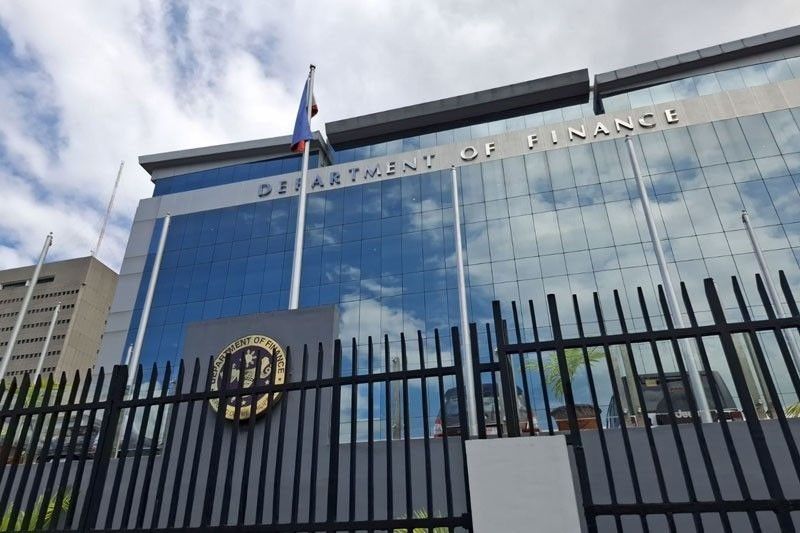
MANILA, Philippines — The Department of Finance (DOF) expressed confidence that it will still be able to meet its P4.21-trillion revenue target for the year despite experiencing a noticeable slowdown in tax collections.
Acknowledging the issues that affected tax payments, Finance Undersecretary Charlito Martin Mendoza said the government might fall short of its tax revenue target but expects to offset the gap through higher collections from non-tax revenues.
“Hopefully, we will be able to recover. However, we admit that because of everything that is happening, there’s been an impact on our tax revenues,” said Mendoza, head of DOF’s revenue operations group.
Mendoza added that once the system is corrected, the momentum in tax collections is expected to recover and improve in the succeeding periods.
“We might not be able to meet our tax revenues, but we will be able to cover for that from our non-tax revenues,” he said.
Recent data from the Bureau of the Treasury showed that non-tax revenues declined by 65.8 percent year-on-year to P15.8 billion in September from P46.2 billion.
From January to September, collections dropped by P167 billion, as the government raised only P314.1 billion on non-tax revenues compared to P481 billion in the same period last year.
“Primarily on the Bureau of Internal Revenue side, there has indeed been an impact on revenue collection. During the first half of the year, the BIR was very much on track to meet its collection target, but a slowdown eventually occurred,” Mendoza said.
Treasury data indicated that the BIR collected P2.32 trillion from January to September this year, which represents a nearly 11-percent increase from last year’s P2.09 trillion.
The collections, however, are only 72 percent of the P3.23 trillion target set by the Cabinet-level Development Budget Coordination Committee for 2025.
Finance Secretary Ralph Recto earlier confirmed that the BIR’s collections have declined, cautioning that the continued downturn in revenues could serve as an early warning of slower economic growth.
This was admitted by BIR Commissioner Romeo Lumagui Jr., who attributed the slowdown to the lingering issues surrounding the Department of Public Works and Highways (DPWH)’s infrastructure projects.
“I’m not sure if it can be attributed to the flood control issues. But there was definitely a slower collection because of the issue, because of the DPWH,” Lumagui previously said.
According to BMI Country Risk & Industry Research, the Philippines’ fiscal deficit is expected to narrow by the end of this year as government spending continues to fall behind programmed expenditures outlined in the national fiscal plan. The research firm reported that it expects a decline in the budget gap to 5.5 percent, as the slowdown in government spending was attributed to restrictions on pre-election expenditures and the sluggish disbursement of funds for infrastructure projects.
“According to latest reported figures, revenue collection in the year-to-August has outperformed average monthly government targets, while expenditure over the same period has lagged programmed spending,” BMI said.
The firm stated that while the spending shortfall is expected to narrow, overall government expenditure is likely to fall short of the 2025 budget target. Last year, the country’s fiscal shortfall reached 5.7 percent of gross domestic product.


- Latest
- Trending