Special report: Fortitude fuels furniture firm to face uncertain future
Treading through troubling tariffs
MANILA, Philippines — Malabar chairs. Celine Dion. Craftsmanship. All these point to one medium-sized enterprise north of the country’s capital: Calfurn.
This Pampanga-based manufacturing firm has become synonymous with world-class Philippine furniture found in American homes. Today, the 49-year-old Calfurn Manufacturing Philippines Inc. finds itself weaving through a tangled trade situation caused by US President Donald Trump’s tariffs.
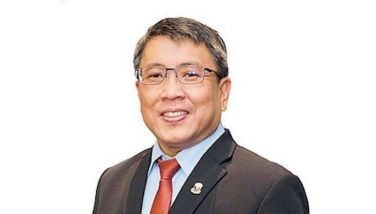
“Some of our customers have already asked for discounts since [furniture] demand has been slow because of the soft US housing market exacerbated by the tariff uncertainties,” Paolo Feliciano, vice chairman of Calfurn, told The STAR.
In April, Trump announced the imposition of reciprocal tariffs on all of the US’ trade partners to fix their trade imbalances. For the Philippines, it was 17 percent. Two months later, it became 20 percent. A week ago, it was reduced to 19 percent.
For a company like Calfurn that ships out 95 percent of its products to the US, the numbers meant more: unquantifiable consequences.
Household name
Founded in 1976, Calfurn found its niche in manufacturing furniture and furnishings made out of indigenous, sustainable and locally sourced natural materials. At the turn of the third millennium, Calfurn was at its A-game, having sealed million-dollar deals to supply the US market with its products – from chairs, desks to sofas and beds.
It sold over 50,000 of its famous Malabar chairs across American stores like Pottery Barn, Nordstrom, Saks Fifth, Neiman Marcus, Macy’s and Bloomingdale’s. Celine Dion also had one of those.
Feliciano, now 45, has seen through the storied journey of Calfurn. At just nine years old, he was exposed to the ins and outs of the business. Weaving and various parts of the production process were his summer classes.
He was in his adolescence when the Asian financial crisis happened. He was out of college by the time the company faced the global financial crisis of 2008. Decades later, Feliciano was enjoying his life as a photographer – shooting for several furniture manufacturers locally and abroad.
When the COVID-19 pandemic arrived, Feliciano came back home.
“My father called me and told me to come back to the company since I was not doing much,” he said. “It’s like a first love that you cannot really leave behind.”
Since then, he became vice chairman of the company. The announcement of the US tariffs on Philippine goods came at an unfortunate time since Calfurn has just exited corporate rehabilitation.
Calfurn exports 95 percent of its products to the US and sells the remaining five percent to the local market.
“Some say that we are okay with 19 percent since it is lower than other countries but for MSMEs like us we are not okay. That is from a zero tariff to 19 percent. We are concerned with that tariff rate - we must aim for zero,” Feliciano said.
Outright costs
Tariffs, which are taxes on foreign-made goods, are shouldered by importers. While some try to absorb the added costs, most importers pass it on to customers. Meaning, the higher the tariff, the higher the retail cost of imported items.
So it was not a surprise for Feliciano that their US clients have negotiated for lower product prices to mitigate the anticipated tariff impact. As a result, Calfurn slashed their prices by 10 percent on an annual basis.
The higher tariff rate also exacerbated the slower demand for furniture in the US initially caused by its softer housing market. Calfurn’s purchase orders in America have already fallen by 30 percent year-on-year.
The lower demand and revenues do not only affect the furniture firm’s bottomline but also that of their allied industries, particularly smallhold players and farmers alike that supply them with raw materials. Calfurn sources abaca, rattan, seagrass, among others from various provinces like Bicol and Cebu.
“And they are more affected since they are at the end of the value chain and have slimmer profit margins,” Feliciano said.
Feliciano was frank about the direct consequence of the US tariffs on micro, small and medium enterprises (MSMEs) like them: layoffs.
“It is the no-brainer solution since labor is a cost driver. We try our best to cope without retrenchment. And I am proud to say we have not had layoffs in the past few months,” he said, noting that the company employs around 300 to 400 in-house weavers. Calfurn also indirectly employs 1,000 more through its subcontractors in Angeles, Pampanga.
Pulling through challenges
Calfurn has embarked on both short-term and long-term adjustments to protect its market share in the US and sustain its operations amid the tariff issue.
Feliciano said they are trying to reduce their costs without compromising the quality of their products by lessening the layers of their production to make it more efficient.
The company also removed overtime payment and holiday work as an immediate solution. Weavers at Calfurn are now just working within their regular hours.
To augment the salaries of their employees, Calfurn is giving them rice to at least ease their daily needs, Feliciano said.
The company has also applied with the Department of Labor and Employment (DOLE) to avail of the government’s subsidized sale of P20 per kilo rice.
The Department of Agriculture (DA) and DOLE launched last month the sale of P20 per kilo of rice to minimum wage earners through accredited companies.
As part of its long-term measures, Calfurn is intensifying its marketing operations both locally and abroad. It is now planning to diversify its export markets, looking at Europe and the Middle East, to reduce its dependence on the US market.
That way, Feliciano said, the company will be positioned to be more insulated to any possible trade disruptions, whether in the form of tariff threats or not, in the future.
Furthermore, the furniture maker is becoming more aggressive in pivoting toward the local market. Calfurn’s products are now available in some leading department stores as well as at a showroom in New Clark City.
“Well, 49 years ago we started with just the local market. So we are now becoming aggressive in our expansion locally,” Feliciano said.
Calfurn continues to develop new product offerings that will cater to the growing demands of their clients in the US to ensure that it keeps a strong foothold in the Western economy, Feliciano said.
Feliciano explained that the company does not have an intense direct competition in the US since half of its furniture market is for upholstered products. The closest competitors to Philippine furniture are the likes of Indonesia that have endemic natural materials too.
Empowering MSMEs
For Feliciano, MSMEs like them cannot brave the storms brought by the US tariffs alone. They too need the helping hands of the government.
He proposed that the government should also provide them with incentives such as tax breaks and cheaper access to raw materials since they are outside of economic zones.
The government should also ramp-up its promotion of Philippine-made goods to other markets to accelerate market diversification. There should also be a program that will allow furniture makers to access new technologies that will help them optimize their operations and reduce costs, Feliciano said.
Like other industries, furniture manufacturers are also facing brain drain with top designers being pirated abroad. State subsidies will also help MSMEs to sustain their operations, especially if they are targeted to cushion future wage increases, Feliciano said.
If there are ayudas for vulnerable sectors, then there should also be one for MSMEs, which are the lifeblood of the country’s economy, he added.
Today, the US tariffs took effect and Calfurn hopes for a brighter tomorrow.
“We have been through tougher times. This, too, shall pass,” Feliciano said, noting that the 2008 financial crisis was worse than the current market challenges.
“Our clients in the US understand our situation. We have been partners throughout the years. We are all in this together — and that is what true reciprocity means,” Feliciano added.








- Latest
- Trending