Energy transition: A power trip worth taking
MANILA, Philippines — At a critical time marked by climate change, depleting resources and millions of Filipinos still living in the dark, the Philippines is re-unlocking the power it has always known.
The country’s power sector has taken a dynamic turn — from relying entirely on renewable energy (RE) to embracing fossil fuels, undergoing privatization and now finding its way back to RE.
Since the implementation of the RE Law in 2009, over 3,700 megawatts (MW) of additional capacity have been installed, based on data from the Department of Energy (DOE).
This translated to around P363 billion in energy investments and significantly displaced about 38 million tons of carbon emissions.
Yet these figures remain well below what’s required to meet the country’s ambitious clean energy targets.
Under the Philippine Energy Plan, the government aims to scale up the share of renewables in the energy mix to 35 percent by 2030 and 50 percent by 2040.
To achieve these targets, the DOE estimates around P20 trillion to P31 trillion in funding.
In an interview, Energy Undersecretary Mylene Capongcol confidently affirmed that the Philippines is making steady strides in its clean energy journey and is on track to hit its goals.
“We’re still working on that (RE targets). You can see that our green energy auction (GEA) program is really pushing for a number of capacities,” Capongcol said, while acknowledging that there is still much work to be done.
Similarly, Energy Secretary Sharon Garin has vowed to champion and strengthen key policies and reforms that have successfully drawn investments in the sector.
“Programs such as GEA, the steady growth in renewable energy capacity and the increasing investor confidence in our energy transition framework underscore our collective progress in advancing the President’s policy agenda,” Garin said.
“As we move ahead, the department shall continue to promote collaboration, uphold transparency and pursue innovative and responsive energy solutions that every Filipino benefits from a reliable, secure and sustainable energy future,” she said.
RE programs and policies
The Philippines is building on the positive momentum from 2024, a year considered nothing short of remarkable after hitting its highest RE installation to date.
DOE data showed that over 794 MW of RE capacity reinforced the country’s supply last year, surpassing the installations in the previous three years combined.
Contributing to record-high installations was the net metering program, a scheme that allows power end-users to build their own RE facilities for personal use and sell any excess electricity generated to the grid.
This program, along with other investor-friendly policies, helped the Philippines emerge last year as the second most attractive emerging market for RE investments, according to a Bloomberg report.
This marked an improvement from 2023’s fourth-place ranking and an incredible leap from 20th place in 2021.
The rise in the rankings was attributed to the country’s effective implementation of energy policies, including feed-in tariffs, import and value-added tax incentives, priority grid access and RE certificates.
In 2022, the government allowed full foreign ownership in the RE sector, which was previously subject to a 40-percent cap.
Industry stakeholders welcomed the move as it effectively opened the floodgates for investment in renewables, particularly capital-intensive geothermal and offshore wind developments.
Green energy auctions
To further drive clean energy investments, the DOE is committed to holding competitive biddings for renewables annually, with three more auction rounds scheduled for this year.
The DOE recently concluded the third GEA round or GEA-3, awarding over 6,600 MW of impounding hydro, pumped storage hydro and geothermal contracts with delivery dates between 2025 and 2035.
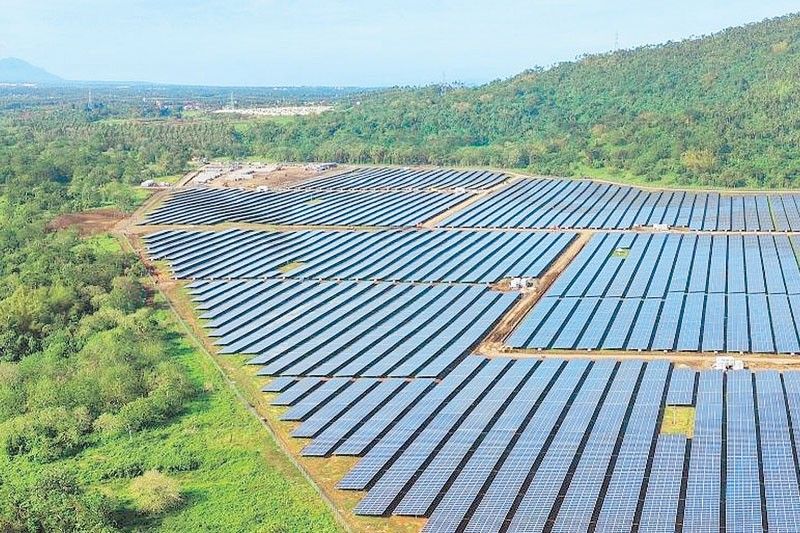
GEA-4 will see over 9,300 MW of capacity from ground-mounted solar, roof-mounted solar, floating solar and onshore wind projects, along with an additional 1,100 MW of solar capacity paired with battery storage components.
GEA-5, meanwhile, is exclusively dedicated to offshore wind technologies, offering 3,300 MW of capacity.
Apart from the upcoming auctions, the DOE has also announced plans to launch GEA-6 this year, focusing on waste-to-energy and biomass contracts.
Call to private sector
With all these programs and policies in motion, one might assume they are enough to attract critical investments to propel the country’s bold energy targets.
But the truth is, far greater effort and sustained momentum are still needed to turn the Philippines’ ambition into a reality.
In fact, overall private green investments in the Philippines saw a double-digit decline last year, according to a 2025 report by Bain & Company, GenZero, Google, Standard Chartered and Temasek.
The country’s private green investments reached $1.28 billion in 2024, down by 12 percent from the $1.46 billion recorded in 2023.
“The private sector would have to step up. My prayer is that more private companies come in, whether they are local or foreign,” energy expert Alberto Dalusong told The STAR.
Dalusong, who serves as an energy transition advisor for the Manila-based think tank Institute for Climate and Sustainable Cities, said the private sector should own its role as the main engine of growth and investments.
“The private sector must invest and must deliver energy,” he said, pointing out that the government now plays only a supporting role following the power sector’s privatization in 2001.
In 1979, Dalusong recalled, 75 percent of the country’s power generation came from oil and 25 percent from RE. Just five years later, renewables had grown to 52 percent.
Fast forward to today, renewables make up about 22 percent of the energy pie, with coal accounting for the largest share at 63 percent.
“We achieved 52 percent in 1984, so why can’t we do 35 percent?” said Dalusong when asked if the Philippines’ 2030 clean energy targets are achievable.


- Latest
- Trending