


‘P200 wage increase damaging to economy’
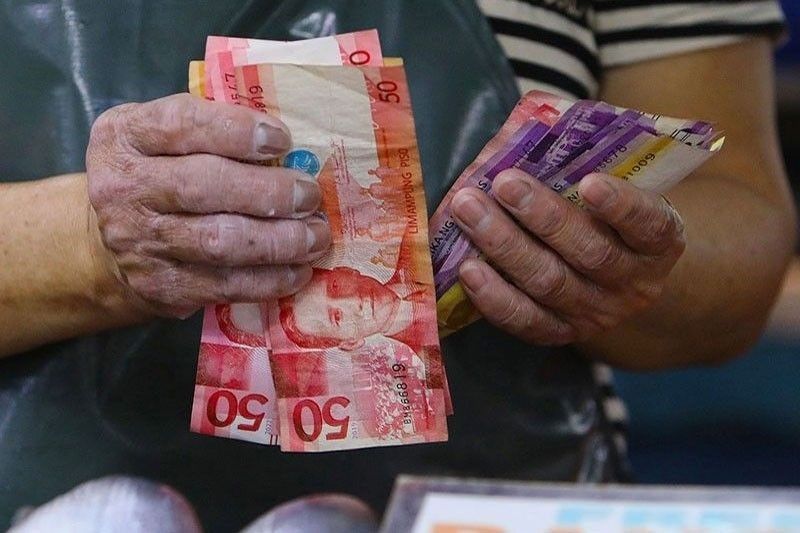
MANILA, Philippines — The P200 across-the-board wage hike could spell damage to the economy, reversing recent inflation progress, missing growth targets for the year and eventually hitting the poorest of the poor, the economic team warned.
In a joint position paper, members of the economic team of the Marcos administration opposed a measure that would hike the daily minimum wage of private sector workers by P200.
The House of Representatives on third and final reading approved the P200-increase. The Senate, on the other hand, has a modest P100-hike proposal.
The economic team argued that the wage hike has dangerous repercussions, be it the House or Senate versions, especially in terms of inflation, unemployment and gross domestic product (GDP) growth.
For one, data showed that inflation could increase by 0.7 to as much as two percentage points considering that any wage increase could result in higher production costs.
As such, economic managers cautioned that inflation progress could be reversed.
Headline inflation further slowed to a five-year low of 1.3 percent in May, bringing the average to 1.9 percent, well-below the two to four percent target band of the government.
“When wage adjustments are not commensurate with improvements in productivity, they can exacerbate price pressures,” they said.
Similarly, the wage hike is seen exerting substantial downward pressure on GDP by 0.5 to as much as 1.6 percentage points.
This could lead to the government missing even the lower end of the GDP growth target of six to eight-percent for 2025. The economy grew by 5.4 percent in the first quarter.
The economic team likewise warned of the impact on the labor force as businesses may be forced to either stop hiring or lay off workers.
Estimates showed that unemployment rate could worsen by 0.2 to 0.6 percentage points, equivalent to as much as 300,000 individuals losing their jobs.
“Those who will lose their jobs will then shift to the informal sector, which puts them in a worse situation, unable to meet their basic needs and making them more vulnerable, ultimately worsening poverty incidence,” the economic team said.
“Another scenario is that employers may likely simply not follow the required increase, keeping their employees but shifting them to the informal market as they work below minimum wage, weakening labor market institutions and giving rise to less protection for minimum wage earners,” they said.
Further, the economic team argued that a legislated wage hike will only widen regional disparities as it does not consider differences in cost of living and other socioeconomic factors, such as regional unemployment conditions and business climate.
As such, this could affect less developed regions, which may face greater difficulty attracting investments and generating employment due to increased labor costs.
Following all the expected repercussions, the economic team recommended to President Marcos that the current system of adjusting wages through the Regional Tripartite Wages and Productivity Boards be maintained.
Instead, they called for the strengthening of the implementation of the minimum wage law focused on having each region more adequately respond to the needs of its workers.
“Regional minimum wage setting better reflects local economies, avoids purchasing power disparities and supports fairer wage distribution,” the economic team said.
The joint position paper was signed by Special Assistant to the President for Investment and Economic Affairs Frederick Go, Finance Secretary Ralph Recto, Economic Planning Secretary Arsenio Balisacan, Budget Secretary Amenah Pangandaman, Trade Secretary Cristina Roque and Bangko Sentral ng Pilipinas Gov. Eli Remolona.


- Latest
- Trending


