It’s final: No more capital hike for existing HMOs
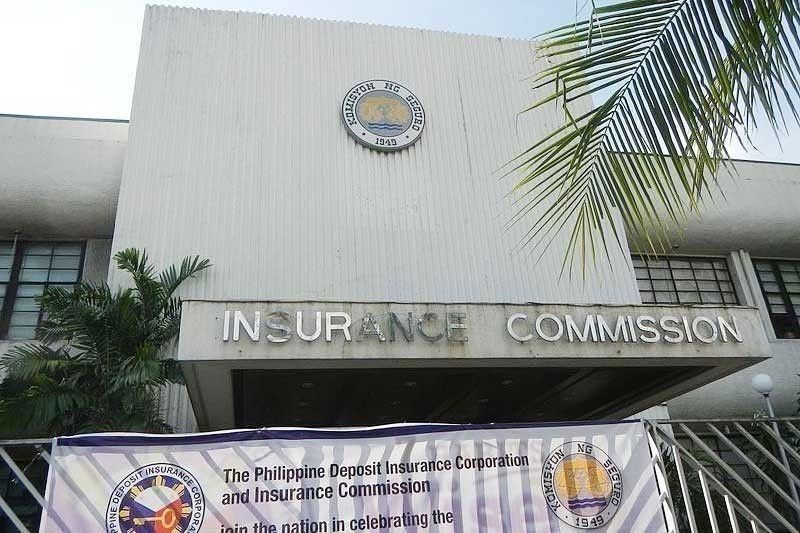
MANILA, Philippines — The government has formally scrapped the increase in the minimum paid-up capital of existing health maintenance organizations (HMOs) as they will instead undergo tiering based on net worth.
In its latest circular, the Insurance Commission (IC) formalized the revision in the minimum capitalization, financial capacity and other regulatory requirements of HMOs.
The IC last month released the new draft and sought comments from all stakeholders.
“The HMO industry has experienced significant growth in membership and services and is expected to play a larger role in the national health care system,” IC chief Reynaldo Regalado said.
“This necessitates updates to the regulatory framework to ensure financial stability, operational efficiency and inclusivity in delivering health care to a broader population,” he said.
As such, existing domestic HMOs will continue to have a minimum paid-up capital of at least P10 million.
New HMOs, however, should have a paid-up capital of at least P100 million.
On the other hand, HMOs are now classified into tiers based on their net worth. Tier A is for HMOs with net worth of over P500 million, B for P100 million to P500 million, C for P50 million to P100 million and D for P50 million and below.
All HMOs should maintain a net worth that is not lower than their actual paid-up capital.
Every HMO doing business shall at all times maintain a security deposit of at least 25 percent of the actual paid-up capital or P5 million, whichever is higher.
Further, HMO’s maximum risk on membership fees is now based on the tiering.
Moving forward, HMOs belonging to Tier A will have no limit while those on Tier B will have maximum gross membership fees 10 times the net worth.
HMOs on Tier C should have five times the net worth and Tier D with three times the net worth.
Gross membership fees pertain to the total annual fees arising from full-risk HMO agreements of the pre-agreed set of health services.
Likewise, the tiering will determine the acid test ratio (ATR) that firms should maintain at all times. Tier A and B must have at least 1.0, C with at least 1.75 and D with at least 2.0.
The ATR is computed based on an HMO’s current assets and liabilities.
Meanwhile, only HMOs classified under tiers A, B and C are allowed to invest in real estate properties.
The imposed tiering will also impact the dividend distribution of HMOs as only those under tiers A and B may do so without IC approval.
Those under C and D must secure clearance and may be ordered shut if found to be declaring dividends without IC approval.
In addition to the disclosures required under the Philippine Financial Reporting Standards, HMOs shall present information on their compliance with the minimum capitalization and financial capacity requirements.
With this, the filing fee was retained at P20,000 upon submission of audited financial statements and the same penalty of P5,000 will be imposed for every calendar day of delayed submission.
The annual supervision fees will also now be based on paid-up capital instead of gross membership fees.
The annual supervision fees will be P20,000 for paid-up capital of up to P20 million and P75,000 for those over P75 million. Those between P20 million to P75 million will have a supervision fee of P50,000.
HMOS that fail to pay the required fee will now be subject to a basic fine of P5,000 plus an additional P500 for each calendar day the payment is delayed.
HMOs are juridical entities legally organized to provide or arrange for the provision of pre-agreed or designated health care services to its enrolled members for a fixed prepaid fee or a specific period of time.


- Latest
- Trending