Inflation dulling in April makes case for rate pause
MANILA, Philippines — Inflation showed more signs of deceleration in April, offering Filipinos some reprieve from expensive prices, which gave the Bangko Sentral ng Pilipinas leeway for a pause in monetary action.
In a briefing on Friday, inflation amounted to 6.6% year-on-year in the previous month, according to the Philippine Statistics Authority.
This was slower compared to the 7.6% recorded in March, as consumer price growth decelerated for the third straight month.
The latest outturn fell squarely with the Bangko Sentral ng Pilipinas' inflation projection in April. For the entire year, the central bank said it would revise its inflation projections to below 6% in its next meeting.
The figures in April were still faster than the inflation print a year ago, as the domestic economy then had not reopened yet.
Year-to-date, inflation currently averaged 7.9%.
When the national government decided to open up the economy in the final quarter of 2022, consumer price growth accelerated to a 14-year high.
The Philippines' inflation woes persisted in part because an explosion in consumer spending worsened supply chain bottlenecks, as businesses and firms were still dealing with the effects of expensive fuel prices and a weak peso.
To stem consumer price growth, the Marcos Jr. administration resorted to importing food products, but this came at the expense of farmers as shipments came in the middle of harvest season.
Sought for comment, Nicholas Antonio Mapa, senior economist at ING Bank in Manila, expected price growth to moderate in April.
“BSP will be considering this data point and a slower print could open the door for a potential pause from the BSP at the May meeting,” he said in a Viber message.
Monetary policy has shown its deft hand in combatting inflation, as the BSP hiked its key rate by 425 basis points since May last year.
These interest rate hikes take 6-18 months before it seeps into the domestic economy, as expensive borrowing costs discourage consumers and firms from taking out credit.
“There appears to be an outsized concern about robust demand driving prices however we agree with the Governor that the current inflation spell is more due to supply shortages rather than excess funds,” Mapa added.
Seesawing prices and core inflation
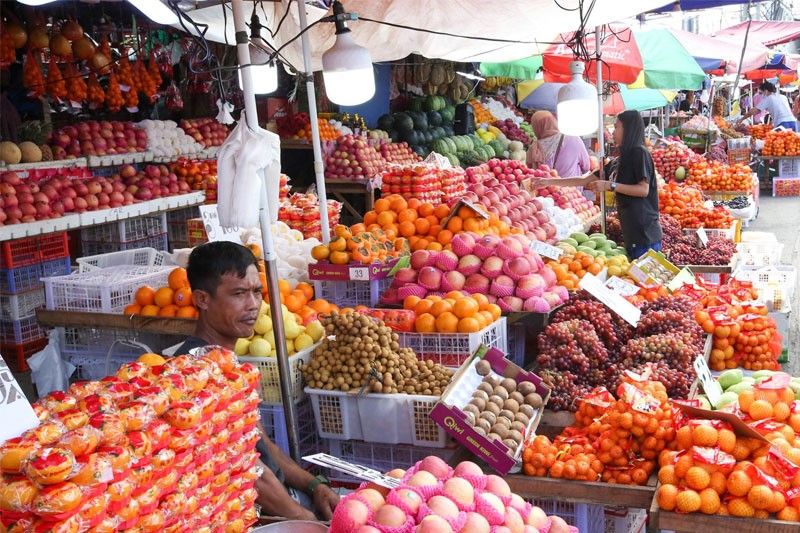
Food prices were easing in April, government data showed.
The prices of fish, seafood, milk, dairy products, eggs, oil, vegetables, sugar, and processed food retreated in Metro Manila compared to the previous survey round in March.
Outside the National Capital Region, national statisticians found that prices of some key food products such as corn, flour, bread, meat, chicken and fish were subsiding as well.
Rice remained a costly commodity across the country. PSA data recorded an uptick of 2.9% in April, from the 2.6% recorded in the preceding month.
Core inflation, computed without volatile items such as fuel, hit 7.9% on-year in April.
This was slower compared to the 8% recorded in March, but markedly faster than the 2.5% tallied in April last year.
That core inflation was still moving at such a feverish pace still cast doubts on whether consumer price growth could maintain its deceleration.
The PSA, could not ascertain whether the declining trend could be maintained, as the threat of El Niño remained.
Jun Neri, lead economist at the Bank of the Philippine Islands, said they agreed “partially” with the outlook of slowing inflation.
“Problem most of these declines are still just a reversal from the 1.1% month-on-month increase between January and December. The big question is if the core items will decelerate fast enough to bring us back to target within the year,” he said in a Viber message.
Neri acknowledged that a host of risks could push prices up again, even as base effects on prices are dissipating.
The Marcos Jr. administration revised its inflation target for 2023 back in April. They now project price growth to average between 5-7%, from the initial 2.5-4.5% as risks remained.
“BSP will likely consider the pause and let supply-side remedies alongside the lagged impact of aggressive tightening counter sticky inflation,” Mapa added.


- Latest
- Trending