Agri group pushes revitalization of salt industry
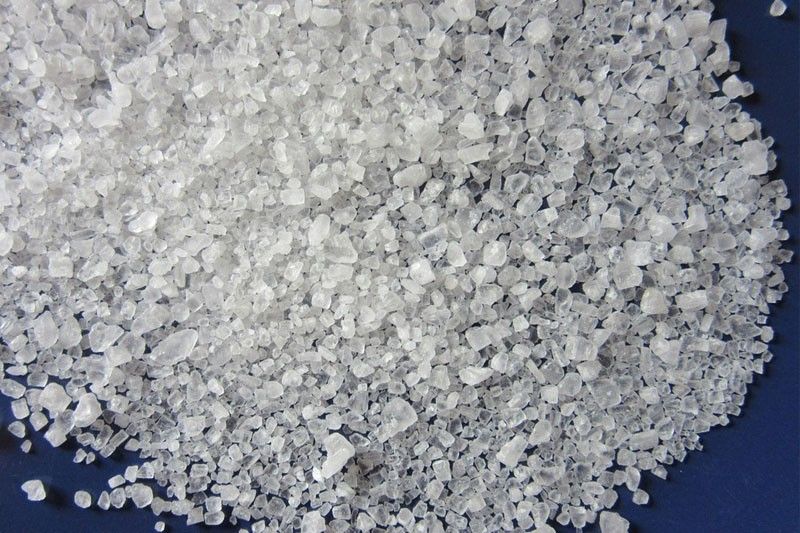
MANILA, Philippines — The Philippine Chamber of Agriculture and Food Inc. (PCAFI) is pushing for a higher budget allocation to revitalize the local salt industry as the budget for the agriculture sector more than doubled to P181 billion for next year from P85 billion this year.
PCAFI president Danilo Fausto lamented that nothing was allocated for some important sectors such as the salt industry.
To meet the local salt requirements, he said the country is importing 93 percent of its salt supply – equivalent to almost one million tons of salt.
“We have 36,000 kilometers of shoreline. We only need six percent of that shoreline, we can already be sufficient of salt. But we are importing 93 percent of salt from Australia and China,” Fausto said.
PCAFI is urging government to review Republic Act 8172 or An Act for Salt Iodization Nationwide (ASIN Law) to help invigorate the local salt industry.
“I think we should take a look at this. In the proposed budget, not a single centavo is allocated to salt,” Fausto said.
The ASIN Law was enacted in 1995 to address the country’s micronutrient deficit through “the cost-effective preventive measure of salt iodization,” which requires all salt for consumption to be fortified with iodine.
According to the World Health Organization (WHO), iodization refers to the process of “fortifying salt for human consumption with iodine.”
But 27 years after the law was passed, the local salt industry only diminished.
“Because of that requirement and our small salt farmers don’t have that equipment…it is killing or has killed our salt industry,” Philip Young, chairman of food exporter Global Food Solutions Inc. chairman, said.
It is high time that the law be amended given the global push for natural products such as sea salt.
“The trend now is go natural, sea salt. When salt is iodized, it’s no longer considered as natural, it has been treated or fortified,” Young said.
The Export Development Council (EDC) has endorsed the review of the law to the Department of Trade and Industry (DTI) since some processed food exporters using salts should be exempted from the law as it requires them to have two production lines – one for local and one for export.
“For the export market, some countries do not allow to import products containing iodized salt,” Young added.
Last month, the Philippine Chamber of Commerce and Industry, Employers Confederation of the Philippines, and Philippine Exporters Confederation Inc. included the ASIN Law as among urgent legislative reforms the new Lower House should implement.
The business groups believe it is time to amend the ASIN Law in order to exempt natural sea salt from mandatory iodization, as this effectively inhibits local sea salt farming.
Aside from amending or repealing ASIN law, Young said there is also a move to file a bill to revitalize the local salt industry.
Kabayan Partylist Rep. Ron Salo filed House Bill 1976 to revive the local salt industry so the country can export salt, instead of importing it.








- Latest
- Trending