UP debating team crusades for liberty,1928
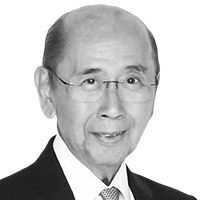
Today January 14 is the 115th birthday of my father, Carlos P. Romulo. Much has been written about him and his career as a journalist, soldier, educator and diplomat. After extensive research on his UP days, my daughter Liana Elena, has allowed me to reprint her story.
The question of Philippine independence had long been a flashpoint between Filipino nationalists and their American counterparts, particularly in the years leading up to the formation of the Commonwealth, the 1920s and 30s. Indeed, the question elicited intense debate even among Americans and among Filipinos. Arguments ranged from emotional to economic, but in general those who favored colonial rule argued that we weren’t ready for--or were incapable of--self-government. They also feared that if the US did not take control, another power (i.e., Japan) might. Meanwhile, the great majority of those who were in favor of independence believed America wanted to maintain its hold on the Philippines solely for commercial gain; others felt that to take another nation by force was morally wrong, plain and simple.
Lolo had been a lively participant in these heartfelt and often heated debates. When in 1927 the University of Oregon’s three-man debate team visited Manila to disprove that the Philippines should be granted immediate and complete independence, five thousand people turned up at the Grand Opera House to witness them go head-to-head with the University of the Philippines. Lolo was the UP team’s coach, and was probably as shocked as everybody else when the audience reacted to the arguments with “fist fights, cat calls, boos, hisses, thunderous applause.†1 The visiting team went on to China, having lost the debate by unanimous audience decision, but they left the UP team energized and inspired--and wanting to travel around the world to continue debating the Philippine question.
Lolo had already traveled to the US several times before, and he knew all too well that most “regular†Americans had no idea what a Filipino was; or, worse, they thought we were half-naked savages living in trees (no thanks, in part, to the 1904 St. Louis World Fair, which featured a 47-acre human zoo of more than a thousand Filipino tribal people). In 1919 he left as a pensionado to get his master’s at Columbia University. He went again three years later with the Philippine Parliamentary Mission. Led by Senate President Manuel L. Quezon, for whom Lolo served as private secretary, the 1922 mission was the second of what would be a series of eight independence missions. These culminated in the 1934 Tydings-McDuffie Act, which designated a ten-year transition period on the way to full independence.
In addition to assisting Quezon at this point in time, Lolo was working his way up the editorial ladder at The Philippines Herald. He was also an associate professor in the English department of UP, which eventually led him to teach a course in public speaking and coach the debate team.
By the end of 1927, Lolo was sending letters out to top universities in the United States, with a request for “immediate action.†He hoped to bring to the US the same three men who had beat the University of Oregon just weeks before, to debate the question of Philippine independence. I am not sure how he managed to pull it off, as the historic debate in Manila had “provoked so much discussion that [US] Secretary of War Davis frowned on the affair and notified Henry L. Stimson, governor-general of the Philippines, that no more debates on that subject could be tolerated by the government.†2 But somehow Lolo managed to organize a team of the same three men plus one alternate. All four were law students, each with an impressive record of successful debates. By March 3, 1928, they were aboard the SS President McKinley, bound for Seattle, on a fifteen-university tour sanctioned by the US Bureau of Insular Affairs.
“The youth of the Philippine Islands covet the friendship and goodwill of the youth of the United States,†he wrote in a letter explaining the purpose of the trip. “It is by the interchange of ideas between their representatives and by contact with the national institutions of both countries that the American and Filipino students will learn to know each other, and knowing each other, understand the ideals of each nation. . . . We hope to present the Philippine problem free from political bias and stripped of the petty irritants and antagonisms engendered by politics, prejudice, and misunderstandings.â€
On April 4, 1928, dressed in conventional tuxedo, as was the standard for forensic events held in the evening, the UP debaters faced their first opponent, the Varsity Debate Quad of Stanford University, and won by audience vote 178 to 52. The main contention of the team was that the Philippines had a stable government, and was capable of maintaining this government if granted independence.
From California the team traversed the country by train, crushing opponents at the Universities of Minnesota, Utah, and Michigan, Illinois, as well as George Washington University and Indiana University. Their eighth debate was with the University of Wisconsin, where acclaimed writer and Philippine national artist Carlos Quirino was an eighteen-year-old journalism student covering the event. On April 24 he wrote that the debate tour offered audiences the opportunity of finally “hearing the Philippine question debated on a basis of first-hand information.†3 Three days later he wrote another story with the headline, “Philippine Team Wins in Stirring Plea for Liberty.â€
When the team arrived at Miami University, Ohio, they discovered that their reputation had preceded them—and they were allowed only to give speeches; not to engage in debate. Since the contest was not being sponsored by the public speaking department, the university authorities expressed concern that “any group of students [would] be outclassed by the gifted Filipinos.â€
The student newspaper hinted at the real reason, however; that is, that the “political gentlemen†who voted for the state university’s annual budget might be annoyed by the topic of the debate, as US Republican “President Coolidge has declared that the Philippine question is settled. There can be . . . no independence for an indefinite term of years.†The writer questioned the university’s stance. “It’s good business . . . but is it good education?†4
By the time they reached home at the end of July, the UP team had drawn a combined audience of a few thousand and threatened no less than the Secretary of War and, indirectly, the president of the United States. They had challenged--and defeated--six of the Big Ten schools, along with several southern and eastern universities, including Cornell and Harvard. “We . . . were given a dazzling reception at the pier,†Lolo recalled in his memoirs. “The entire student body from the university turned out along with students of other schools, and we were cheered as heroes and draped with floral necklaces. . . .â€
In his initial statements proposing the debates, Lolo had expressed his hope that after exchanging views with the representatives of fifteen American universities, the UP debaters would be able to bring home “the message that there is in America no such thing as the Philippine question, that to the American mind it is not merely a Filipino problem, it has ceased to be a question of nationality or of politics, it is a moral one, one of justice and of truth.â€
Footnotes:
1 Hempstead, Walter E. (November 27, 1927). “Manila Engagement Heated for Oregon Debate Squad: Ticket Scalpers Get Cash.†World Debate Tour Collection, Division of Special Collections and University Archives, University of Oregon: Eugene, Oregon.
2 “Oregon-Philippine Debate Draws Ire of United States Secretary of War.†World Debate Tour Collection, Division of Special Collections and University Archives, University of Oregon: Eugene, Oregon.
3 The Daily Cardinal (the campus paper of Unv of Wisconsin). April 24, 1928.
4 from the column “Slants before the Walk†by Milton L. Farber. The Miami Student, Feb. 7, 1950.




- Latest
- Trending