Boying Remulla: Man of the hour
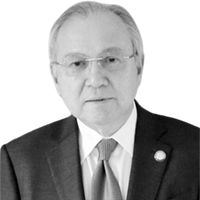
There are moments in the life of a nation when one public official suddenly carries an extraordinary weight of expectation. Today, as Filipinos demand answers over the flood control scandal and other alleged abuses of public funds, that official is Ombudsman Jesus Crispin “Boying” Remulla.
He is, without question, the man of the hour.
The public is angry, and understandably so. Every peso stolen from a flood control project is not merely an accounting irregularity. It can mean a family trapped in rising water, a livelihood destroyed, a road rendered impassable or, in the worst cases, a life lost. When projects exist only on paper, are grossly overpriced or are built below standard, corruption ceases to be an abstract crime. Its consequences become painfully visible in submerged communities.
This is the atmosphere in which Boying must perform his constitutional duty. The expectations are enormous, the personalities involved are powerful and the political pressures must be intense. Yet the Office of the Ombudsman was created precisely for such a moment: to investigate wrongdoing in government, prosecute cases supported by evidence and demonstrate that public office is indeed a public trust.
I have known Boying and the Remulla family for many years through our shared life in the political arena. His late father, Juanito “Johnny” Remulla, was a respected lawyer and a formidable governor of Cavite. Public service became part of the family’s upbringing, but Boying developed his own style: direct, decisive and unafraid of difficult assignments. From my personal experience, I can attest to his sense of mission and his desire to do what is good for the country.
His career has prepared him for this demanding hour. A political science and law graduate of the University of the Philippines, he passed the Bar and the Career Executive Service examination in 1987, then practiced law. He first held elective office as a member of the Cavite provincial board in the early 1990s.
In 1998, president Joseph Estrada brought him into the Presidential Management Staff as an assistant secretary. He later served as chief of staff to senator Luisa “Loi” Ejercito Estrada and became a spokesman for the political opposition. Those years taught him how government works from within, how political battles are fought and, most importantly, how decisions made in Manila affect ordinary people outside it.
Boying later represented Cavite in the House of Representatives for several terms, rising to become deputy speaker and, upon returning to Congress in 2019, senior deputy majority leader. Between those chapters, he served as governor of Cavite from 2016 to 2019. These roles gave him experience across the executive and legislative branches, and at both national and local levels.
In 2022, President Ferdinand Marcos Jr. appointed him Secretary of Justice. At the Department of Justice, he quickly created a Prosecution Integrity Board to address misconduct among prosecutors. His tenure also saw the establishment of human rights and gender equality offices, continued reforms in the prosecution service and a sustained effort to make fugitives face Philippine justice. His approach was characteristically forceful: institutions must act, cases must move and the law must not be reduced to speeches.
When President Marcos appointed him the country’s seventh ombudsman in October 2025, Boying inherited an office central to restoring public confidence. One of his earliest significant actions was to lift restrictions imposed in 2020 on public access to the statements of assets, liabilities and net worth of government officials. That decision sent an important message: transparency must be the rule, not the exception.
His office is now pursuing numerous investigations arising from the flood control controversy. It has filed major cases before the Sandiganbayan, while lifestyle checks reportedly cover more than a hundred government officials and employees. Some prominent individuals have surrendered or been arrested after warrants were issued. Others remain under investigation. Every accused person retains the presumption of innocence, but due process cannot become an excuse for endless delay, selective prosecution or theatrical investigations that produce headlines but no convictions.
Boying’s greatest challenge is therefore larger than filing cases. He must convince a skeptical nation that the process is impartial. The evidence must lead wherever it leads, regardless of family name, political affiliation, wealth or proximity to power. The ombudsman must neither persecute enemies nor protect friends. Justice loses its meaning when it changes according to who stands before it.
This principle may test relationships and loyalties, including those formed over decades in politics. But genuine friendship does not ask a public official to abandon his oath. On the contrary, those who know Boying should expect him to honor it. Boying’s duty is not to please any camp – it is to protect the Republic.
Filipinos have heard many promises to fight corruption. They no longer measure sincerity through press conferences or fiery declarations. They measure it through well-prepared cases, recovered public funds, fair trials and final judgments. The ombudsman must work closely with the Commission on Audit and other agencies so that evidence is preserved, stolen assets are traced and accountable individuals cannot escape through technicalities.
Boying Remulla has been given a rare opportunity to strengthen an institution and restore faith in government. History will judge him not by the power of those investigated, but by the fairness, courage and durability of the justice he delivers.
This is his moment. If he stands firm, follows the evidence and proves that no one is above the law, he will do more than prosecute corruption. He will help return to Filipinos something far more valuable than stolen money: their belief that justice in our country can still once again prevail.
* * *
Email: [email protected]





- Latest
- Trending