COA: Ombudsman management too top-heavy
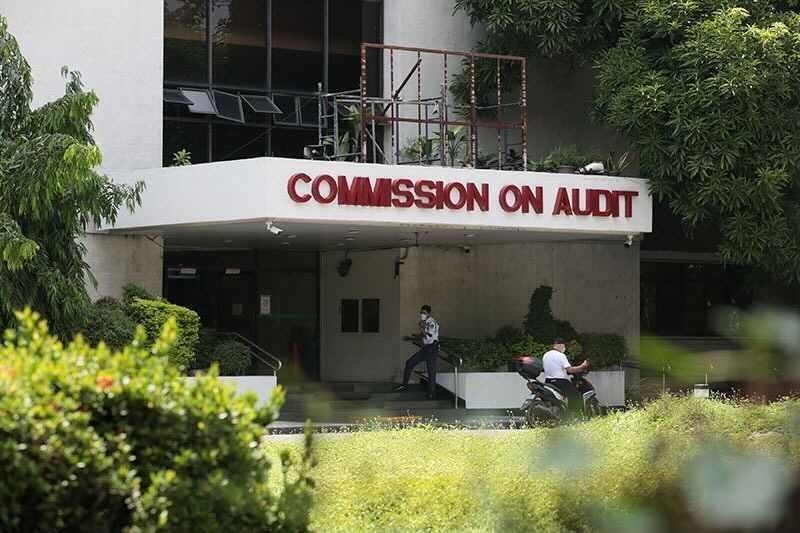
MANILA, Philippines — Auditors from the Commission on Audit have discovered that the Office of the Ombudsman’s management team is top-heavy, with about 64 percent of its personnel occupying high-level positions for at least five years now.
“Our analysis of the ombudsman’s workforce for core positions, based on the actual headcount, depicted an inverted pyramid, which is opposite of the traditional workforce setup, be it in a private company or a government entity,” the auditors observed.
In a 20-page Audit Observation Memorandum, the team led by Florence Villaluz and OIC supervising auditor Joey Bernardino noticed “mismatches and imbalance workforce” in the way the office has been handled, at least as far back as 2017 records are concerned.
Ombudsman Samuel Martires took over the helm of the independent, constitutional office in July 2018, after his predecessor Conchita Carpio-Morales – a fellow Supreme Court justice – finished her seven-year fixed term after her 2011 appointment by former president Benigno Aquino III.
“It shows that high-level positions represent the most numbers of workforce totaling 291 or 64 percent; mid-level positions comprised the 19 percent with workforce of 86; and low-level positions with workforce of 80 representing only 17 percent,” the COA report stated.
High-level positions in government service meant those personnel holding Salary Grades (SG) 26, 27 and 28 enjoying a hefty P115,000 monthly salary for director II positions, P130,000 for director III and P147,000 for bureau directors, respectively.
Mid-level positions are those belonging to SG 22, 24 and 25, correspondingly receiving P73,000 monthly as assistant division chief, P86,000 as division chief and P98,000 as director I, respectively.
The ombudsman carries Salary Grade 31 rank with at least a monthly P284,000 salary.
The team illustrated the “inverted pyramid” where top management had the lion’s share.
SG 27 was the highest with 27 percent, next was SG 26 with 25 percent, third was SG 28 with 12 percent while the rest of the pie was shared by the rest – SG 22 with 11 percent, SG 25 six percent, SG 24 two percent and SG 18 with 10 percent.
“As can be readily seen, there is a huge mismatch of low-level positions and mid-level positions as against the high-level positions, far from the ideal workforce setup,” the Villaluz team observed.
“It is worth stating that low and mid-level positions, even considering the ombudsman’s uniqueness, are those considered as foot soldiers doing most of the legwork,” the auditors stated further.
“Gaps in the structural design and imbalances among the ombudsman’s workforce created mismatches of tasks that need to be done and the personnel that gets the job done, thereby resulting in lesser productivity,” they said.
The COA also declared: “As observed, the request for assistance, resolution of fact-finding cases and prosecution have been improved in calendar year 2018 as the number of carry over cases decreased compared to 2017.”
The team learned that the 81 ombudsman offices each have an average of 13 personnel, and seven out of 13 are non-core personnel, while only six are core personnel.
“It is worth to emphasize that offices and bureaus primarily engaged to agency’s core functions are not predominantly comprised of core personnel, having only 56 percent or 389 out of the 693 personnel in 54 offices and bureaus,” the auditors noted.
“The 43 percent or 297 are non-core position personnel while one percent belong to top management,” it added.





- Latest
- Trending