Declining MMFF attendance? What stakeholders are saying

MANILA, Philippines — Debates over the future of Philippine cinema have been reignited with industry stakeholders offering contrasting views on “declining” audience turnout at theaters, especially during the Metro Manila Film Festival (MMFF), considered as “peak season” for Filipino moviegoing.
The Metro Manila Development Authority (MMDA)-backed MMFF is the only time of year in the Philippines when theaters show local films exclusively.
The MMFF Execom previously denied releasing any official box-office figures or rankings for the eight official entries to the media. But the question is: Will the 2025 filmfest, now on its last stretch in cinemas, match or overtake the P800 million earnings of the previous year? The 2023 MMFF remains the highest-grossing edition in history, with total receipts of over P1 billion from 10 entries.
In a social media post, filmmaker Jun Robles Lana publicly criticized the ticket prices as a major factor in alienating Filipino families from cinemas this 51st MMFF season.
“For decades, the MMFF was the ‘people’s festival.’ It was the one time of year when ordinary workers took their children to the mall to see their idols,” Lana said, saying that a family of four now needs at least P1,500 just to watch a single film, an amount that does not even cover transportation to the theater and even a “bag of popcorn” during the screening.
“By pricing the ordinary Filipino out of the theater, the industry hasn’t just lost customers, it has lost its soul. Cinema has shifted from a shared national culture to a middle-class privilege,” said the director behind the current MMFF Third Best Picture (tied with “Manila’s Finest”) “Call Me Mother.”
Lana further raised the contradiction of “promoting” MMFF as a “national” film festival while maintaining ticket prices that exclude a large portion of the population.
“Until we admit that cinema has become a luxury that the ‘P500 Noche Buena’ family cannot afford, we are simply watching the slow, expensive sunset of Philippine cinema,” he said, referencing the controversial remark by the Department of Trade and Industry Sec. Cristina Roque that P500 is sufficient for the traditional Christmas Eve feast.
The director’s comments quickly went viral, with netizens and fellow creatives echoing his sentiment that the “expensive” ticket prices have drastically altered their moviegoing habits. Some netizens reacted that it was more practical to wait for the films on streaming platforms.
But for cinema owners and operators, the problem runs deeper than peso amounts printed on ticket stubs.
In a statement exclusively sent to The Philippine STAR, Cinema Exhibitors Association of the Philippines (CEAP) president Irene Jose believes pricing alone does not explain why audiences are staying away.
“While rising ticket prices are often cited as the reason for declining cinema attendance, pricing alone is not the primary driver of moviegoing behavior. Cinema attendance has always been content-driven. Audiences consistently show up — and pay premium prices — when the film offers a compelling reason to be seen on the big screen. Recent box office trends locally and globally prove that people are still willing to spend when the content resonates,” Jose said.
She pointed instead to the shortened theatrical window and the rapid transition of films to digital platforms as the more critical factor reshaping audience habits.
“A more significant shift lies in the shortened theatrical window, which has fundamentally changed viewing habits. Today, moviegoers are fully aware that films will arrive on streaming platforms in a matter of weeks — sometimes even days. Worse, once a title is released digitally, it quickly spreads across multiple illegal streaming and piracy sites, making it far more accessible at little to no cost. This reality inevitably leads audiences to question: Why watch in cinemas now, when I can wait and watch at home soon enough — legally or otherwise?” Jose said.
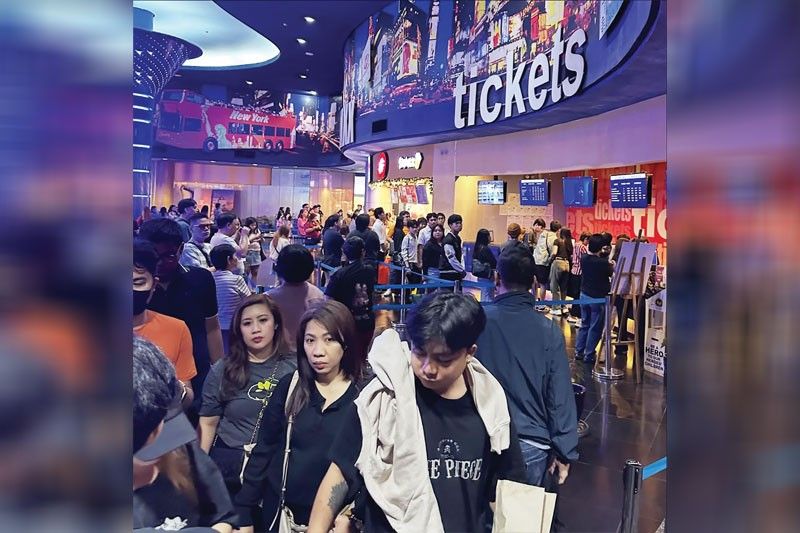
She added that lowering ticket prices would not necessarily increase foot traffic.
“Lowering ticket prices does not address this core issue. Affordability does not automatically translate to urgency, nor does it guarantee increased foot traffic. Without strong, exclusive must-see content — and without a meaningful period where the cinema is the only place to experience a film — the perceived value of theatrical viewing diminishes, regardless of price,” Jose said.
For Jose, talks about cinema being a “luxury” don’t capture the full picture.
“Cinema did not become a ‘luxury’ simply because tickets went up. It became optional because exclusivity went down. Until the industry collectively addresses shortened windows, streaming-first mindsets, and rampant piracy, focusing solely on ticket pricing risks oversimplifying a much deeper, structural challenge facing theatrical exhibition today,” she said.
Despite differing takes on the problem, stakeholders agree that audiences are the lifeblood of the industry.
Award-winning production designer and 2025 MMFF Hall of Famer Ericson Navarro hoped to see viewers return to theaters, especially for local films, this 2026.
“Since most of the agencies tasked to develop the industry are working hard naman like FDCP (Film Development Council of the Philippines), FAP (Film Academy of the Philippines) and MMDA, my wish is getting the audiences back into theaters for both local and international films,” he told The STAR.
“Pero syempre mas sa local films. Kasi kung walang audience, para saan ang paghihirap ng mga filmmakers and developers. The industry will not prosper kung kami-kami lang or tayo-tayo lang makaka-appreciate ng mga ginagawa natin. The audience is the source of revenue and will be the inspiration to create good films,” Navarro said.
He also acknowledged economic realities faced by exhibitors, suggesting government intervention.
“Economics na kasi yan. Mahal na din kasi maintenance ng sinehan, so dapat siguro subsidy ng government ang isang tulong nauubra,” he further told this paper.
MMFF, for its part, assured the public that steps are being taken to address the concerns being raised, while underscoring the filmfest’s relevance.
“The Metro Manila Film Festival (MMFF) is a powerful testament to the Philippines’ rich storytelling heritage and creative spirit, evolving into a vital platform that showcases the best of Filipino filmmaking talent,” MMFF spokesperson Noel Ferrer told this paper.
“With its long history and tradition, it’s become an integral part of the cultural calendar, eagerly anticipated by audiences nationwide, inspiring new creatives and celebrating exceptional storytelling.”
He added that the festival’s commercial performance remains a point of optimism.
“The fact that the highest-grossing Filipino film of the year hails from the MMFF 2025 roster is a testament to the festival’s enduring impact. Rest assured, efforts are underway to address concerns and make these exceptional films more accessible to everyone,” he further said.
Amid all the discussions on cinema as a collective cultural experience rather than a privilege for a few, Ferrer urged continued public support for MMFF.
“Let’s continue to support the MMFF and celebrate Filipino cinema,” he said. “Any additional audience is an appreciated show of love for the Filipino film industry.”





- Latest
- Trending