Subsistence

We are in another one of those pointless debates over the importation of food items.
Last week, the Bureau of Fisheries and Aquatic Resources (BFAR) announced plans to import 25,000 metric tons of fish. The importation is necessary to guarantee adequate supplies during the three months our large fishing corporations are prohibited from harvesting from the sea. This is meant to ensure the repopulation of our fish stocks.
The imports will keep our wet markets supplied with frozen round scad (galunggong), bigeye scad, mackerel, bonito and moonfish from November to January when the fishing ban is in effect. Unless this is done, shortages will cause fish prices to spike.
The fishing ban during the spawning season looks like a necessary policy to avert exhaustion of our fishing grounds. It does not cover the activities of municipal fishermen. More importantly, it does not cover the large fishing fleets from neighboring countries poaching on our waters.
As it always happens, both the three-month fishing ban and the fish importation plan have become the subject of contrived protests and political agitation.
The leftist fisherfolk group Pamalakaya is opposing both the ban and the importation plan. They claim the ban is oppressive and the importation will deny our fishermen income.
The first point about the ban is entirely unscientific. If we do not protect our fish stocks during the spawning season, our supply will be depleted. There is no guarantee that once depleted, the stocks could be replenished. It takes fish to reproduce fish.
The importation is necessary to prevent shortages and price spikes. Those who claim to speak for the small fishermen want to have it all. They want a price windfall for our fishermen even if this means penalizing our own consumers.
We are in another round of demagoguery about why an archipelagic nation would be importing fish. That should have been resolved by scientific evidence long ago.
Our large fishing companies might seem large and powerful. In the larger scheme of things, however, they are actually small and puny. They are no match for the fishing expeditions launched from neighboring countries. These expeditions involve fleets with about 200 ships, including radar and aerial surveillance, floating canning facilities and refrigerated boats capable of blast freezing the catch.
In the open sea, our small flotillas compete with the large trawling fleets that have economies of scale and technology on their side. They can haul, freeze, can and export their fish catch more efficiently.
The reason we have puny flotillas competing with the large fleets is capital scarcity. Had we had the corporate organization and the access to financial markets of our competitors, we could have matched the size of their fleets and the packaging and marketing prowess they have.
For decades, however, we ignored the need to corporatize our fishing industry. Therefore we failed to modernize our methods and our scale. The catch our best flotillas bring in are still sorted and sold in “banyeras” at the Navotas fish port. This is no way to fill the protein needs of a nation of 110 million.
Our municipal fishermen, romanticized in leftist lore, are in an even worse position in terms of efficiency. With their small boats, they could not venture far enough to get to the rich fishing grounds. Their catch, without the benefit of blast freezing, packaging and systematic marketing, could only be sold in their localities.
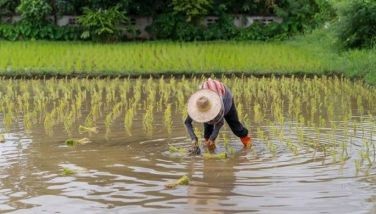
Like our rice farmers, our small fishermen are trapped in subsistence methods. What they could not sell on the same day, they sun dry to conserve the fish. We have not built the logistics system that will enable us to conserve the catch and enable our small fishermen to reach a larger market. Again the cause for this is insufficient investment in cold chains and the other segments of a proper logistics network.
Like our rice farmers, our small fishermen are kept small. They are at the mercy of middlemen who get a bigger share of the value chain. Our municipal fishing “industry,” frozen at the subsistence level, labors with higher production costs per unit of fish catch. The inefficiency contributes to the high food price regime that keeps so many poor and malnourished.
Like our rice farmers, our small fishermen are trapped in an inefficient system that keeps them poor. In the case of our farmers, we broke up the land into inefficient “family size” plots that cannot truly support families. In the case of our fishermen, a backward logistics system prevents them from financing their activity to achieve a more efficient scale. We need to corporatize even municipal fishing as we need to industrialize our farms.
One program initiated during the presidency of Gloria Arroyo was to build “nautical highways” running across the archipelago that would seed investments in our inter-island logistics network. The program was abandoned during the Noynoy Aquino presidency and has been virtually shelved since.
Without a better logistics system, both our fisheries and our farms will be trapped at subsistence production. The inefficiency will keep food prices high. Importation will be resorted to every time shortages loom.
It is time to end our futile romance with smallness. That romanticization of smallness preserves systemic inefficiency. It penalizes our consumers. It reproduces poverty.
Market forces, guided by progressive policies, should provide solutions. Those policies need to be better framed. Only efficient value chains will distribute both investments and income more justly.
But our political discourse remains primitive. Economic nationalism and nativist ideologies shape the backwardness.





- Latest
- Trending