85% of Filipinos distrust China — OCTA survey
MANILA, Philippines — A vast majority of Filipinos distrust China and view it as the nation that poses the greatest threat to the Philippines due to its aggressive actions in the West Philippine Sea, according to a new poll by OCTA Research.
At least 85% of Filipinos distrust China, with only 15% saying the Philippines should extend trust to the country, according to the new OCTA poll conducted July 12 to 17.
This latest figure marks a slight dip from a similar survey conducted by OCTA in March 2024, where 91% of respondents said they distrusted China
The survey released Monday showed distrust toward China was highest in Metro Manila and Luzon, and lowest in Cagayan Valley at 34 percent. Several regions — including MIMAROPA, Bicol, Western Visayas, and Caraga — recorded 100% distrust.
The poll was conducted through face-to-face interviews with 1,200 adult respondents. OCTA says it has a ±3% margin of error at a 95% confidence level.
China as greatest threat. According to OCTA's survey, Filipinos overwhelmingly perceive China as the largest threat to the Philippines above all other nations.
At least 74%, or about four in five respondents, identified China as the country that poses the greatest threat to the Philippines when asked to choose from a list of 10 nations — far higher than the 4% who chose Russia or North Korea. Meanwhile, 10% said no country from the list posed a threat.
The figure is nearly unchanged from last year’s survey conducted March 2024, when 76% of Filipinos also identified China as the country’s greatest threat.
Country perceived to be the greatest threat to the Philippines
| Country | PH | AREA | SOCIOECONOMIC CLASS | |||||
|---|---|---|---|---|---|---|---|---|
| NCR | BL | VIS | MIN | ABC | D | E | ||
| China | 74 | 76 | 78 | 63 | 73 | 73 | 73 | 84 |
| Russia | 4 | 5 | 1 | 10 | 4 | 3 | 4 | 3 |
| North Korea | 4 | 4 | 5 | 3 | 1 | 2 | 4 | 1 |
| United States of America | 2 | 2 | 1 | 1 | 7 | 1 | 2 | 4 |
| Iran | 2 | 1 | 1 | 2 | 3 | 1 | 2 | 1 |
| Pakistan | 1 | 1 | 0 | 1 | 4 | 4 | 1 | 0 |
| Japan | 1 | 1 | 1 | 1 | 0 | 0 | 1 | 0 |
| Saudi Arabia | 1 | 0 | 1 | 1 | 1 | 1 | 1 | 0 |
| India | 0 | 0 | 0 | 1 | 0 | 0 | 0 | 0 |
| Australia | 0 | 0 | 0 | 0 | 0 | 0 | 0 | 0 |
| None | 10 | 8 | 10 | 17 | 7 | 10 | 11 | 6 |
| Refused | 1 | 1 | 2 | 0 | 0 | 5 | 1 | 1 |
What is driving this distrust? OCTA says the "roots of this perception are multifaceted" but that the top concern is China’s "aggressive acts in the West Philippine Sea."
According to the survey, China's escalatory maritime behavior in the Philippines' jurisdictional waters emerged as the primary reason for distrust, cited by 66% of respondents who expressed negative views toward China.
Other concerns included smuggled Chinese products hurting local industries (13%), increased criminal cases involving Chinese nationals (9%), and job competition from Chinese workers (8%).
"Taken together, the survey findings highlight a multi-dimensional distrust toward China," OCTA said in its report.
"Filipinos not only view China as a direct threat to the country’s sovereignty and territorial integrity, but also express concerns about its economic activities and social impact on local industries and communities," it added.
Minimal demographic differences. Filipinos in rural areas reported higher distrust (90 percent) toward China compared to urban residents (82 percent), while distrust remained consistently high across all educational levels and socioeconomic classes.
High support for gov't's WPS efforts. The survey also captured majority support (76%) for the Philippine government's efforts to assert its rights in the West Philippine Sea — the part of the South China Sea that falls within the Philippines' exclusive economic zone. At least 3% disagreed, while 19% are undecided.
Support was highest in Metro Manila (86%) and Mindanao (86%), while Balance Luzon (25%) and the Visayas (21%) had more respondents saying they neither agreed nor disagreed.
"The great majority of Filipinos strongly support defending the country's maritime rights, affirming that the West Philippine Sea is a vital part of the nation's maritime entitlements," the survey report read.
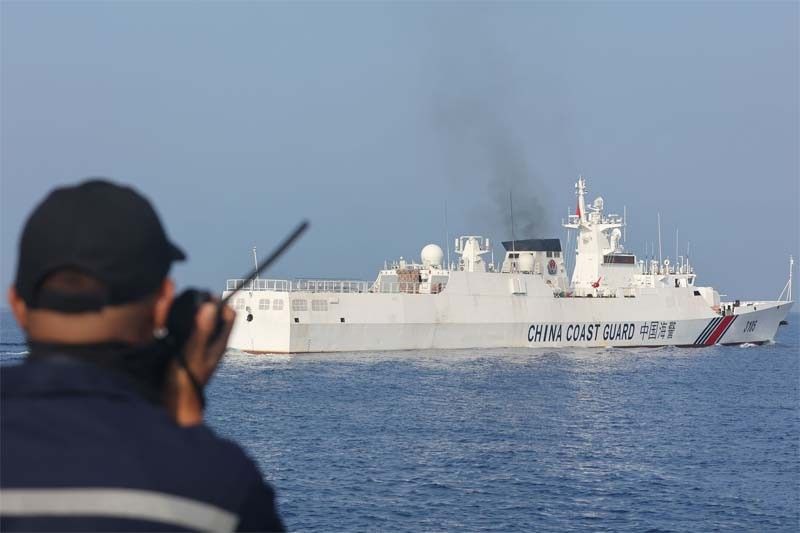
China has sharply escalated its assertiveness in the resource-rich South China Sea throughout 2025, culminating in the most severe confrontation yet on August 11 when two Chinese vessels collided while pursuing a Philippine Coast Guard ship near Scarborough Shoal.
The incident saw a Chinese Navy destroyer ram into its own coast guard cutter, leaving the smaller vessel badly damaged and "unseaworthy" after both ships attempted to sandwich the Philippine Coast Guard's patrol boat.
China at the start of the year also regularly deployed the China Coast Guard's “monster ship” in the waters off Zambales, prompting Manila to lodge a diplomatic protest with Beijing to demand its withdrawal.


- Latest
- Trending