US slaps higher 20% tariff on Philippine goods
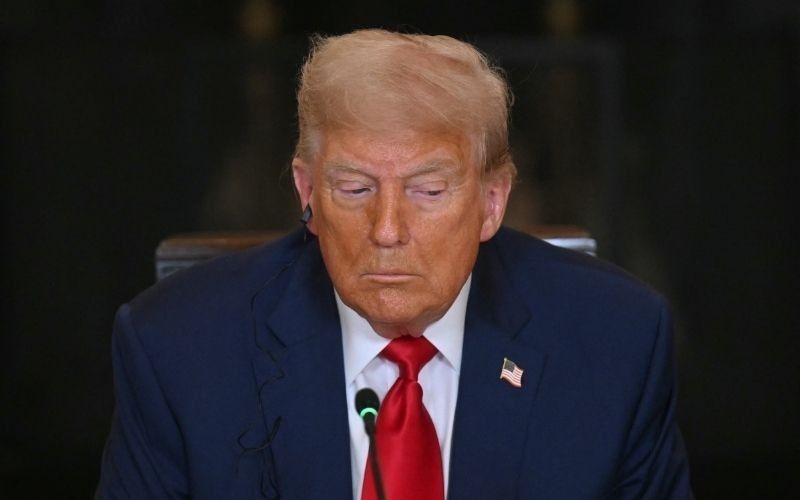
WASHINGTON – US President Donald Trump released a fresh set of letters to trading partners on Wednesday, setting out tariff rates for six countries as Washington pushes to bring about a flurry of trade deals officials have promised.
The letters, addressed to leaders of economies including the Philippines, Brunei, Algeria, Libya and Iraq, spelled out duties ranging from 20 percent to 30 percent.
Citing what he described as Washington’s “trade disparity” with Manila, Trump’s decision to slap a 20 percent tariff on Philippine exports to the US prompted the Marcos administration to pursue negotiations aimed at forging a bilateral economic deal.
In a letter to President Marcos, Trump said the US has to move away from “long-term and very persistent trade deficits engendered by the Philippines’ tariff and non-tariff policies and trade barriers.” He argued that the relationship between the Philippines and the US has been “far from reciprocal.”
“Starting on August 1, 2025, we will charge the Philippines a tariff of only 20 percent on any and all Philippine products sent to the United States, separate from all sectoral tariffs. Goods transshipped to evade a higher tariff will be subject to that higher tariff,” Trump said in the letter dated July 9.
The new rate is higher than the 17 percent tariff that was supposed to be imposed on Philippine merchandise exports when Trump announced the policy last April. It was adjusted upwards despite earlier efforts by Philippine trade officials to meet with their US counterparts to relay the concerns of sectors to be affected by the tariff regime.
Similar to Trump’s first batch of documents published Monday, the tariff levels were not too far from those originally threatened in April, although some partners received notably lower rates this time.
While the president in April imposed a 10 percent levy on almost all trading partners, he unveiled – and then held off on – higher rates for dozens of economies.
The deadline for these steeper levels to take effect was meant to be Wednesday, before Trump postponed it further to Aug. 1.
Instead, countries who face these threats of elevated duties began receiving letters spelling out US tariff rates on their products.
Trump’s latest messages were near-identical to those published earlier in the week and justified the tariffs as a response to trade ties that have been “unfortunately, far from reciprocal.”
They urged countries to manufacture products in the United States instead in order to avoid duties, while threatening further escalation if leaders retaliated to the levies.
Apart from tariffs targeting goods from different countries, Trump has also rolled out sector-specific duties on steel, aluminum and autos since returning to the White House in January.
On Tuesday, Trump said tariffs were incoming on copper and pharmaceuticals as well.
Philippines delegation flies to US for negotiations
Special Assistant to the President for Investment and Economic Affairs Frederick Go expressed concern over the adjusted tariff, but noted that the rate remains the second lowest among all reciprocal tariffs imposed by the US on the region. The lowest rate was the 10 percent slapped on Singapore.
“But more importantly than all of these, we remain committed to continuing negotiations with the United States in good faith to pursue a bilateral comprehensive economic agreement or if possible, an FTA (free trade agreement),” Go said in a press briefing yesterday at Malacañang.
Go revealed that he, Trade Secretary Ma. Cristina Roque and Trade Undersecretaries Perry Rodolfo and Allan Gepty would be flying to the US next week to meet with American trade representatives, although he clarified that the trip has been scheduled even before the announcement of the adjusted rate.
For his part, Philippine Ambassador to the US Jose Manuel Romualdez said yesterday the “Philippines is still planning to negotiate down” the tariff set on Philippine exports raised from 17 percent to 2 percent.
Although countries can negotiate before the Aug. 1 deadline, Trump insisted there will be no extensions for the countries that receive letters.
Asked what went wrong in the previous negotiations with the US, Go replied: “I think there are some posturing here, I don’t think I can comment further. But we will go there next week and we will try to bring this down if we can.”
‘Major threat’
Trump, who claimed that the tariff policy would support US industries and “make America wealthy again” told Marcos that the 20 percent tariff is “far less than what is needed to eliminate the trade deficit disparity Washington has with Manila.
“As you are aware, there will be no tariff if the Philippines, or companies within your country, decide to build or manufacture product within the United States and in fact, we will do everything possible to get approvals quickly, professionally and routinely – in other words, in a matter of weeks,” the American leader said.
Should the Philippines decide to increase tariffs on US products, whatever the number it chooses to raise them by would be added to the 20 percent, Trump warned.



- Latest
- Trending