DOH cautions public on dengue amid El Niño
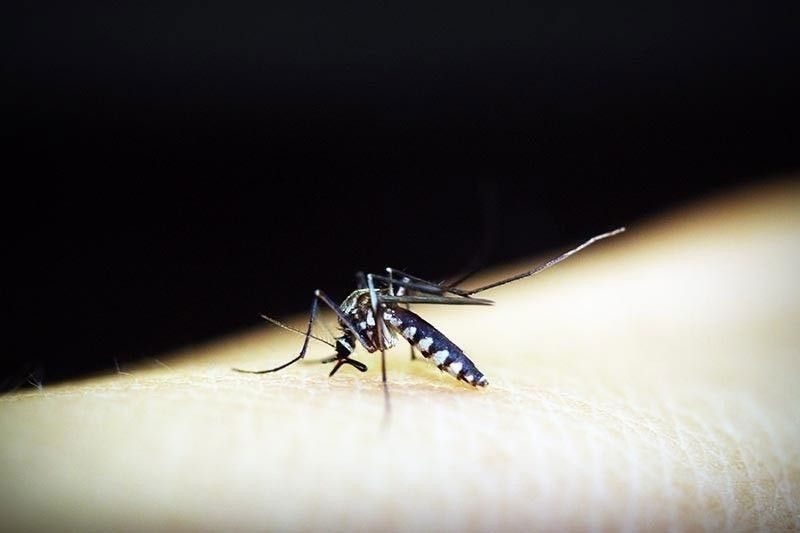
MANILA, Philippines — The Department of Health (DOH) has cautioned the public against contracting vector-borne diseases such as dengue after the Philippine Atmospheric, Geophysical and Astronomical Services Administration (PAGASA) declared the onset of the El Niño phenomenon in the country.
Vector-borne diseases refer to human illnesses caused by parasites, viruses and bacteria that are transmitted by vectors, or living organisms that can transmit infectious pathogens between humans or from animals to humans, according to the World Health Organization. Many of these vectors are bloodsucking insects, such as mosquitoes, ticks and fleas.
“Weather affects health. This is a dry El Niño. That means we will handle diseases linked with drought,” Health Secretary Ted Herbosa said at a press briefing on July 10.
Herbosa added that apart from vector-borne illnesses, people can also get sick with water-borne diseases.
“This happens when old and worn water pipes are turned off, then brownish water gets in, especially when the pipe is located near the toilet. So we remind people to boil their water, especially if they have a different color. That is what happens during El Niño,” he said.
“During El Niño, the tendency of the people is to store water, and water containers are breeding places of mosquitoes. That is the (simplest) explanation (for dengue),” DOH spokesman Undersecretary Eric Tayag said.
Tayag noted that diseases such as cholera and diarrhea are also common during this dry spell episode in the country.
“We hope that there will be no cholera incidents because people tend to use or store water that is not safe or contaminated. We will also monitor this,” he said.
To prevent the occurrence of dengue, in particular, the DOH has been reminding the public on the “5S” strategy: search and destroy mosquito breeding sites; uphold self-protection, like using insect repellents; seek early consultation at the nearest health care facility; support fogging, spraying and misting in hot spot areas and sustain hydration.




- Latest
- Trending