Vaccine incentives, affordable COVID tests urged as cases shoot up
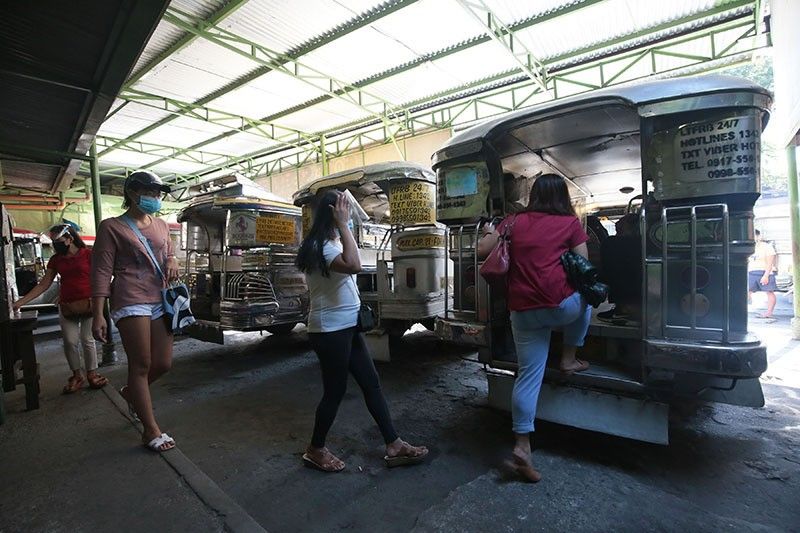
MANILA, Philippines — Progressive groups urged the Duterte administration to provide fuel and transportation subsidies as incentives to the public to boost the country's COVID-19 vaccination rate and soften the impact of the oil price hike Tuesday.
This comes as gasoline, kerosene, and diesel prices rose by as much as P2.40 per liter effective Tuesday, January 4, with coronavirus cases still rising in Metro Manila.
In a statement issued Wednesday, Akbayan party-list said that the public needs a "lifeline" to help them start the new year healthy and with fewer economic worries.
"The government should seriously explore transportation and fuel incentives to ease the suffering of so many who have only recently begun to rebuild their lives and motivate more people to get their vaccines," Perci Cendaña, the party-list's first nomineed, said in mixed Filipino and English.
"Instead of banning people from going outside, they should get more motivation to get vaccinated. Our policies should effect positive behavioral change, not simply threaten people with restrictions," Cendaña said.
The Department of Health on Wednesday reported a positivity rate of 31.7% out of 44,643 tests, far beyond the 5% set by the World Health Organization for opening economies and marking the country’s worst result since last November.
Akbayan said that is has already asked the national government to revive its Pantawid Pasada Program to provide fuel subsidy to the public amid the non-stop fuel price increases.
Pantawid Pasada is a subsidy program first implemented in 2011 as part of a contingency plan to provide targeted relief to the public transport sector to cushion the impact of high fuel prices on the riding and consuming public.
Service contracting and more public transportation options
Earlier on in the coronavirus-induced quarantines, transport advocates lobbied for the government to introduce service contracting to address the reduced vehicle capacity mandated under the general community quarantine at the time.
Under service contracts, public utility jeepneys and buses will be paid a subsidy for every kilometer they run on required 18-hour operations daily, among other performance standards specified under these contracts.
In November, Sen. Risa Hontiveros, who previously represented Akbayan at the House, also called on the Department of Transportation to allow more jeepneys to ply their routes to supplement public transportation for workers and avoid further transmission in cramped vehicles.
With service contracting now implemented though, drivers and operators participating in the program say they don't feel its effects as subsidy funds are often delivered late, among other logistical problems.
READ: LTFRB aid and subsidies not reaching transport workers, jeepney drivers say
Testing relief urged
In a separate statement, the Coalition for People's Right to Health slammed what it said was the worsening "out-of-pocket spending" for Filipinos and reiterated its longstanding call for free and accessible mass testing and a focus on community-based interventions.
Pointing out that December saw a mere 20,000-30,000 tests daily, CPRH also questioned the national government's pronounced focus on "a vaccination campaign that has not even met its targets" instead of case detection.
"This only shows a testing system based on demand and symptoms instead of active surveillance. However, price continues to be an issue for many who have become apprehensive towards the idea of testing, which has still not been addressed," it said.
"Local authorities have put so much premium on vaccination over other interventions to the point that it has now resorted to locking down the unvaccinated and allowing essential services like testing to be paid out-of-pocket."
CPRH also called for "a pricing methodology that acknowledges the effect of the economic crisis on patients, rather than enabling laboratories to charge an 'allowable markup.'"
"Through greater health benefits, national or local subsidies, incentivization and direct investment in provincial laboratories, access to testing can be vastly improved if such an integral health service is seen as the people's right," it said.
"The evolution of variants necessitates a health response that can equally adapt to concrete conditions. This entails that testing be made as accessible as possible, removing obstacles of proximity and cost, as part of a more robust disease surveillance system."
Dr. RJ Naguit, Akbayan Youth chairperson and Akbayan's second nominee, said that the government should improve the consolidation of data of antigen-positive cases and complement the public’s effort in self-testing with the appropriate relief and other support services for the individuals affected by COVID-19.
"In the setting where there are people turning positive in self-administered antigen tests, rampant community transmission, and inaccessible RT-PCR, the Department of Health and local government units must develop a way for people to self-report those who tested positive in antigen tests to improve contact tracing and provision of support," Naguit said.
“It's already the people who are finding ways to get themselves tested at this point. This should hopefully be maximized so our delivery of services can be more efficient and effective. This is on top of our calls for free mass testing, ayuda, and increased capacity of our health system."




- Latest
- Trending