


Experts call for better West Philippine Sea marine and coastal protection
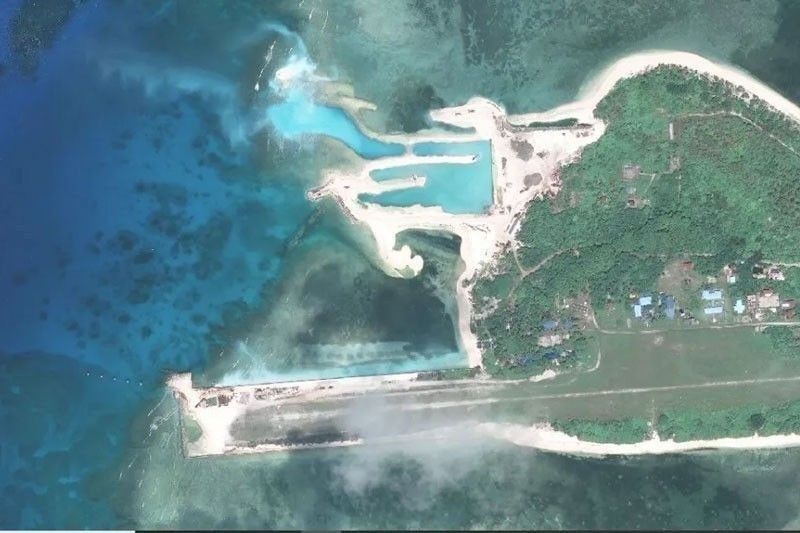
MANILA, Philippines — Environmental experts have called for a more comprehensive approach in dealing with issues related to claims by other countries at the West Philippine Sea, while they emphasized the need to boost coastal and marine environmental protection in the area.
UP Marine Science Institute director Laura David and Environment Undersecretary Analiza Rebuelta-Teh underscored the need for more government support for the protection of areas within the West Philippine Sea during a briefing initiated by the Presidential Communication Operations Office-Global Media Affairs.
“Managing the marine environment of the West Philippine Sea cannot be based primarily on the overlapping territorial and maritime claims to which the aquatic organisms pay no attention,” Teh said during the forum.
“Beyond claims of sovereignty, territory and maritime entitlements, the West Philippine Sea faces serious sustainability challenges, particularly from the threats of climate and ocean change,” she added.
“Undeniably, the West Philippine Sea narrative is not just about contestation. The Philippines and neighboring countries should retrain the West Philippine Sea narrative from one of contestation to consensus building and cooperation towards protection of the marine environment,” Teh added.
In stressing the need to protect the West Philippine Sea from marine destruction, Teh cited the importance of addressing the threats of ocean and climate change.
Teh, who is undersecretary for climate change and mining concerns, sought to ensure sustainable development of the marine ecosystem and resources in the West Philippine Sea.
She cited a report of the Intergovernmental Panel on Climate Change (IPCC), which said that the ocean is a carbon sink that absorbs 30 percent of the anthropogenic carbon dioxide emitted into the atmosphere. The IPCC has highlighted in its fifth assessment report that climate change negatively impacts ocean health in terms of ocean warming, acidification, sea level rise and deoxygenation – putting marine ecosystems, marine biodiversity and fisheries at risk.
“Under a business-as-usual scenario, one research predicted that the ocean species in the West Philippine Sea will decrease by up to 59 percent by 2045 due to climate change,” she said.
Teh also batted for the management of the environmental resources within the West Philippine Sea, which is based around the connectivity of the entire marine ecosystem, from the reefs to the sea grasses on which much marine life depend.
She also pushed for strengthening cooperation for marine environmental protection.
Collaboration with China
Amid the overlapping claims with China, Teh revealed that the Philippines is working with China under the bilateral consultative mechanism for marine environmental protection and marine scientific research.
“And basically, the engagement is on how we can share experts or how we can share capacity development programs,” she said, but that the two countries have yet to commence the conduct of the actual joint marine scientific research until the two parties reach the “proper protocol because the sensitive or crucial issue there is the sharing of information.”
“But basically, we are both supporting collaboration in the sphere of marine environmental protection,” Teh said.
Earlier, Teh said the areas for collaboration should aim to establish policies to manage more productive coastal and marine environment for the benefit of all neighboring countries, identify areas with different priorities for sustainable use and manage and regulate destructive and pollutive activities.
The agreement should also be able to establish areas as havens for migratory species locally, and nationally important marines species, she added.
For her part, David explained that there is a 15-year plan dubbed as National Academic Research Fleet or NAR Fleet, where the concerned sectors will “make use of our resources to also conduct research that will benefit not just the Philippines but the entire region.”
The entire development plan is part of the contribution of the Philippines to the UNESCO Intergovernmental Oceanographic Commission’s Decade of the Ocean which started this year, 2021, and will continue until 2030. The research will be shared in various universities in the Philippines involved with marine sciences.
David cited the importance of the plan to specifically look at the West Philippine Sea and the Philippine Rise, and to do long-term oceanic monitoring all over the Philippines.
“There are a lot of opportunities surrounding the Philippines… So, expertise on marine engineering, biologists, experts in law of the sea, and so on. So, there are a lot of things that we can develop internally that will actually benefit the Filipino people as well as the global public,” David said.


- Latest
- Trending


