‘Endo’ honors and interrogates the madiskarte spirit
Not every stage production leaves you inspired. Some leave you tired.
Not bored, not unmoved in the traditional sense, but the kind of tired that settles into your body after sitting with stories that feel too familiar, too unresolved and perhaps too close to the reality many continue to live through. Walking out of the theater, that was the feeling that stayed with me the most: exhaustion — and maybe that is exactly the point.
From screen to stage
The story, originally told through a 2007 movie of the same title, “Endo,” is rewritten for the stage with the same urgency by playwright Liza Magtoto and reimagined with a more modern take that still echoes the struggles of uncertainty under the direction of Melvin Lee.
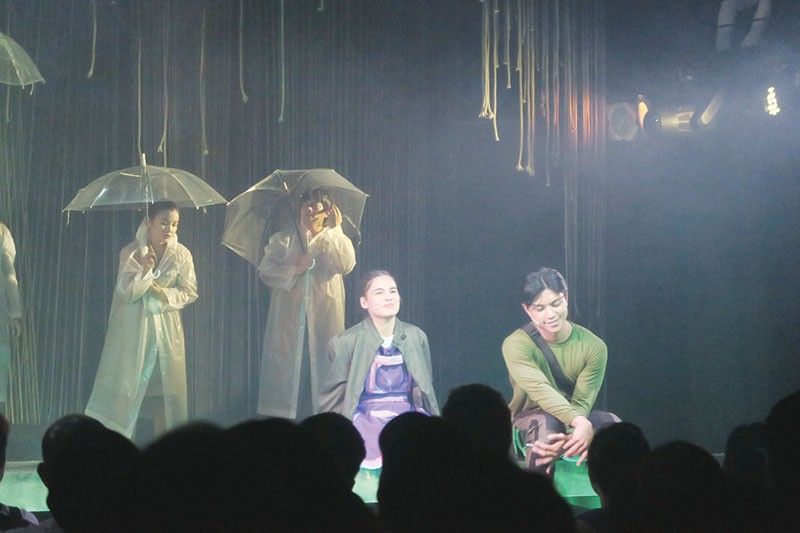
For nearly two hours, the audience watches the characters navigate uncertainty in every sense of the word. They work, they hustle, they dream, they negotiate, they endure, all while the stage they stand on literally shifts beneath their feet. It tilts and wobbles, never allowing them — or the audience — the comfort of equilibrium. Each step is a visible act of effort, and that seems to be where the production finds its strongest resonance with the story being told. It is a simple but potent element of visual storytelling.
Paired with the compelling and riveting performances of the actors who played the roles of the main characters named Leo (Royce Cabrera, alternated by Esteban Mara), Tanya (Jasmine Curtis-Smith, alternated by Rissey Reyes-Robinson) and Candy (Iana Bernardez, alternated by Kate Alejandrino-Juan), each step they took caused the platform to lean to one side. Every move, every decision, every shift in weight shows how workers trapped in the cycle of “endo,” or the system of contractual employment continues to keep stability out of reach.
When you are living contract to contract, role to role, paycheck to paycheck, there is no stable center to return to. This physical imbalance becomes the production’s most effective metaphor for the instability of its characters’ intertwined stories shaped by their everyday struggles and defined by open-ended dreams. This shifting platform becomes more than a design choice — it becomes the emotional architecture of the show.
It mirrors the lives of workers asked to keep moving, adapting and making do in systems that rarely offer solid ground, which is powerful reflection of what it means to be endlessly madiskarte — resourceful, strategic, always finding a way to make things work no matter the odds.
The cost of being ‘madiskarte’
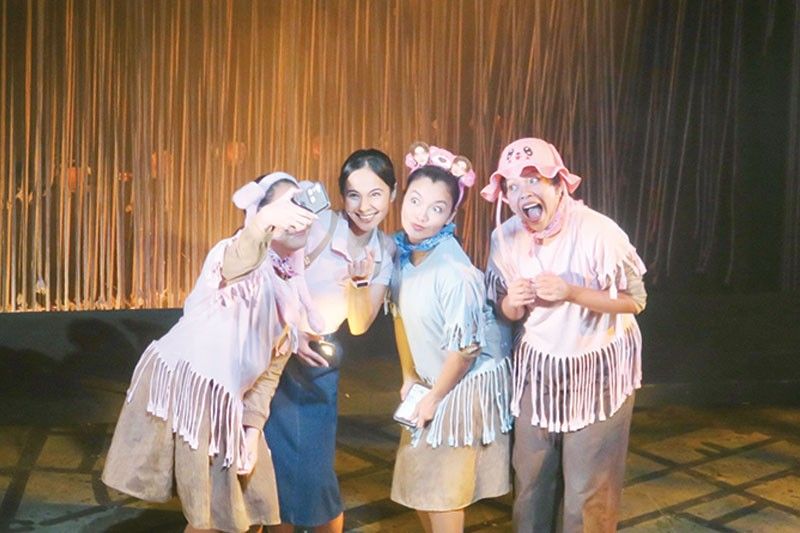
In the Filipino context, diskarte is often worn like a badge of honor. It celebrates ingenuity, the everyday brilliance of finding ways to keep going. It means knowing how to survive. But this production seems interested not only in honoring that spirit but also in interrogating it.
What does it mean to constantly be asked to be madiskarte?
At what point does resilience become a demand rather than a virtue?
The production exposes the exhaustion embedded in that praise. When survival depends entirely on one’s ability to constantly adapt, to stay alert, to keep compensating for an unstable system, then resilience stops being empowering and starts becoming a burden.
The actors as the anchor
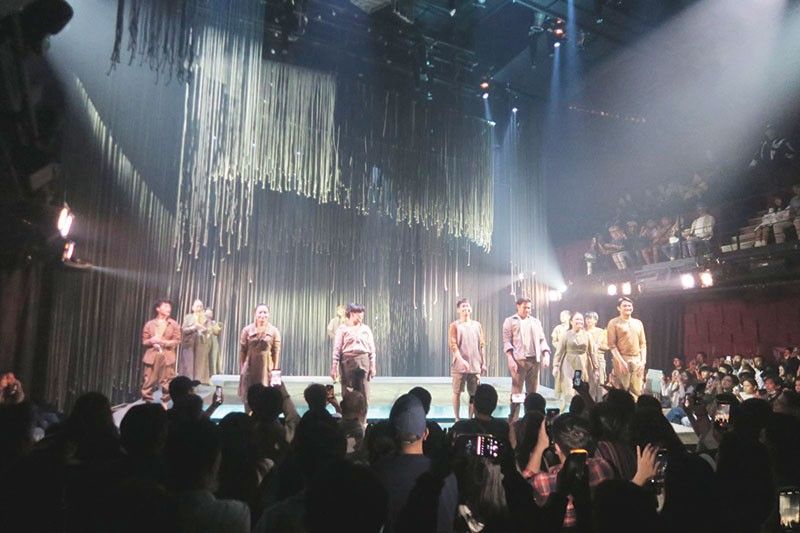
The actors carry the show with a kind of precision and control that makes the instability of the stage feel real, rather than theatrical.
Performing on a moving platform is physically demanding on its own, but what stands out most is how they sustain the emotional stakes while navigating that instability. Each movement feels deliberate. Each stumble, recalibration and recovery adds weight to the material.
Even when the dialogue settles into familiar rhythms, the cast keeps the tension alive. They carry not just their characters, but the metaphor itself. The instability of the set never feels like a gimmick because the performers make it feel lived in. The actors remain as the show’s strongest anchors, and their effort becomes part of the storytelling.
There is an honesty in the way the actors inhabit exhaustion as well — not the dramatic kind, but the quieter, more familiar fatigue of everyday survival. They capture the weariness of people who continue to dream despite systems that seem built to keep those dreams suspended.
Watching without escape
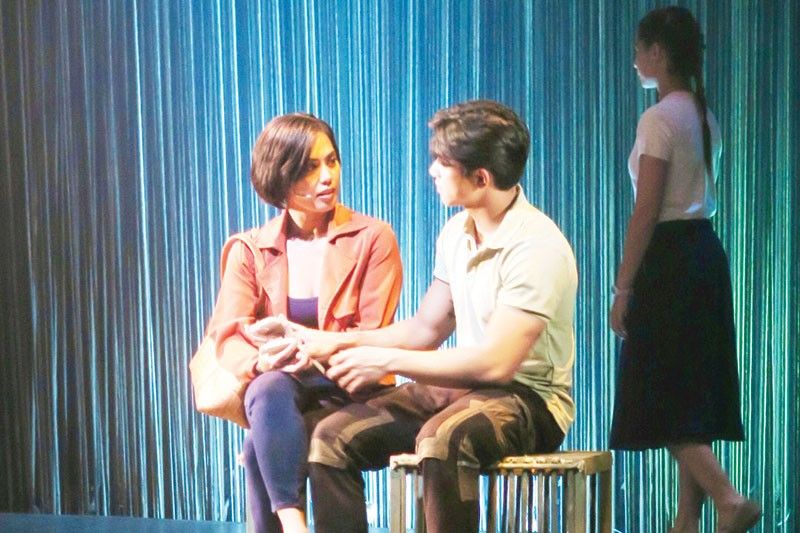
The show does not hand the audience neat resolutions or triumphant endings. Instead, it lingers in uncertainty long enough for viewers to locate their own meanings within it. The stories remain open-ended, and the dreams on stage are allowed to stay unfinished.
It provides a deliberately unstable space where questions matter more than conclusions: What are we still working toward? What do we continue to endure? What kind of future are we still trying to imagine for ourselves?
These are uncomfortable questions, but they are also necessary ones.
There are moments when the repetition of hardship creates emotional distance rather than immersion. The audience is not swept away so much as asked to stay present — to watch lives in motion, never balanced, never secure. It is not always an emotionally stirring experience. At times, it simply lingers with a quiet heaviness.
But at one point, as the platform sharply tilts mid-scene, the actors don’t break — they adjust mid-line, mid-emotion, as if instability were second nature. It’s a small moment, but it quietly captures everything the show is trying to say.
Why this story still matters
Not every show is meant to send audiences home uplifted. Some are meant to hold up a mirror and ask you to sit a little longer with what you’ve just witnessed.
In a landscape where stories are often made easier to consume, there is something quietly powerful about a production that refuses to do so. “Endo” is one of those shows. It doesn’t offer comfort — it demands attention, and perhaps that is where its impact lies.
This is not a show for those seeking light entertainment. But for audiences willing to sit with discomfort and recognize stories that feel close to home, “Endo” offers something more lasting than easy enjoyment.
Stories like this matter precisely because they continue to exhaust us — because they remain true, and because the work, on stage and beyond it, is still not done.
And maybe being tired for the right reasons is reason enough to see it.
Catch “Endo” on stage at the PETA Theater Center in Quezon City until May 10. Buy your Tickets at Ticket2me.net.






- Latest
- Trending