How Mike de Leon’s films created a niche in the industry

MANILA, Philippines — “Today, I lost a dear friend.”
That was veteran actress-producer Charo Santos-Concio, whose very first mentor in the art and discipline of filmmaking was Mike de Leon, when she did “Itim” back in 1976.
“From him, I learned everything: the rigor of preparing a shot list, the mounting of scenes, the rhythm of narrative, the editing, the discipline of sound, music and mixing back when a motion picture was shot on actual film.”
An eminent filmmaker of the so-called Second Golden Age of Philippine cinema, independent film director Miguel Pamintuan de Leon had years of going into a recluse, where he didn’t make any film.
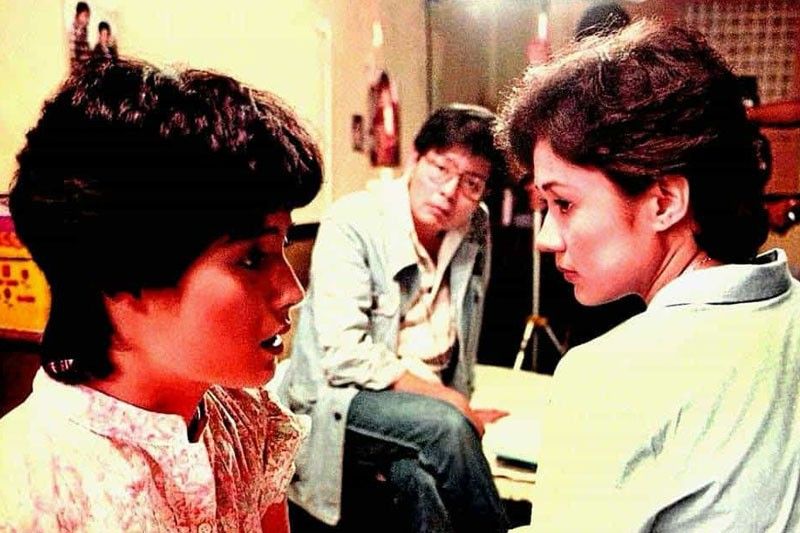
“He was a perfectionist, a genius and a true master of cinema,” added Charo. “Yet, beyond his brilliance, Mike was my friend. He gave me trust, guidance and unforgettable moments of collaboration.”
“Through the years, he was unfailingly present at milestones and even in the most challenging seasons of my life. In my darkest hours, he was there, quiet, steady, kind. Ours was a bond that felt like soulmates in artistry, a connection built on respect and admiration.”
Known as Mike de Leon to many, he was distinguished as a pillar of Philippine cinema for marginalized themes within Philippine culture, mostly depicted in the Martial Law era under the presidency of Ferdinand Marcos Sr.
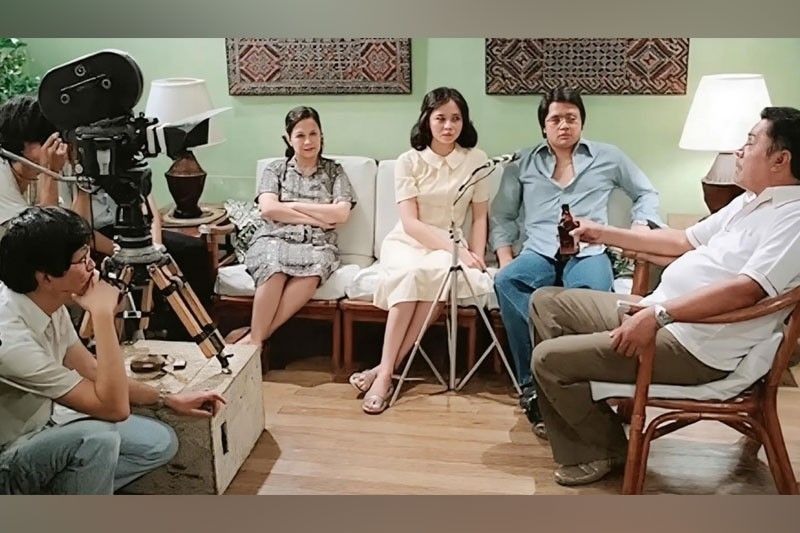
“He gave us films that were not merely watched, but deeply felt, etched into who we are. ‘Kisapmata,’ ‘Batch ’81,’ ‘Kung Mangarap Ka’t Magising,’ ‘Kakabakaba Ka Ba’ and ‘Itim’ were never just films; they were mirrors, unflinching in their truth, forcing us to confront ourselves and the world we live in.”
Mike was considered an auteur whose award-winning films, box-office success or not, created a niche in Philippine movie history. He gave the public other films, ‘Sister Stella L’ (1984) and ‘Bayaning Third World’ (2000).
During the Marcos regime, Mike had a brief detention and interrogation inside a military camp.
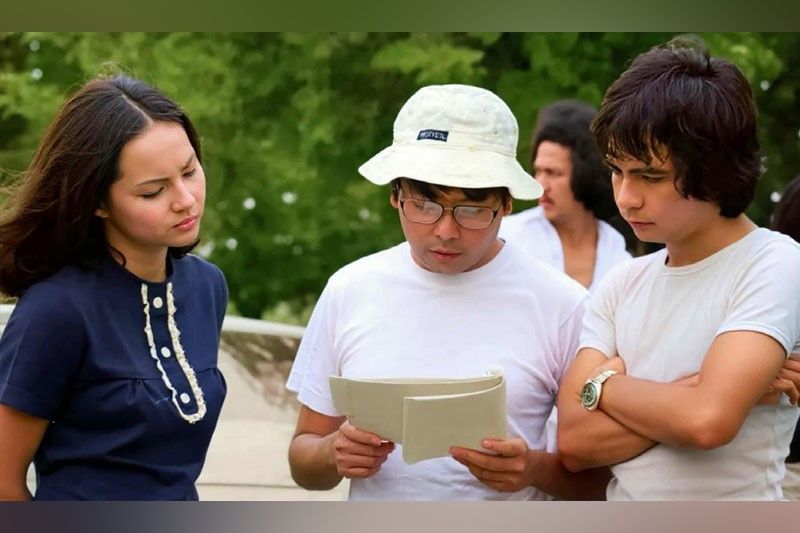
Mike came out of his cocoon and in his retirement, even directed his last film, “Citizen Jake,” which starred broadcast journalist Atom Araullo. The last film was made available for free streaming ahead of the high-stakes 2022 presidential elections.
Mike passed on this Thursday, Aug. 28. at the age of 78. His family confirmed his death to French film distributor, Carlotta Films, who released a Blu-ray box set of Mike’s films. At that time of his death, he was awaiting the completion of the 4K restoration for his 1984 film “Sister Stella L” at the L’Immagine Ritrovata in Bologna, Italy, according to a University of the Philippines Film Institute (UPFI) Film Center post.
“I just caught wind that Mike de Leon passed,” wrote Audie Gemora in his Facebook account. “Not many know that he was my film teacher in DLSU Com Arts. I did my OJT doing production work for his award-winning film, ‘Batch 81.’”
“During the shoot of the talent show sequence (done in the San Agustin gym), he instructed me to go up the stage and play the emcee. If you blink, you’ll miss this shot. But for an impressionable young theater actor, it was an unforgettable experience. Mike is one of Philippine cinema’s greats. He will live on through his masterworks,” added he.
Veteran writer Pocholo Concepcion asked Mike when the cinema icon was still around: “Are you still motivated to do another movie? Why or why not?”
The director replied, “I’m still thinking hard about making another movie. First, there is my health and age to consider. And then, of course, the kind of film I would be interested to spend my time and resources on.”
“A seismic shift has happened inside my head with the return of the Marcos family to power. I still can’t make sense of this, it’s too surreal for words. Perhaps, I never will. Again, I go back to something I wrote in the book about the film, Aliwan Paradise.
“Aliwan Paradise is set in a speculative limbo — what the country might transform into in its insatiable addiction to entertainment. The people are desperate for the ultimate entertainer as if that achievement would validate its existence as a thriving nation rather than a failed state.”
In 2019, Mike released a short film, “Kangkungan,” his critique on the administration of former Pres. Rodrigo Duterte.
The director also released a book, Mike de Leon’s Last Look Back, which he referred to as a “photographic memoir” of his life in cinema. The two-volume memoir was his autobiography.
“One reason I’m writing this book is to keep the memory of the LVN and the studio era alive,” said Mike when the book was released in 2022. “Sadly, so many films had been lost.”
“I grew up in the movies and it shaped my life and way of thinking. It also ruined any semblance of real family we may have had. But like dog breeding, which I used to engage in with a passion, I trace my pedigree as a filmmaker to my grandmother’s and father’s time.
“That is a privilege that no other filmmaker working in the industry today can say. Maybe that’s why I’m still alive. As it is said in my book, my biological life, I owe it to my parents, but my life in cinema, I owe it to LVN.”
Mike’s family ran the largest and longest living film studio in the country, LVN Pictures (1936 to 2005). He is the third-generation heir to the production company.
Mike was born on March 24, 1947 to film producer Manuel de Leon and Imelda Pamintuan. Through the lineage of his father, Mike was the grandson of LVN Studios matriarch Doña Narcisa “Sisang “de Leon.
Mike received his bachelor’s degree from the Ateneo de Manila University (ADMU) before taking up art history at the University of Heidelberg in Germany.
At the start of his directorial career, Mike directed two short films, “Sa Bisperas” (1972) and “Monologo” (1975).
Mike served as cinematographer to Lino Brocka’s “Maynila: Sa Kuko ng Liwanag” (1975). The following year, Charo Santos made her breakout acting performance in Mike’s first directorial job, “Itim” (1976), where he was also the cinematographer, editor and writer.
Mike directed the coming-of-age romantic drama, “Kung Mangarap Ka’t Magising,” starring Christopher de Leon and Hilda Koronel. The film was dedicated to Doña Sisang, who marked her centennial that year (1977).
Mike made his Cannes debut in 1982 when he premiered two films at the Director’s Fortnight — “Kisapmata” and “Batch 81” — that same year, becoming only the second filmmaker to do so at that time.
“In this situation, what can one film do?” Mike wrote in the intro to “Batch 81.”
“Nothing much. In fact, very little.”
The multi-awarded director was active until 2000 when he made “Bayaning Third World.” It took him 18 years to direct a follow-up, what would be his last full-length film, “Citizen Jake.”
According to the Film Development Council of the Philippines (FDCP), direk Mike’s films shone a light on the beauty and pain of the downtrodden and repressed, bringing their stories to the cultural forefront.
FDCP chair Joey Reyes said, “His life was dedicated to film. His consistent imagination to explore the language of cinema shaped what we understand of Philippine filmmaking today.”



- Latest
- Trending