

To boost ASEAN security cooperation: 5 new initiatives
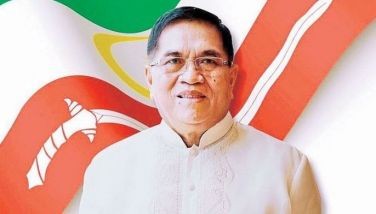
CEBU, Philippines — At least five new initiatives were adopted during the 20th ASEAN Defense Ministers’ Meeting (ADMM) and the 13th ADMM-Plus in Cebu to strengthen regional security cooperation and enhance collective resilience against emerging threats.
Speaking at a press conference following the meetings, Defense Secretary Gilberto Teodoro said the initiatives include promoting exchanges among younger defense and military leaders, strengthening individual and collective resilience against chemical, biological and radiological threats, and enhancing synergy between the ADMM-Plus and the ASEAN Regional Forum.
The initiatives also include developing a comprehensive guide to ADMM and ADMM-Plus practices and protocols, as well as the Philippines’ plan to co-host with India the Maritime Security Resilience Amidst Emerging Technologies Conference in 2027.
Teodoro said the meetings also adopted the Joint Statement Commemorating the 50th Anniversary of the Treaty of Amity and Cooperation in Southeast Asia and the Manila Joint Declaration on the 20th Anniversary of the ADMM, titled “Navigating Our Future, Together.”
He said the documents reaffirmed member states’ shared principles and commitment to strengthening cooperation and solidarity.
During the 13th ADMM-Plus, defense ministers and dialogue partners exchanged views on regional and international security concerns. The meeting also welcomed the incoming co-chairs of the Experts’ Working Groups for the 2027-2030 cycle.
The body likewise adopted the Joint Statement of the ADMM-Plus on Youth, Peace, and Security, underscoring the role of junior military officers and younger civilian defense personnel in shaping the region’s future.
Teodoro also chaired the ASEAN+1 Defense Ministers’ Informal Meetings with United States Secretary of War Pete Hegseth and Japanese Defense Minister Shinjiro Koizumi.
On the sidelines of the meetings, Teodoro held bilateral discussions with his counterparts from Brunei, Malaysia, Singapore, the United States, Japan, South Korea, Australia, Vietnam and India.
He also convened a SQUAD ministerial meeting involving the Philippines, Australia, Japan and the United States, during which the four countries reaffirmed their commitment to strengthening bilateral and quadrilateral cooperation toward a safer and more prosperous Indo-Pacific.
Asked about the Philippines’ achievements as chair of the ADMM-Plus, particularly in maritime security, Teodoro said progress within ASEAN should be viewed as a continuing process rather than measured by immediate results.
He cited joint cooperative activities and exercises involving ASEAN and its dialogue partners as significant developments in strengthening regional defense cooperation.
Teodoro said defense ministers had recognized that security threats were becoming increasingly unpredictable and were no longer limited to traditional military and defense concerns.
He said ASEAN must become more proactive and inclusive in addressing emerging security challenges while taking into account the logistical limitations of individual defense establishments.
The defense chief also highlighted the importance of preparing emerging defense leaders to respond more quickly and effectively to changing security conditions.
China's Criticism
Meanwhile, Teodoro dismissed China's claim that the Philippines had seriously undermined the spirit of ASEAN and China's legitimate rights as a dialogue partner.
China said on Thursday, October 29, that it had sent only its Manila-based defense attaché to a top regional defense meeting in Cebu because a “self-serving” Philippine politician had abused the country's chairmanship to block its participation.
Stressing that the ASEAN Defense Ministers’ Meeting-Plus (ADMM-Plus) operates on ASEAN's principle of “consensus through consultation,” the Chinese defense ministry said the Philippines' actions violated that rule and undermined Beijing's “legitimate rights” as a member of the mechanism.
“As the rotating chair of this year’s ADMM-Plus, the Philippine side has allowed a certain self-serving politician to act recklessly and abuse its chairmanship to put up obstacles to China’s participation,” ministry spokesperson Zhang Xiaogang told a press conference in Beijing.
Zhang did not name the politician or describe the alleged obstacles.
Teodoro, however, said China had no authority to characterize ASEAN's position, stressing that only the bloc's member states could determine its processes and positions.
“I do not believe our ASEAN member countries feel that way. If not, they would have let me know. So it is China’s position, it is not ASEAN’s position,” Teodoro said during a press briefing in Cebu.
He said China's representative had been given the opportunity to express Beijing's views on regional and international security, including maritime security issues, during the meeting.
Teodoro added that the position articulated by the Chinese representative was not significantly different from what Chinese officials had previously stated.
He said ASEAN had allowed a robust exchange of views, emphasizing that dialogue partners must operate within the rules and limitations established by the regional grouping.
“No country has the right to characterize ASEAN processes except ASEAN member countries. They are dialogue partners,” Teodoro said.
Teodoro also defended the Philippines' decision to strengthen its defense capabilities and partnerships with treaty allies and like-minded countries, saying these were fundamental rights of a sovereign state.
Responding to concerns that the Philippines' growing external defense cooperation could undermine ASEAN unity, he said member states would have communicated their objections if they had concerns about Manila's actions.
He also cited the 2016 arbitral award on the South China Sea, which upheld key Philippine positions on maritime entitlements under international law.
Teodoro said the Philippines had demonstrated its commitment to peacefully settling disputes through legal and diplomatic processes while maintaining that it must respond to China's maritime claims and actions.
“If other ASEAN countries were subjected to the same kind of action in the maritime Philippines is experiencing, I am sure that they would resist this to the best of their ability,” he said.
Teodoro stressed that ASEAN unity and solidarity remained central to the ADMM. However, he said the Philippines must also maximize its defense relationships to protect its territorial integrity and sovereignty, given its geographic location in the Indo-Pacific.
Teodoro thanked ASEAN members and dialogue partners as the Philippines concluded its defense chairmanship.- FPL (CEBU NEWS)








- Latest