‘Very unhealthy’
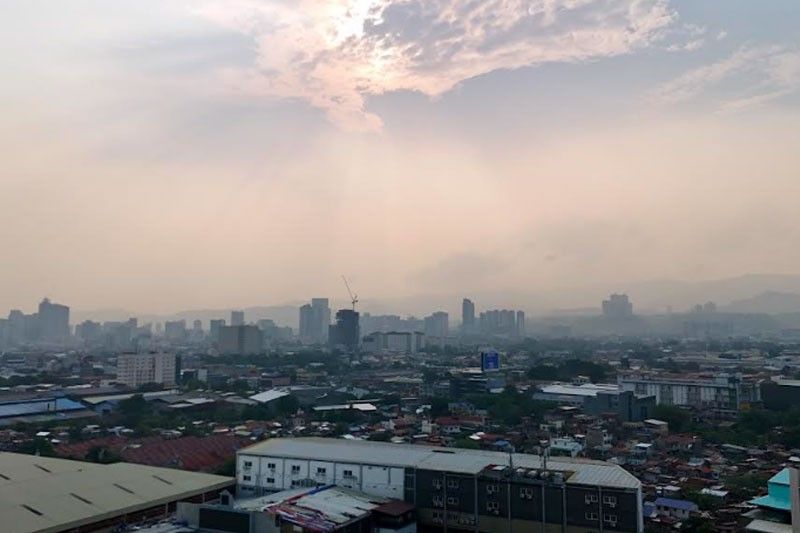
CEBU, Philippines — A blanket of haze covered Metro Cebu with air quality monitoring data from the Department of Environment and Natural Resources-Environmental Management Bureau in Central Visayas (DENR-EMB-7) showing PM2.5 concentrations reaching “very unhealthy” levels.
At dawn yesterday, September 1, the Continuous Ambient Air Quality Monitoring Station (CAAQMS) at Talisay City Hall registered an Air Quality Index (AQI) of 152. By midday, the index had climbed to 172 and reached 173 at 3 p.m., according to the EMB.
The steady rise throughout the day indicated worsening air quality across Metro Cebu.
Officials said that while the monitoring station is located in Talisay, its readings reflect conditions in the broader Metro Cebu air shed, influenced by prevailing wind patterns. The AQI is the official measure used to communicate pollution levels.
In the Philippines, AQI values of zero to 50 are considered “Good,” 51 to 100 “Fair,” 101 to 150 “Unhealthy for Sensitive Groups,” 151 to 200 “Very Unhealthy,” 201 to 300 “Acutely Unhealthy,” and above 300 “Emergency.”
Cebu’s AQI of 173 places it firmly in the “Very Unhealthy” category, meaning even healthy individuals may experience adverse effects while vulnerable groups face greater health risks.
The main pollutant of concern is fine particulate matter known as PM2.5—particles 2.5 micrometers or smaller in diameter, or about 30 times thinner than a strand of human hair.
Because of their size, PM2.5 particles can remain suspended in the air for long periods, travel across regions and penetrate deep into the lungs and even the bloodstream.
The World Health Organization (WHO) sets the safe annual mean exposure at five micrograms per cubic meter. Prolonged exposure to elevated PM2.5 levels increases the risk of asthma, chronic obstructive pulmonary disease, heart disease and stroke.
Haze from indonesia
Environmental authorities traced the deterioration in air quality to transboundary haze drifting from forest fires in Kalimantan, Indonesia.
Smoke and PM2.5 particles were carried across the sea by the southwest monsoon, locally known as the Habagat, before settling over Central Visayas.
“As long as padayon pa ang forest fires didto ug Habagat gihapon ang predominant winds, posible nga magpadayon gihapon ang epekto diri sa ato,” DENR-EMB Air Quality Specialist Engr. Arthur Niño Calupig told reporters yesterday.
Calupig said rainfall could temporarily improve air quality through a “scraping effect,” but pollutants could return as long as the fires continue to burn.
An expert from the University of the Philippines (UP) said Tuesday that the haze affecting the country could persist until Friday or Saturday due to the southwest monsoon and tropical cyclones.
In an interview with DZMM, UP Diliman Institute of Environmental Science and Meteorology Prof. Gerry Bagtasa said the haze became more noticeable after the rains stopped.
“Because it was raining here, the rain was cleaning the air. We didn't see it so we were more focused on the rain. But when the rain disappeared yesterday, even the other day, a large part of the Philippines actually experienced it (haze),” Bagtasa said.
Bagtasa said that although Tropical Cyclone Obet is already outside the Philippine Area of Responsibility (PAR), it remains south of Hong Kong, while Tropical Cyclone Pilandok is east of Taiwan.
“It looks like these cyclones will last until Friday, even Saturday. Until these cyclones are there, they are pulling the southwest monsoon, along with pulling the fires in Indonesia,” Bagtasa added.
He said the wildfires in Indonesia are being worsened by the strong El Niño.
“It's human induced because usually people start fires in Indonesia. El Nino also has something to do with it. The last time there was a huge fire in Indonesia was in 2015, which was also El Nino, before that, 1997, which was also El Nino, it's not El Nino's fault but it's the trigger for the bigger fires in that area,” Bagtasa added.
Bagtasa advised the public to wear masks, preferably N95 masks, to protect themselves from the health effects of the haze.
“Generally speaking, when you see haze in the environment, it's a bit hazy, meaning the air is a bit dirty,” he added.
“Wear masks, preferably, N-95, it's very helpful even when you're outdoors. Sometimes we can't avoid going out,” Bagtasa said.
According to Bagtasa, fires in Indonesia usually peak between September and October.
“The wind might weaken or change direction so it will still be a problem in areas in Southeast Asia but here in the Philippines, we might be insulated in the next few weeks,” Bagtasa said.
He said the southwest monsoon may end in the next few weeks, followed by a transition period lasting two weeks to a month.
Health risks
The current haze is not Cebu’s first recent experience with compromised air quality.
In July, ashfall from the eruption of Mt. Kanlaon reached parts of the province, prompting air quality advisories from the EMB. At that time, air quality was classified as “Unhealthy for Sensitive Groups.”
Volcanic ash consists of larger particles that settle more quickly and can be washed away by rain.
The current haze, however, is composed mainly of PM2.5, which consists of finer particles that remain suspended longer, disperse more widely and pose a more persistent health threat.
Cebu City Councilor Dave Tumulak, chair of the Cebu City Disaster Risk Reduction and Management Council, also confirmed that smoke from Indonesia had reached parts of Cebu, Luzon and the Visayas.
He warned that the haze posed serious risks, particularly to people with asthma and other respiratory conditions, and urged residents to wear masks.
PAGASA data showed haze spreading across several areas, from Mindoro and Palawan to Metro Manila, Bicol, Western Visayas and Eastern Visayas, with varying degrees of severity.
Talisay City Mayor Samsam Gullas expressed concern over the EMB’s pronouncements, questioning the absence of clear guidelines on what actions should follow.
“My concern, and what I also expressed to them, is why they would issue a public pronouncement without having clear and corresponding guidelines on the proper course of action after such a statement,” Gullas said.
He stressed that if AQI readings are to serve as a basis for suspending classes, the policy should apply across Metro Cebu and not just Talisay.
Gullas said he had spoken with the EMB regional director, who told him discussions were ongoing but no thresholds had yet been set.
The Department of Health (DOH) also issued advisories urging residents to avoid unnecessary outdoor exposure, particularly children, senior citizens, pregnant women and people with heart or lung conditions.
N95 and KN95 masks were recommended. For those without access to such masks, the DOH advised using damp cloths or double-masking as temporary alternatives.
The public was also advised to stay indoors, seal doors and windows, drink plenty of water and use saline solution to ease eye irritation.
“Maaaring magdulot ang haze ng hirap sa paghinga, pag-ubo, pananakit ng dibdib, pangangati o pagluluha ng mga mata, at paglala ng mga sakit sa baga tulad ng hika,” the agency warned.
Other precautionary measures include postponing strenuous outdoor exercise, avoiding unnecessary travel, refraining from burning waste and regularly checking on vulnerable individuals.
Local governments are coordinating with the Office of Civil Defense, Department of Education and DOH to determine whether classes should be suspended.
Calupig clarified that while the EMB can issue recommendations, the final decision rests with local government units.
“Anything above 100 AQI is unsafe na sa public. Ang final nga desisyon sa suspension naa gihapon sa local government units,” he said.
The DENR-EMB Region VII said regular air quality bulletins would be released through its official Facebook page and website.
The situation recalls the 2015 Southeast Asian haze crisis, when Indonesian peatland fires blanketed the region, prompting widespread school closures and economic disruptions. A Harvard-Columbia study estimated that the episode was associated with about 100,000 premature deaths.
Despite the ASEAN Agreement on Transboundary Haze Pollution signed in 2002, recurring haze episodes continue to affect communities across Southeast Asia. — (FREEMAN)





- Latest