‘No touch’

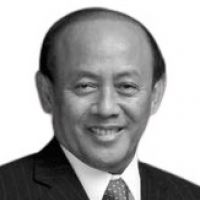
Once burned twice shy? Or have our Congressmen taken a quiet vow among themselves to live by the tenet of Filipina virtue of “no touch” while still on the serenade stage with her lover? So it seems. Rep. Brian Raymund Yamsuan revealed during our Kapihan sa Manila Bay news forum last Wednesday that his House colleagues have promised among themselves to strictly stay away as much as they can from the notorious practice of congressional insertions in next year’s proposed P7.2-trillion budget as submitted to the 20th Congress.
A neophyte congressman of the second district of Parañaque City, Yamsuan cited his partymates from the National Unity Party (NUP) in particular believe they can start this “no touch” policy on the budget allocations in the proposed 2027 General Appropriations Act (GAA) bill. The NUP is headed by House deputy speaker Rep. Ronaldo Puno of Antipolo while Yamsuan is currently the deputy secretary-general of the NUP.
The NUP functions as a major political bloc within the House of Representatives. Formed in December 2010 by a faction that broke away from Lakas-Kampi-CMD, the NUP has 50 members out of the 318 House members. Yamsuan hopes the “no touch” policy will catch fire and be included in the rules of the House committee on appropriations.
“It is not yet cast in stone. We are still in the process of interpellating agencies (on their 2027 budget proposals),” Yamsuan pointed out.
The 52-year-old Yamsuan is currently a member of the Budget Appropriations Review Committee (BARC) that replaced the controversial “small committee,” the existence of which was previously denounced as being behind the alleged congressional insertions, a bulk of which reportedly went into the alleged “ghost” flood control projects of “cong-tractors” in the 2025 GAA.
Metro Manila Development Authority (MMDA) general manager Nicolas Torre III asserted at the same Kapihan sa Manila Bay forum their agency has no “ghost” flood control projects. While the National Capital Region (NCR) has suffered much from the severe flooding due to the combined effects of typhoons and the habagat, Torre explained the flooding in Metro Manila was largely due to trash and garbage dumped indiscriminately and found its way into the creeks, esteros all the way to the Manila Bay, Pasig River to as far as the Laguna de Bay. He noted with dismay between 25 to 27 truckloads of garbage were collected at EDSA after the flooding on Monday.
Torre took the opportunity to ask Rep. Yamsuan to support the approval of the proposed budget of the MMDA for next year. Torre wished the MMDA would have all the resources to mitigate, if not totally stop the severe flooding, especially in the low-lying areas such as those in Parañaque City. The 2027 National Expenditure Program has allocated P3.3 billion for MMDA, Yamsuan told Torre.
Yamsuan expressed the readiness of the present Congress to allocate a budget for the implementation of the Metro Manila flood control and drainage masterplan. After all, he pointed out, the 17 MM cities and the municipality of Pateros are contiguous and inter-connected to each other, as experienced during the latest heavy monsoon rains and flooding.
“You cannot just have one flood control project to solve it. No matter how beautiful it was made, it still has an outfall to other cities. It won’t solve the overall problem,” he pointed out.
“It must be science-based, evidence-based urban planning, how to deal with environmental behavior, and historical settlement pattern and waste disposal of the people,” he argued.
For one, he asked his fellow legislators to pass into law long pending measures such as the National Land Use bill that has been languishing in Congresses past. There is also a need to implement “in-city” resettlement of informal settlers living in danger zones such as esteros and creeks, he added.
Yamsuan noted as much as P643 billion in the budget of the Department of Public Works and Highways (DPWH) for next year, P103.5 billion was allocated for flood mitigation measures. The proposed 2027 budget of the DPWH is much higher than the P540 billion under the Congress-approved 2026 GAA.
“That’s why we say it’s better ‘no touch,’ no hand in the (projects) of congressional districts,” Yamsuan vowed.
“While we lobby for projects as representatives of our constituencies for the taxes they pay, taxation without representation is tantamount to tyranny,” Yamsuan philosophized.
“But we leave it centrally to the DPWH,” he stressed.
Yamsuan calls for “whole-of -nation” efforts to include the private sector to allow water retention facilities in available open vacant lots. “Band-aid or quick fix solutions won’t work,” he rued.
Instead of waiting for a comprehensive national flood control and drainage master plan, acting DPWH Secretary Vivencio “Vince” Dizon was quoted as saying he would rather implement localized drainage master plans in direct consultation with city and municipal mayors to address Metro Manila’s flood crisis.
Under the revised procurement and budgeting guidelines, Dizon declared that no project will be submitted to Congress unless it possesses a comprehensive master plan, an engineering design, mandatory feasibility studies and formal endorsements from both the Local Development Council (LDC) and the Regional Development Council (RDC).
“If a project lacks even one of these five requirements, it will not enter the budget – period,” Dizon warned. “This is one of our key safeguards so that past abuses won’t happen again. Previously, entries consisted merely of a project title and an arbitrary cost – meaning those figures were simply invented without any engineering studies on paper,” he fumed. Under the new system, local chief executives will no longer be caught off guard by unvetted projects in their localities, as LDC and RDC clearances are now strictly required, Dizon added.
Yamsuan could not agree more. Yamsuan embraces the “bottom up” budget process. Yamsuan cited “bottom up” budget process best exemplifies how to effectively implement a “whole of government” approach in addressing perennial problems like severe flooding.
For now, we wait with bated breath how the 2027 GAA comes out, if “no touch” will indeed be adopted in Congress.





- Latest
- Trending