Balancing the scales for women and girls
Gender equality requires a whole-of-society effort to realize. This March marks my first Women’s Month in the Philippines, and I have seen the excellent initiatives both our countries are pursuing to empower women and girls. While more can be done, this month-long celebration highlights the centrality of women in Filipino society and our shared responsibility to continue advancing gender equality together.
Each year on International Women’s Day, we celebrate the achievements of women and girls around the world while also reflecting on the work that remains. This year’s theme – “Rights. Justice. Action. For ALL Women and Girls.” – is a powerful reminder that despite progress, many women and girls still face economic, legal and social barriers to equality.
Australia is committed to advancing gender equality both at home and internationally. Last year, we launched Australia’s International Gender Equality Strategy, which sets out our approach to promoting equality and empowering women and girls across our global partnerships.
At the heart of this strategy is a simple truth: gender equality benefits everyone. When women and girls are able to participate fully in society – in education, the workforce and leadership – entire communities prosper.
Here in the Philippines, Australia is proud to partner with the Philippine government and local institutions to advance gender equality and deliver real, practical change.
One area where this cooperation is making a difference is through strengthening access to justice.
Australia’s FAIR Justice Program works with Philippine justice sector institutions to support reforms designed to ensure that the justice system is more accessible, inclusive and responsive to the needs of vulnerable Filipinos.
Since its launch in 2024, the FAIR Justice Program has helped drive several important changes:
First, the legal aid system has been reformed to mandate access to pro bono legal representation for those who cannot afford legal fees, including women victims or women offenders. Next, new court family mediation processes have been introduced which prioritize the welfare of women and children through inclusive dispute resolution. Finally, protections have been strengthened for women in detention who face abuse risks at different stages of the criminal justice system.
Beyond the courtroom, Australia is supporting women’s leadership in peacebuilding and conflict resolution.
In the Bangsamoro Autonomous Region in Muslim Mindanao, Australia’s peacebuilding program is empowering women to play a greater role in mediating and resolving disputes in their communities. In partnership with the Center for Humanitarian Dialogue, 30 women from the Moro Islamic Liberation Front have been trained in conflict resolution and mediation. These women have since formed a group known as the “Bae Mediators,” who are helping address local disputes and strengthen peace at the community level.
Australia’s partnership with the Philippines on gender equality spans many areas – including health, economic empowerment and education.
Since 2021, Australia’s development support has helped deliver more than 5.5 million sexual and reproductive health services to nearly 600,000 people in the Philippines. These services include family planning, prevention and treatment of sexually transmitted infections and HIV and broader reproductive health care.
Through our Investing in Women program, Australia supported policy research with the Department of Economy, Planning and Development to explore ways to expand flexible and part-time work opportunities. This research has informed the Trabaho Para sa Bayan Masterplan 2025-2034, helping shape policies that support greater workforce participation for women.
Through the Australia Awards, talented Filipinos undertake postgraduate study in Australia and return with the skills and networks needed to contribute to their communities. In our current cohort of 436 scholars, half are women, with strong representation from persons with disability and indigenous communities. These emerging leaders are helping shape the future of their fields – from public service and academia to business and civil society. Applications for the next intake of Australia Awards are open until April 30, and we encourage interested applicants to apply.
Training women leaders is also important for the future of the region. Nine female officers from the Philippine Coast Guard, Philippine Navy and Department of Foreign Affairs recently participated in a training program on the UN Convention on the Law of the Sea, aimed at strengthening regional maritime cooperation. Through programs like this, Australia upholds the rule of law and the peaceful settlement of disputes in the maritime domain.
As Prime Minister Anthony Albanese has said: “We choose to do these things not because gender equality is a special interest – but because it is a national interest. Empowering women is not simply a matter of equity; it is a strategic imperative for security, prosperity and stability in our region.”
Australia is proud to work with the Philippines in advancing gender equality and ensuring that women and girls can participate fully in society. Together, we can help ensure that the promise of rights, justice and opportunity becomes a reality for all women and girls.
* * *
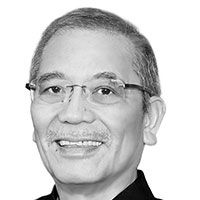
Marc Innes-Brown is the Ambassador of Australia to the Philippines.


- Latest
- Trending