


‘Philippines middle class carrying burden of squeeze economy’
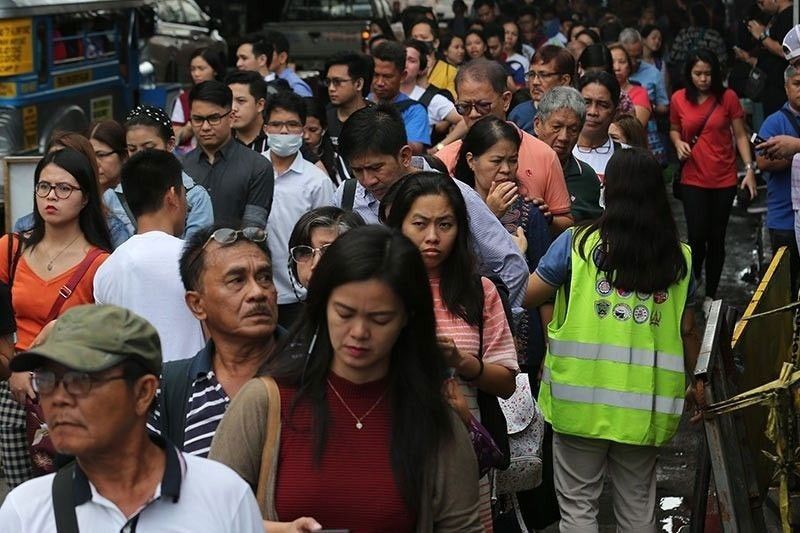
MANILA, Philippines — The country’s middle class is bearing the brunt of rising costs and higher interest rates without assistance from the government, according to state think tank Philippine Institute for Development Studies (PIDS).
“The middle class is often, shall we call it in the literature, the quiet absorber of economic shocks,” PIDS senior research fellow John Paolo Rivera said in an interview with ANC, when asked which group absorbs the most economic pain at present.
“They are the one absorbing rising costs without necessarily qualifying for government assistance,” he said.
He said minimum wage earners are the ones immediately hit by economic shocks because the bulk of their budget goes to necessities.
“Most of their income goes into consumption. So any sharp increases in the cost of living would actually affect significantly the amount of money, their purchasing power,” he said.
Families of overseas Filipino workers (OFW), he added, are also vulnerable to shocks when remittance growth slows down as prices increase.
“That’s why we’re trying to temper inflation so that the blow to the minimum wage earners, middle class, OFW dependent families would be mitigated,” he said.
Rivera emphasized the need to address the country’s energy dependence, infrastructure, food security, productivity, investor confidence and institutional quality to achieve higher growth.
“If we do not resolve or address these issues sooner, slower growth might become a new normal rather than a temporary phase,” he said.
Inflation eased but remained elevated at 6.8 percent in May from 7.2 percent in April.
Despite easing tensions in the Middle East, Rivera said that households remain vulnerable to shocks given the country’s dependence on oil imports.
The Middle East tensions, which triggered an oil shock, translated to higher fuel prices and pushed up other costs including transportation, electricity and food in the domestic market.
Rivera said that the economy is also facing persistent uncertainty, with geopolitical risk becoming part of commodity pricing.
He said that uncertainty, along with a high interest rate environment, may lead to businesses delaying investment.
While external shocks can trigger an economic slowdown, he said internal structural weaknesses determine how long the country’s slow growth episode can last.
Within the next 12 to 18 months, he said that the economy is expected to grow modestly, unless investment conditions improve and economic confidence is restored.




- Latest
- Trending


