


Quake death toll adjusted to 46; 38 still missing
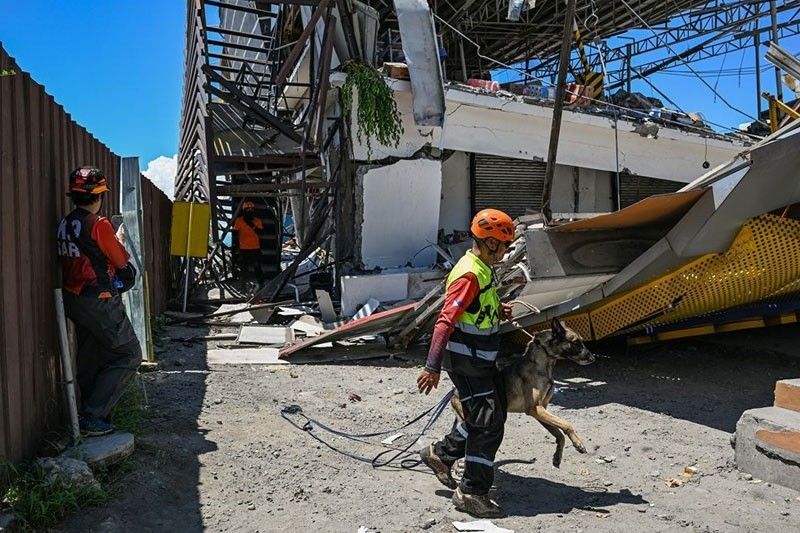
MANILA, Philippines — From the initial count of 55, the death toll from Monday’s powerful magnitude 7.8 earthquake in Mindanao has been revised down to 46, the National Disaster Risk Reduction and Management Council reported.
The NDRRMC explained that the changes in figures were due to continuing search, rescue and retrieval operations, as well as ongoing validation and verification of reported deaths, missing persons and injuries.
The number of missing individuals also changed and has risen to 38, while a total of 688 persons were reported injured.
As of yesterday, a total of 392,806 persons were affected by the earthquake, of which 10,783 were taking shelter in 31 evacuation centers.
In terms of infrastructure damage, 19,095 houses were affected, of which 3,485 were reported as totally destroyed.
Most of the fatalities were recorded in the Davao Region and SOCCSKSARGEN, where the epicenter of the quake was located in Maasim, Sarangani. Other heavily affected areas include the Zamboanga Peninsula and the Bangsamoro Autonomous Region in Muslim Mindanao.
Assistance continues
As part of the government’s humanitarian efforts, the Department of Health deployed Mental Health and Psychosocial Support (MHPSS) teams from its regional offices in Mindanao to provide mental health and psychosocial support to affected residents in communities hit by the disaster.
DOH Secretary Ted Herbosa said the teams began facilitating mental and emotional assistance programs for disaster victims on June 12, with eight MHPSS teams composed of five personnel from the General Santos City CHD and the local government unit already assisting families in SOCCSKSARGEN.
Three additional MHPSS teams, meanwhile, have also been mobilized in the Davao Region.
In Zamboanga City, Mayor Khymer Olaso led the send-off of a humanitarian mission to support residents of General Santos City, one of the areas hardest hit by the earthquake.
The mission, led by the City Disaster Risk Reduction and Management Office, includes a rescue team and relief goods such as rice, canned goods, jerry cans and other essential items.
Olaso added that cash assistance amounting to P1 million is also being processed and will be hand-carried to General Santos City next week.
In Basilan, Gov. Mujiv Hataman said the provincial government is likewise preparing assistance for affected communities and has called for donations and support from Basileños.
The local government of Pagadian City, for its part, dispatched relief trucks carrying essential humanitarian supplies, while the Department of Social Welfare and Development Field Office-9 sent a 10-member quick response team to augment disaster response operations in affected areas.
Meanwhile, the Philippine Coast Guard reported that a yacht carrying relief goods for earthquake victims caught fire in the waters off Barangay Small Margus in Glan, Sarangani at around 10:25 a.m. on Friday.PCG spokesperson Commodore Noemi Cayabyab said all crew members and passengers were rescued and safely transported to Barangay Big Margus, with no casualties reported.Aftershocks
Amid ongoing recovery efforts, the Philippine Institute of Volcanology and Seismology (Phivolcs) reported that the number of felt aftershocks has significantly declined since the earthquake struck.
From 28 felt aftershocks recorded between June 8 and 9, the figure rose slightly to 30 from June 9 to 10 before dropping to three from June 10 to 11 and remaining at three from June 11 to 12.
The total number of recorded aftershocks has also continued to decrease, from 1,083 between June 8 and 9 to 805 between June 11 and 12.
Based on the plots of state seismologists, Phivolcs director Teresito Bacolcol earlier said that the aftershocks felt are “on the sea but concentrated around the epicentral area of the main earthquake.“
“This is mainly because these areas are closest to the aftershock zone,” Bacolcol said, noting that General Santos City was where aftershocks were frequent. — Roel Pareño, Josiah Antonio, Rhodina Villanueva, Bella Cariaso





- Latest
- Trending


