Brownouts return as Luzon, Visayas grids hit red alert; here's what the terms mean
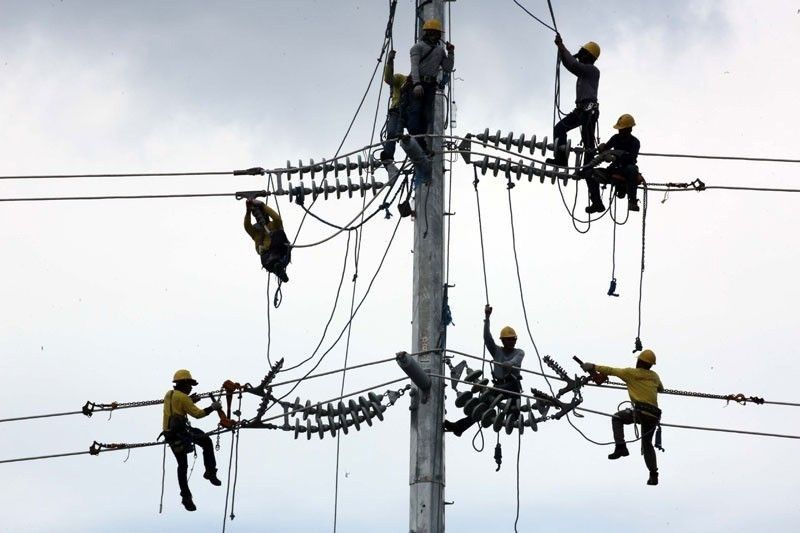
MANILA, Philippines — Rotating brownouts have been occurring in parts of Luzon and the Visayas this week after a chain of power plant outages and transmission line failures earlier this week.
As a result, the National Grid Corporation of the Philippines (NGCP) has raised the red alert status over both the Luzon and Visayas grids.
In its 2:30 p.m. advisory Thursday, the NGCP placed the Luzon grid under red alert from 3 p.m. to 10 p.m., with yellow alerts from 2 p.m. to 3 p.m. and again from 10 p.m. to 12 a.m.
Available capacity stood at 12,464 megawatts (MW) against a peak demand of 12,877 MW.
The Visayas grid was placed under red alert over the same 3 p.m. to 10 p.m. window, with a yellow alert from 10 p.m. to 11 p.m. Available capacity there was 2,377 MW against a peak demand of 2,552 MW.
Here's what all that means:
Yellow alert: the warning
A yellow alert is a warning. The NGCP raises it when the grid's spare supply — the extra electricity kept on standby in case a power plant suddenly breaks down — drops below the safe level.
It is not a brownout. Supply still meets demand under a yellow alert level. The alert simply signals that the system has little room to absorb another outage.
Red alert: supply falls short
A red alert is the highest level. The NGCP defines it as the point when power supply is insufficient to meet consumer demand and the transmission grid's regulating requirement.
That is when manual load dropping, or MLD, is triggered. Distribution utilities like Meralco are told to cut power to selected areas on a rotating schedule — the rotating brownouts consumers experience — to bring demand back in line with supply and keep the grid from collapsing entirely.
Meralco implemented emergency MLD yesterday, May 13, affecting more than 200,000 customers across parts of Metro Manila, Batangas, Bulacan, Cavite, Laguna and Rizal. The interruptions lasted an average of three hours.
Peak demand
According to the NGCP, demand typically peaks three times a day — at 11 a.m., 2 p.m. and 7 p.m. — when households and businesses run appliances at the same time. The highest level recorded in a day is called peak demand.
The trigger for alert levels to be raised this week was on the transmission side, which led to supply deficiencies.
The Department of Energy said the 500-kilovolt Tayabas-Ilijan and Dasmariñas-Ilijan transmission lines tripped at around 6:30 a.m. on Wednesday.





- Latest
- Trending