


Keep graduation rites simple, public schools told
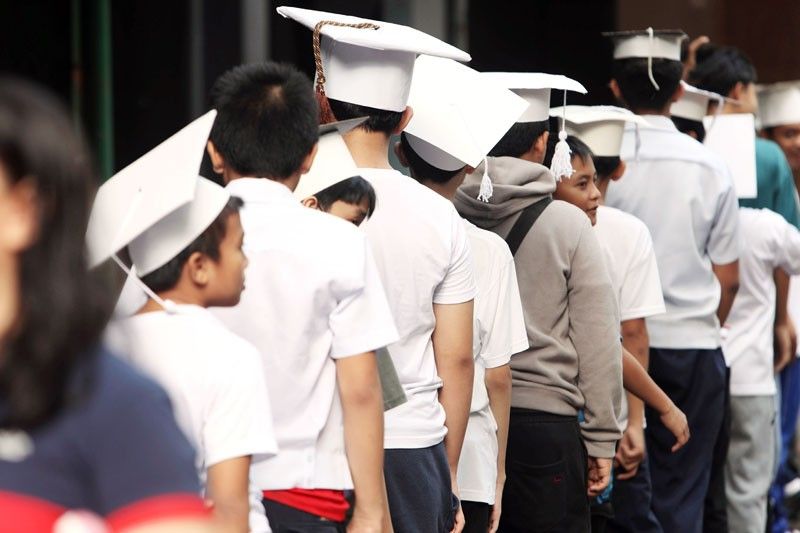
MANILA, Philippines — The Department of Education (DepEd) has directed public schools to hold simple and low-cost graduation and moving-up ceremonies this year amid the recent surge in the prices of fuel and other commodities.
Education Secretary Sonny Angara issued the directive yesterday through Memorandum 015, Series of 2026.
“We must ensure that this milestone remains a celebration of achievement rather than a financial ordeal for our parents, especially as we navigate the economic impact of rising fuel costs,” Angara said in a statement.
“Our schools must prioritize the welfare of learners by keeping these ceremonies simple, meaningful and entirely free of unnecessary expenses,” he added.
The directive is in line with the order of President Marcos to ease the financial burden on Filipino households who are currently grappling with the impact of the Middle East crisis.
Under the memorandum, public schools are prohibited from collecting any fees or contributions for graduation and moving-up rites.
Schools are also required to hold ceremonies in simple venues such as school grounds or covered courts and avoid expensive rentals.
DepEd added that non-academic activities, including field trips and prom nights, should not be made requirements for graduation.
Expenses for the ceremonies will be sourced from schools’ maintenance and other operating expenses.
Around 1.9 million Grade 6 pupils and 1.8 million Grade 12 students are expected to graduate next week, March 30 or 31.
Amid the issuance of the directive, DepEd also took yesterday defended its plan to implement a three-term school calendar starting school year 2026-2027, saying the reform would improve the quality of teaching and learning.
DepEd expressed support for President Marcos’ approval of the reform, which aims to address long-standing inefficiencies in the current academic calendar.
Citing the loss of up to 53 school days in school year 2023-2024, the department explained that the redesigned structure would ensure more effective use of time in schools.
Under the proposed setup, the school year will begin with a five-day “opening block” dedicated to learner profiling, baseline assessments and administrative preparations to allow uninterrupted instruction once formal classes start.
This will be followed by an “instructional block” of around 60 days focused on continuous teaching and learning.
Activities and celebrations, which previously disrupted lessons, will be moved to a two-week “end-of-term block,” which may also be used for remediation, enrichment, teacher training and wellness breaks.
DepEd added that shifting from four quarters to three terms would streamline grading cycles, reduce administrative workload and allow teachers to focus more on instruction.
The agency also clarified that it has conducted multi-level consultations since January with learners, teachers, parents, lawmakers and other stakeholders before coming up with the decision.
“This reform is about making the school year work better for both learners and teachers, so that every day in school leads to deliberate and deep learning,” it noted.
Added burden
The Alliance of Concerned Teachers, however, was not convinced as it continued to oppose the reform, saying it would only cause additional burden on the teachers’ already heavy workload.
“Teachers will be forced to recalibrate curricula, overhaul teaching and learning materials, redesign assessment systems and adjust grading frameworks – all without adequate preparation, support or resources,” the group said.
It added that the change would impose additional strain on educators amid existing shortages in personnel and resources.
The group also argued that the government should prioritize addressing soaring commodity prices and stagnant wages, alongside increasing education funding.
ACT reiterated its call for higher salaries, including a P50,000 entry-level pay for teachers, P36,000 minimum salary for Salary Grade 1 employees and a long-overdue increase in the Personnel Economic Relief Allowance from P2,000 to at least P5,000.


- Latest
- Trending


