Magalong willing to lead infrastructure corruption probe
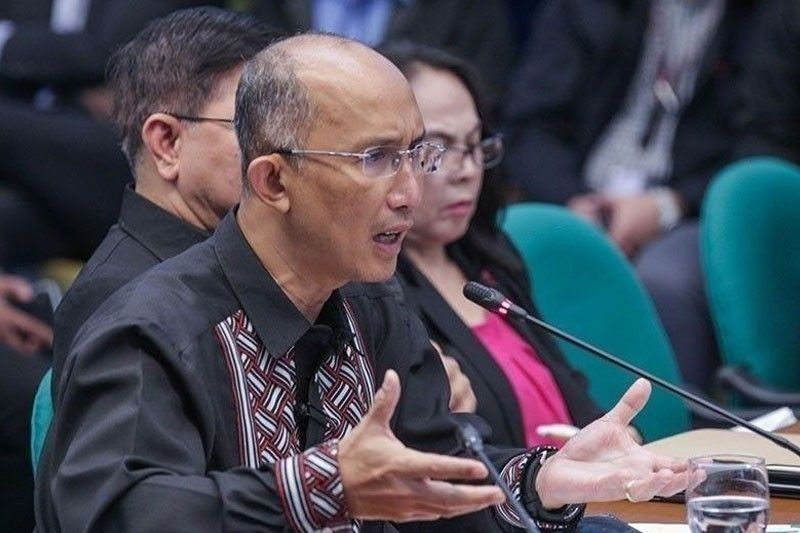
BAGUIO CITY, Philippines — Mayor Benjamin Magalong is willing to lead the probe into the corruption involving legislators and other government officials in infrastructure projects.
He is just waiting for the House of Representatives summons or notice, the Baguio mayor said, in response to the challenge posed by committee on accounts chair Rep. Terry Ridon for Magalong to show his evidence: “Tawagin na lang nila ako, wag na silang magdadaldal pa (Just call me, no more useless talk).”
“They have to allow me to do my presentation,” Magalong told the House. “They should not treat me there as an accused (but) as a resource person.”
The former police general and head of the Philippine National Police Criminal Investigation and Detection Group said he is no stranger to House inquiries, as he had attended a number of congressional hearings in the past.
He also took a swipe at such inquiries, saying it is often mostly grandstanding.
What is important, Magalong said, is that when he faces the House, it should just be “straight talk.”
“The contract price alone and the detailed unit price analysis, you will see it there at once, that’s already evidence. But they don’t want to look,” he said.
Better flood management
Also in Baguio City, Science Secretary Renato Solidum said the government should adopt an integrated flood management approach involving multiple disciplines to address the decades-long flooding problem in the Philippines.
Lawmakers have focused on anomalies in flood control projects, as President Marcos called out politicians during his fourth State of the Nation Address who allegedly profited from projects that turned out to be substandard or figments of imagination.
Flood control projects, however, are only a “narrow part” of integrated flood management because they focus solely on structural solutions, Solidum said.
“We need to look at the overall system collectively,” he said on Thursday during a press conference at the Luzon leg of Handa Pilipinas sa Bagong Pilipinas.
“You have to look the whole watershed – from the mountain down the river to the shoreline – and different types of floods,” he stressed.
The Department of Science and Technology (DOST) is holding its annual exposition on climate and disaster resilience innovations just two weeks after much of Luzon was battered by the southwest monsoon and three tropical cyclones, leading dozens of cities, towns and provinces to declare a state of calamity.
Metro Manila remains vulnerable to street-level flooding due to indiscriminate littering, aging drainages and rapid urbanization, according to the DOST chief.
He said stakeholders must be mindful when constructing buildings or facilities, as these can impact neighboring areas.
“Once you urbanize, you cover the soil with concrete and asphalt, and water cannot penetrate the ground, instead flowing to the lowest part of the slope,” Solidum explained, adding proper drainage systems must also be kept free of trash.
Meanwhile, in compliance with the President’s directive to strengthen disaster preparedness, the Department of the Interior and Local Government (DILG) launched its infrastructure audit program which aims to assess critical infrastructure of local government units.
The DILG said the program aims to standardize assessment of local public infrastructure using the harmonized IA tool developed with national and local government agencies and stakeholders.
Priority will be given to LGU-owned and key public buildings with essential services such as hospitals, school buildings, government offices and emergency response facilities.
Excluded from the audit are privately owned buildings not providing essential services, residential properties and structures owned by the national government.
Audit findings will be compiled into an integrated database managed by the DILG. — EJ Macababbad, Emmanuel Tupas






- Latest
- Trending