Philippine participates anew in PISA; better results seen
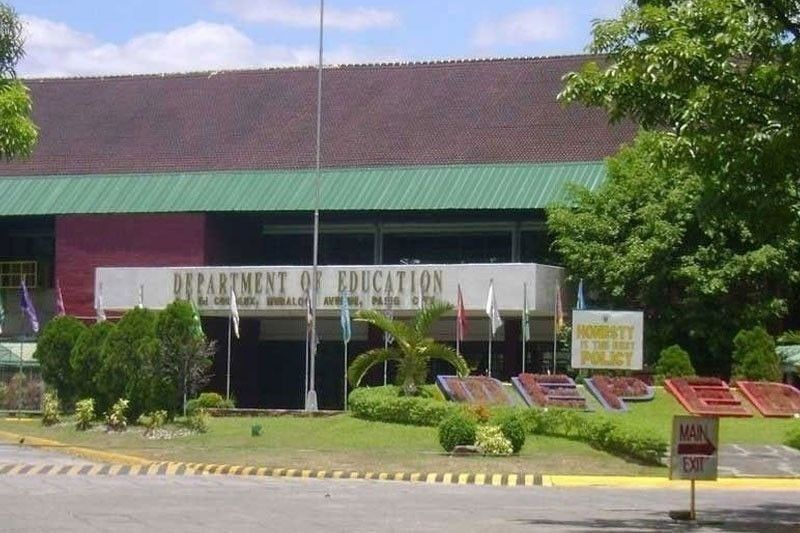
MANILA, Philippines — The Department of Education (DepEd) is optimistic that the country will achieve better results in the recently concluded 2025 Program for International Student Assessment (PISA).
In a press statement issued yesterday, the DepEd said several preparations were implemented under the directive of Education Secretary Sonny Angara, following the Philippines’ dismal performance in the 2022 PISA.
“Acknowledging the diverse perspectives surrounding the country’s participation in ILSAs (international large-scale assessments) tests, Angara emphasizes the DepEd’s commitment to thorough preparation. Angara took the 2022 participation as a learning experience, where a lack of preparation drew public concern,” the DepEd said.
The statement was released after randomly selected 15-year-old students from 208 schools nationwide completed the 2025 PISA, held from March 1 to April 11. The results will be released in September 2026.
Regardless of the results, the DepEd noted that the assessment will “serve as another benchmark for future programs aimed at elevating learning outcomes.”
Nonetheless, the agency emphasized that participating students underwent ample preparation.
In January, the DepEd’s executive committee conducted a functional appraisal of the readiness of the selected schools “to bolster varying degrees of preparedness.”
“Schools with logistical gaps in testing centers, laptops and internet access were given maintenance and augmentation funds. Teachers’ content mastery was assessed through Khan Academy Philippines and Frontlearners, DepEd’s edtech (education technology) partners,” the DepEd said.
As soon as the list of participating 15-year-old learners was released in February, learners received a series of familiarization activities covering computer literacy, basic quantitative skills and critical thinking.
“Our goal here is a more robust and equitable testing environment. We must learn from the gains of this exercise and scale it for future initiatives,” said Angara.
Filipino students have historically performed poorly in international assessments.
Based on the 2022 PISA results released by the Organization for Economic Cooperation and Development (OECD) in December 2023, the Philippines ranked 76th out of 81 countries in reading comprehension, mathematics and science.
Developed by the OECD, the PISA evaluates the ability of 15-year-olds to apply their knowledge and skills in reading, mathematics and science to real-life situations.
The Philippines first participated in PISA in 2018, placing last out of 79 countries.
While the country slightly improved its ranking in 2022, performance indicators still showed minimal gains.
Based on the OECD’S report, the average scores among participating countries in the 2022 PISA were 472 in mathematics, 476 in reading and 485 in science.
The Philippines scored significantly below the average, with 355 in math, 347 in reading and 373 in science.
The OECD noted that every 20-point gap below the average is equivalent to about one year’s worth of learning for a 15-year-old in participating countries.
At a press conference a day after the release of the 2022 PISA report, the DepEd – then led by Vice President Sara Duterte – admitted that the assessment indicated Filipino students were five to six years behind in learning competencies.





- Latest
- Trending