'Deploying more police to enforce health protocols an ineffective, anti-poor strategy'
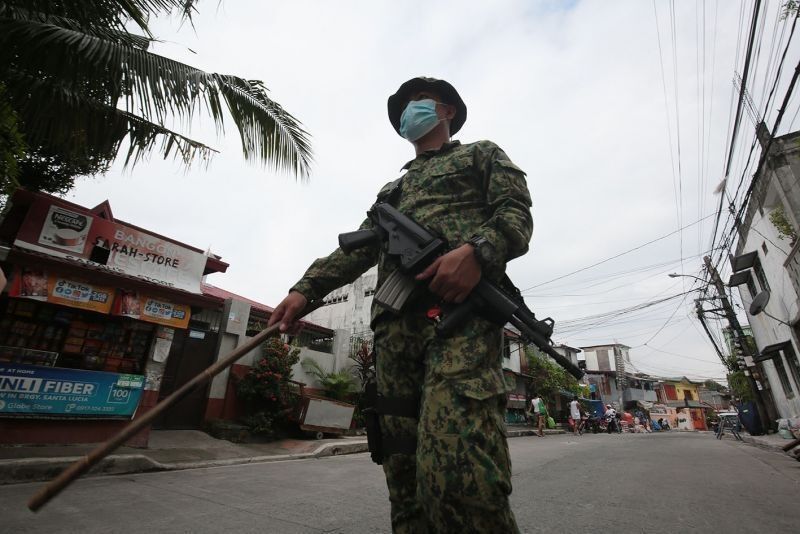
MANILA, Philippines — (Updated 5:53 p.m.) Sen. Risa Hontiveros on Wednesday called out the government for bringing back what she called a failed strategy.
She was referring to the Philippine National Police's deployment of additional personnel to help strictly enforce health protocols in coronavirus hotspots, including the cities of Pasay, Navotas and Malabon.
Hontiveros scored authorities for again choosing to take a militaristic approach to address a health crisis, echoing a statement she issued on July 9, 2020, calling on the government to rethink its strategy after the Philippines saw what was then a record-high rise in the daily number of infections.
She also accused the government of failing to learn the lessons of 2020, evidenced by its reimplementation of a plan that the senator said would only serve to hamper the health response needed to address the current rise in infections in the country.
"Aren’t we learning that mass arrests don’t work or help? People will just crowd the jails. There will be even more transmission [of the virus]," the senator said in Filipino.
Hontiveros recalled that authorities arrested some 76,000 individuals for violating quarantine protocols from March to July last year, but added that this did nothing to curb the spread of the pandemic. Instead, she noted, healthcare workers had to call for a "timeout" in August after being overwhelmed by a barrage of patients.
More than just being ineffective, Hontiveros says taking a militaristic approach to a health crisis is anti-poor, highlighting that a certain demographic seems to have taken the most heat from authorities over quarantine violations.
READ: Why some are saying 'social distancing' is a privilege
She recalled in specific the case of five young people who were locked up in a dog cage by the barangay chairman of Sta Cruz, Laguna over a year ago.
"They can only power trip on the poor. When else have the rich been placed in detention centers or dog cages because of their mass gatherings or parties?" Hontiveros questioned in Filipino.
READ: Whatever happened to: Quarantine violators in Philippine government
"There is a way to enforce stricter health protocols humanely and non-violently. 2021 na. Let’s do this the right way," she said.
Despite the presence of two more infectious COVID-19 variants in the Philippines and the government's repeated easing of quarantine restrictions, the Department of Health on Monday insisted that the rise in coronavirus cases is largely due to people's noncompliance with health protocols.
This messaging resembles statements from the Palace and law enforcement last year, which blamed the high rate of coronavirus transmission on 'pasaway' or disobedient Filipinos, despite the fact that data showed that people were doing their part and staying home.
In addition to deploying more police, cities in Metro Manila are also reinstating more stringent curfews and lockdowns in their jurisdictions.
"The pandemic has been going on for a year. The people have sacrificed so much," Hontiveros said in Filipino.
"[It's the government's turn to adjust], and respond to the spike because we care for the welfare of our people. Let’s not beat them when we’re already on the ground."
Binay discourages return of harsh punishments, fines
Sen. Nancy Binay in a statement released by her office urged the coronavirus task force and local government units to recalibrate their implementation of health protocols to lean more towards "positive reinforcement" rather than harsh punishments.
She specifically highlighted Navotas City Mayor Toby Tiangco's decision to require those caught in public places without their masks on to undergo swab tests instead of slapping them with fines. Tiangco told the Manila Bulletin last week that he understands that his constituents are already "struggling economically."
"We don't need to fine the person who goes out to make a living just because he doesn't have a face shield, or beat him with a stick for not wearing a face mask, or imprison him [for failing to abide by] social distancing," Binay said in Filipino.
"It's about balancing the need to open the economy, yet strictly reminding people to follow protocols in a positive reinforcement that complements public health and safety concerns.
The Department of the Interior and Local Government has since directed local governments and the PNP to implement "a crackdown on quarantine violators" and intensify the enforcement of minimum health standards in all barangays, signaling a possible return to the earliest days of lockdown.
Unlike Hontiveros and Binay, Sen. Panfilo Lacson, a former police chief, has backed the move, saying "the government must use its police power under the Constitution to make sure that the further spread of the virus is prevented or controlled." — Bella Perez-Rubio


- Latest
- Trending