House panel OKs bill creating Philippine Centers for Disease Prevention and Control
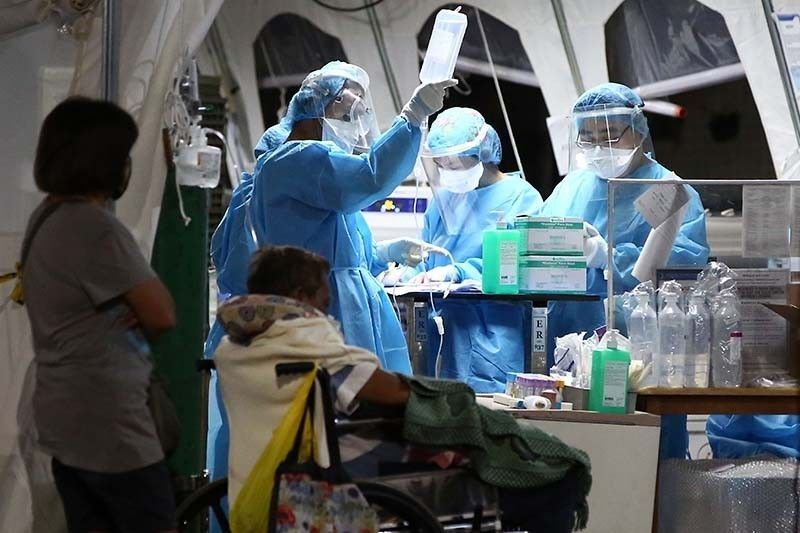
MANILA, Philippines — The House of Representatives' Committee on Health approved Monday a substitute bill creating the Philippine Centers for Disease Prevention and Control, among others.
The substituted House Bill No. 6633 or "An act providing for the modernization of the public health emergency preparedness, establishing for this purpose the Center for Disease Prevention and Control, and appropriating funds therefore" also proposes the creation of the Public Health Emergency Services Modernization Program.
In the event that the substitute measure is fully enacted, the CDPC will be created as an attached agency to the health department and, according to the bill's explanatory note, serve as the principal agency mandated to develop and apply communicable disease prevention and control initiatives.
With its passage at the committee level, the substitute bill now proceeds to the plenary for debates.
In a statement issued Monday morning, Rep. Helen Tan (Quezon 4th District), said that the bill "is urgently necessary as the country, just like most of health systems in the world, is ill-prepared to address the challenges of pandemics such as the COVID-19."
“The bill seeks to modernize the country’s capabilities for public health emergency preparedness and strengthen the current bureaucracy that is mandated to address communicable diseases in the country through organizational and institutional reforms,” Tan, a doctor herself who chairs the House panel on health, said in her statement.
The lawmaker sponsored the Technical Working Group draft substitute bill and was among the principal authors of the consolidated measure. According to Tan, the bill mandates, among others:
- the undertaking of necessary reforms in the recruitment, training, employment and management of the country’s public health emergency personnel;
- development of relevant programs for the acquisition and upgrading of appropriate technologies, laboratories, and equipment;
- the provision for the needed relocation, improvement, and construction of facilities to enhance the country’s preparedness and response to public health emergencies.
Tan said that the center will be taking after the model of the United States CDC, which conducts critical research on both communicable and non-communicable diseases.
"The CDPC will initially prioritize disease surveillance, prevention, and control of infectious diseases but may include non-communicable diseases upon positive recommendation by an independent study/body commissioned by the DOH at least five years after its creation," her statement read.
A similar bill has already been filed by Sen. Grace Poe in the higher chamber.
RELATED: Senate bill seeks creation of Philippines' Center for Disease Control
Should the bill be passed, the CDPC will serve as the technical authority on all matters regarding disease prevention and control and remove the function of addressing the communicable disease concerns from the DOH.
Instead, this mandate will be transferred to the CDPC, after absorbing the following entities:
- Epidemiology Bureau
- Research Institute for Tropical Medicine
- STD AIDS Cooperative Central Laboratory
- International Health Surveillance Division of the Bureau of Quarantine
- and Disease Prevention and Control Bureau except for divisions with existing laws like the Mental Health Division, Cancer Division and Oral Health Division.
“To better prepare against public health emergencies, we need to embark on two essential initiatives: health modernization and institutional reforms,” the doctor turned lawmaker said in her statement.
"We cannot merely keep on rearranging the boxes within our health organization without capacitating our health personnel and resources. That will not work. We need to modernize and reorganize our health system at the same time to protect the public from health risks," she added.
Medical groups have long argued that the coronavirus pandemic exposed longstanding holes in the country's healthcare system.
As of the health department's latest case bulletin issued Sunday afternoon, the national caseload stands at 576,352 after 2,113 new coronavirus cases were recorded.
Exactly 349 days have passed since the enhanced community quarantine was first imposed over some parts of Luzon.
The Philippines is still under the world's longest quarantine and was the last country in Southeast Asia to start vaccinating its citizens.
— Franco Luna with reports from Xave Gregorio





- Latest
- Trending