DOH: Nationwide MGCQ will depend on LGUs
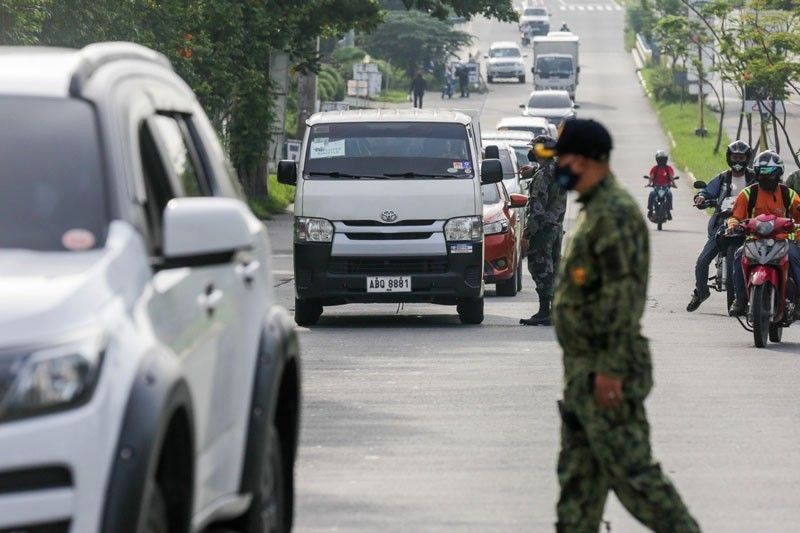
MANILA, Philippines — Determining the quarantine classification to be imposed on an area or region should depend on the preparedness of local government units (LGUs) to manage the COVID-19 pandemic, according to the Department of Health (DOH).
In an interview with “The Chiefs” aired on OneNews/TV5 last Tuesday night, Health Undersecretary Maria Rosario Vergeire said there are “parameters” that should be used in such decisions, which include the number of COVID-19 cases and the area’s health care capacity.
“Aside from that, LGUs should be able to show that they are capacitated to do the gatekeeping,” she added.
Vergeire emphasized that LGUs should be able to do the appropriate surveillance, contact tracing, isolation or quarantine and screening at the borders to prevent the transmission of COVID-19.
The DOH official made the statement after acting National Economic and Development Authority (NEDA) director general Karl Chua recommended last Monday that the entire Philippines, including the National Capital Region (NCR), be placed under modified general community quarantine (MGCQ) next month.
Chua underscored that this shift in quarantine status is necessary for the reopening of the economy. The proposal, however, was opposed by some LGUs that cautioned about the possible spread of the coronavirus.
The DOH “recognized the value of inputs of the mayors… because they are ones who are experiencing (the threats of COVID-19) on the ground, they are the ones implementing protocols on the ground and they can see the situation,” according to Vergeire.
She reiterated that LGUs actually have the authority to do localized lockdowns, and “this is the direction that we will do – granular response – so that we can better manage the situation.”
Asked if the country could ease its quarantine status, the undersecretary said the number of cases in the NCR “has been plateauing.”
“Cases are stable, but we can see some cities that have increasing numbers of cases,” she added.
DOH data showed that NCR cases are decreasing, except in the cities of Valenzuela, Pasay, Malabon, Pasig, Makati, Navotas, Las Piñas and Manila.
This is in contrast to news reports that the NCR is among the regions being closely monitored for increases in COVID-19 cases.
“To reiterate, the NCR did not register a positive growth rate. In fact, the region registered a -3 percent growth rate,” the DOH said in a statement, citing a report of Epidemiology Bureau director Alethea de Guzman during a forum last Tuesday.
This means that “there is even an observed decrease in the overall case trend in the region,” it added.
LPP for nationwide MGCQ
The League of Provinces of the Philippines (LPP) is in favor of placing the entire country under MGCQ next month, but wants LGUs to have authority to impose lockdowns if there is a surge in COVID-19 cases.
LPP president and Marinduque Gov. Presbitero Velasco Jr. said they are supporting the NEDA’s recommendation.
“It’s OK for all of us to place the country under MGCQ as we see the policy or strategy of the government to start the economy grinding,” Velasco said in Filipino in an interview with radio dzBB.
He is urging the national government to give local chief executives the authority to impose strict quarantine measures when an outbreak occurs in their respective areas if NEDA’s recommendation is approved.
“We’d like LGUs to be given the authority to impose sudden lockdown or revert to GCQ or ECQ (enhanced community quarantine) because situations are different in our respective provinces and territories,” he said.
Currently, LGUs have to seek approval of the Inter-Agency Task Force for the Management of Emerging Infectious Diseases (IATF) if they want to revert to stricter lockdown protocols.
Giving LGUs the power to impose lockdowns will immediately address a possible surge in COVID-19 cases, according to Velasco.
While they are in favor of easing restrictions, the LPP chief is against NEDA’s proposal lowering the age bracket of people allowed to go outside from the current 15-65 to 5-70.
He expressed concern that allowing children outside would put them at risk of contracting COVID-19, especially the virus’ new variants, which are more infectious.
Velasco stressed that officials should not expect children to strictly follow minimum health standards, especially in commercial establishments.
“We’re against it because five-year-olds don’t have sufficient frame of thinking. They are restless,” he said.
‘High time’
For Makati City Mayor Abby Binay, it is “high time” for Metro Manila to test if it is ready to relax its community quarantine status – from GCQ to MGCQ – to help revive the economy that has suffered from the COVID-19 pandemic.
“I think it is high time to test, are we ready to shift? See if MGCQ is viable,” Binay said in mixed English and Filipino during the Kapihan sa Manila Bay virtual media forum yesterday.
She also maintained that Metro Manila, the country’s capital region, cannot be under GCQ “forever.”
“We have to learn to live with (COVID-19)… We have to move on from GCQ to MGCQ to help the economy, especially that a lot of people are starving and have lost their jobs,” she said.
Among Metro Manila mayors comprising the Metro Manila Council (MMC), Binay agreed to place Metro Manila under MGCQ, as proposed by the NEDA, but said she would “respect the position for the whole NCR” to keep the GCQ status.
Metro Manila was placed under the strictest ECQ in March and MECQ on May 16-31 and on Aug. 4-18 last year.
Since June last year, the region has been under GCQ, but with some restrictions relaxed and with more businesses allowed to reopen.
Mandaluyong City Mayor Carmelita Abalos is also supporting the NEDA’s proposal, explaining that putting Metro Manila and other parts of the country under MGCQ will spur economic activity.
“For me, MGCQ is OK so that our economy can bounce back,” Abalos said in mixed English and Filipino in a text message yesterday.
She pointed out, though, that easing quarantine restrictions should be gradual so that COVID-19 cases can still be monitored.
There is not much difference between GCQ and MGCQ based on the activities of people on the streets, according to the mayor.
“If you notice, there are already a lot of people outside, especially in depressed areas,” she said.
Harmonize rules, requirements
Travel rules and requirements across LGUs need to be harmonized should the entire country transition to the most lenient community quarantine status next month, the NEDA said yesterday.
Chua stressed the need to have uniform policies and requirements for travel across cities and provinces to facilitate the movement of people.
“We hope there will be consistency on the policies on the requirements in LGUs. Because right now, if you want to travel from one LGU to another, there are different requirements. Some require clearance, some require testing,” he said in a radio interview yesterday. “Because if there is consistency, it will facilitate the movement of people, but we will never sacrifice the need for safeguards.”
Lack of mobility stemming from limited transportation has prevented workers from reporting to work.
Several industries such as the construction sector have suffered the lack of skilled workers who cannot report to building sites because provincial buses operate on limited capacity.
In the same interview, Interior Undersecretary Jonathan Malaya said his department supports NEDA’s proposal and has tabled it for discussion.
“We understand it and we fully support the NEDA’s call on the need to streamline travel restrictions imposed by various local government units,” Malaya added.
75% public transport
Meanwhile, the Department of Transportation (DOTr) said it would be ready to implement NEDA’s proposal to increase to 75 percent the current public transportation capacity.
NEDA has proposed the expansion of public transport from 50 percent to 75 percent so that more people could return to work.
“We leave the NEDA proposal to the evaluation of the IATF, being the primary agency tasked to formulate plans and rules during this period of the pandemic as the country moves forward toward the new normal,” the DOTr said in a statement.
“Rest assured that the DOTr will implement whatever decision the IATF and the Cabinet may arrive at regarding the NEDA’s proposal while making sure that strict health protocols are observed and enforced in public transport vehicles and facilities to prevent the transmission of COVID-19,” it added.
Public transportation has been operating on a limited capacity so that social distancing can be implemented as part of health measures in line with the COVID-19 pandemic.
House leaders back proposal
Speaker Lord Allan Velasco and other leaders of the House of Representatives yesterday supported the plan to ease restrictions to further jumpstart the economy badly hit by the pandemic.
Velasco said he agrees with the NEDA’s proposal.
“It is about time we safely relax pandemic restrictions to lessen the impact of COVID-19 on the economy,” Velasco said in a text message to reporters when asked for his opinion on the matter.
“With vaccines on the way, we should start encouraging our countrymen to patronize businesses again while strictly adhering to minimum health and safety protocols,” he added.
Deputy Speaker for political affairs Mikee Romero shared Velasco’s opinion, but cited the need for the government to ensure that strict guidelines will be implemented.
Deputy Speaker for trade and industry Wes Gatchalian also supported proposals to ease restrictions and called on Malacañang to also consider proposals to allow face-to-face classes to resume.
Gatchalian said the government should prioritize education over recreational activities, as he lamented that students and parents have been facing difficulties in online classes due to poor internet connectivity in the country. – Ghio Ong, Czeriza Valencia, Richmond Mercurio, Edu Punay, Delon Porcalla, Catherine Talavera, RhodinaVillanueva





- Latest
- Trending