


Senate to probe vehicle inspection system
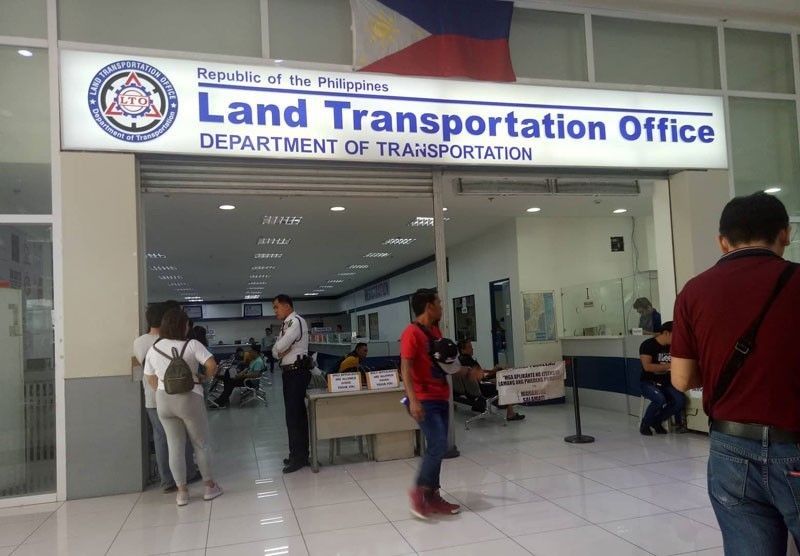
MANILA, Philippines — The Senate committee on public services is set to conduct an inquiry into the operations of Private Motor Vehicle Inspection Centers (PMVICs), with motorists now paying more than double their usual vehicle registration fees.
The inquiry was prompted by a resolution filed by Sen. Grace Poe, who chairs the panel and who wants to look into the implementation of Department Order 2018-019 of the Department of Transportation (DOTr), Memorandum Circular No. 2018-2158 of the Land Transportation Office (LTO) and other related issuances.
“The intention behind the law is noble, but the fees following its implementation cannot come at a worse time in the middle of a pandemic where people are barely getting by and now have to add another item in their list of expenses,” Poe said.
The LTO issued a memorandum circular back in 2018 authorizing PMVICs to collect an inspection fee of P1,800 from motor vehicles weighing 4,500 kilograms or less. If the vehicle fails the test, it will be required to undergo necessary repairs and be brought back to the PMVIC, where the motorist is charged an additional P900 reinspection fee to obtain clearance.
On the other hand, motorcycles and tricycles are charged P600 for the inspection fee and P300 for reinspection, if necessary.
“Imagine, even those who rely on their vehicles, such as delivery people and public utility vehicle drivers, would see their earnings squeezed out from them and left with nothing to bring home to their families,” she said in Filipino.
The implementation of the Motor Vehicle Inspection System (MVIS) program to ensure the roadworthiness of vehicles and prevent road accidents had been put on the back burner for more than 12 years. Before the program was rolled out, motorists only had to pay an average of P500 for the emission testing fee.
The new inspection procedure is allegedly more thorough as it uses advanced technology to check the car from inside out, but this has also elicited a number of complaints from motorists.
“It’s hard to ignore the accounts from motorists who have experienced glitches in the PMVIC test results that incurred additional costs on their part for reinspection. The unreliability of the test results is problematic and burdensome, to say the least,” Poe said.
Another issue is the absence of interconnectivity between the IT system used by the PMVICs and the LTO, which means vehicle owners have to pay for another testing in another testing center.
The DOTr is targeting to roll out a total of 138 PMVICs nationwide. The lack of transparency in the selection of the PMVICs caused apprehension among concerned groups that the program has become a breeding ground for corruption.
Restraint
Senators also hit the LTO for its poor interpretation and implementation of laws passed by Congress.
“Who needs restraint the most? People in the LTO driver’s seat. It is behind the epidemic of new fees. It has become a super spreader of high fines,” Senate President Pro Tempore Ralph Recto said in a statement.
“There is confusion in the rules it issues. The lack of coherence of which is the regulatory equivalent of distracted driving,” he said.
He said the rollout of the MVIS has been marred by chaos. And before that, the LTO’s incomprehensible policies branched out into education, by mandating that driver applicants must be tuition-paying graduates of driving schools.
“The LTO was flip-flopping on face shields. But it turns out that it was ‘swerving’ from the policies of the IATF (Interagency Task Force),” Recto said.
Meanwhile, Senate Majority Leader Juan Miguel Zubiri and Sens. Poe, Nancy Binay, Sonny Angara, Sherwin Gatchalian and Joel Villanueva on Tuesday filed a resolution asking the LTO to suspend its implementation of the Child Safety in Motor Vehicles Act until certain conditions are met.
‘IRR on child car seat needs fine-tuning’
At the House of Representatives, a lawmaker yesterday said the implementing rules and regulations of the controversial Child Safety in Motor Vehicles Act (Republic Act 11229) need fine-tuning, especially during a health crisis brought about by the pandemic.
“I support the initiative of the chair to have the implementation suspended but I also hope that the opportunity to review the IRR be taken while implementation is delayed,” Rep. Ruffy Biazon of Muntinlupa City said.
He was referring to his text message to Samar Rep. Edgar Mary Sarmiento, chairman of the House transportation committee, where he sits as panel member. The House has oversight functions on executive agencies.
Sarmiento earlier wrote Transportation Secretary Arthur Tugade to ask that preparatory measures, including a nationwide education and information campaign, be implemented prior to implementation of the law.
“It seems that there are IRR provisions that go beyond the scope and authority of RA 11229 and also add to the confusion and apprehension about the law,” Biazon, a former Customs commissioner, added.
Biazon cited one basis of an erroneous IRR provision was that on “Fitting Stations,” which is supposedly meant to effectively implement Section 8 of RA 11229, or the Certification Training Program.
“It is my belief that the establishment of fitting stations as contained in the IRR steps beyond the training program intended in Section 8. It is also vague as to the purpose of the fitting stations, with the question raised if motorists would need to have their units evaluated and approved by a fitting station,” he argued.
Biazon also pointed out to Sarmiento that the process of accrediting the fitting stations – as contained in the IRR – “may also give rise to corruption due to the exercise of discretion by accreditors.”
“The law does not mention the creation of fitting stations,” he stressed. – Delon Porcalla


- Latest
- Trending


