Metro Manila COVID-19 surge in early stages – experts
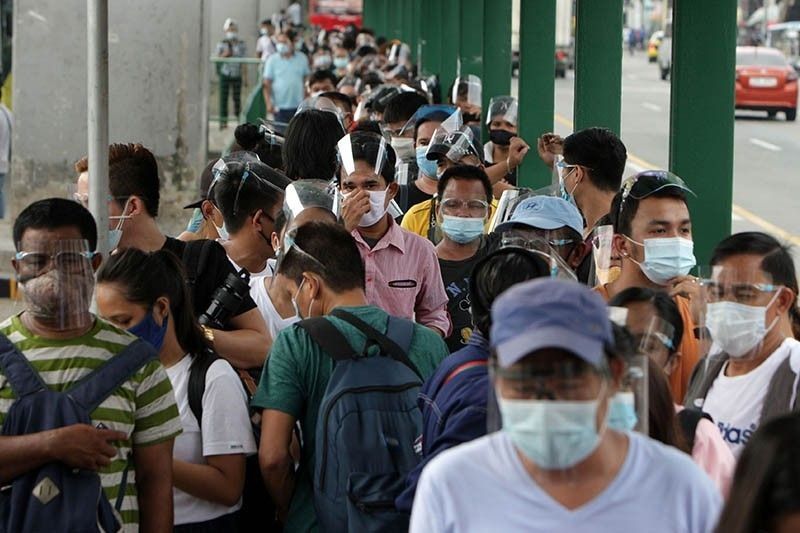
MANILA, Philippines — Days before Christmas, experts have confirmed that Metro Manila is now experiencing the early stages of a surge in COVID-19 cases.
“Based on the available data, the period of the declining trend in cases observed in Metro Manila in the past few months has now ended,” the OCTA Research Group said in its monitoring report released yesterday.
“The trend has been reversed with significant positive growth in new cases observed in the region,” it added.
From Dec. 13 to 19, OCTA said Metro Manila recorded an average of 428 new cases per day, up from the 370 recorded from the preceding week.
Nine local government units recorded increases in average daily cases in the past week: Makati, Malabon, Marikina, Quezon City, San Juan, Taguig, Navotas, Valenzuela and Caloocan.
Except for Navotas, Valenzuela and Caloocan, the other six were identified as among the local government units of concern in Metro Manila.
While still below the worst figures recorded earlier this year, when cases in Metro Manila reached an average of over 1,000 per day, academic experts still warned that the situation is a serious cause for concern.
In Metro Manila, the reproduction number – which indicates how many people a positive individual can infect – increased from 1.06 to 1.15, highlighting the increasing trend in the spread of cases.
“It is in this light that we believe, based on our analysis of the data and of the past trends in Metro Manila, that a surge in its early stages has already started in the region. This is a serious cause for concern,” said OCTA.
“Be that as it may, it should be noted that the surge is still in its nascent stage in the NCR and it can still be mitigated or even reversed. But to achieve this, we need to act now and act as one collectively,” it added.
Still manageable
Experts have previously predicted an increase in cases during the holiday season, citing the reopening of the economy and the quarantine fatigue that may have resulted in violations of health protocols.
The objective, according to OCTA, is to minimize the uptick to avoid overwhelming hospitals.
In its latest report, the group stressed that the situation in Metro Manila is still manageable but urged all sectors to work together to implement appropriate and timely responses to reverse the increasing trend.
“The national and local governments must work together more closely during the holidays to limit the spread of new cases by increasing testing and contact tracing capabilities, especially in Metro Manila,” said OCTA.
“Given the real threat of a surge in Metro Manila, all the local government units concerned should also start preparing public health systems and personnel as well as increasing health care capacity to deal with the influx of cases in the next few weeks,” it added.
The group urged local officials to strictly monitor and enforce currently quarantine guidelines, especially the ban on gatherings of more than 10 persons in areas under general community quarantine.
It also discouraged the holding of parties and activities that would result in the mixing of residents from different households.
“While we must celebrate Christmas, we should do so safely and responsibly, not just to ensure our own safety and well being, but also that of our families and our community,” said OCTA.
“During this new normal Christmas, we must all continue our vigilance and be mindful, never to be complacent and overconfident as the virus is still here and is very much a clear and present danger to us all,” it added.
Other areas
Aside from Metro Manila, experts have also noted an increase in cases in other parts of the country.
OCTA said the reproductive number in the entire Philippines increased from 0.96 to 1.03, indicating an increasing trend in the overall number of cases.
Identified provinces of concern include Rizal, Bulacan, Isabela, Leyte, Pangasinan, South Cotabato and Negros Oriental.
Specific local government units that it cited include Santiago and Ilagan in Isabela, Baguio and La Trinidad in Benguet, Cainta in Rizal, Batangas City and Ormoc and Tacloban in Leyte.
“We urge the local government units concerned to further intensify their efforts at testing, tracing and isolation to reverse the increase in transmissions in their communities,” said OCTA.
“Effective and stricter border controls must be in place to mitigate COVID-19 transmissions within and between provinces. Together with more effective screening and other controls in our ports and airports, this will be crucial to supporting the government’s plans to expand domestic as well international travel in the country,” it added.
Health Secretary Francisco Duque III directed all laboratories involved in handling tests for COVID-19 to remain operational during the holiday season.
Duque said it is important for the government to continue imposing the strict health protocols and regulations
“One, we directed them that they cannot close the laboratories during this time. They have to be fully operational, Mr. President,” Duque told the President when he updated him about the latest developments in the number of COVID-19 cases.
Duque reiterated the appeal to the public and the local government units observe all the health protocols to avoid the surge during the holidays.
Stay away from the elderly
In an advisory, the Department of Health (DOH) urged the public yesterday to stay away from the elderly during the holidays to protect them from possible COVID-19 infection.
The DOH further called on people to avoid kissing hands and cheeks of the elderly, and instead just bow their heads or opt for other gestures to show respect.
According to the DOH, the elderly are at higher risk of acquiring a serious case of COVID-19 as well as other infections and thus must be protected.
The DOH reported that the number of confirmed COVID-19 cases nationwide reached 462,815, with the addition of 1,314 cases yesterday.
DOH said an additional 247 recoveries brought to 429,419 the number of patients who recovered from the infection. The figure comprised 92.8 percent of the total cases.
Active cases stand at 24,375 or 5.3 percent of the total cases. The greater bulk or 91.1 percent of the active cases are mild and asymptomatic.
Quezon City logged the biggest number of new cases with 93, followed by Rizal with 89 and Benguet with 78.
Bulacan ranked fourth in the list of areas with a high of 61 new cases, followed by Davao City with 60.
Fatalities rose to 9,021 with the inclusion of 66 deaths. Mortalities represent 1.95 percent of the total cases.
Ten laboratories failed to submit their data to the COVID-19 Data Repository System on Dec. 21. – Christina Mendez, Mayen Jaymalin



- Latest
- Trending