Senators deny JPEPA railroad
MANILA, Philippines – Senators justified yesterday the ratification of the Japan-Philippines Economic Partnership Agreement or JPEPA, saying the trade pact – although “flawed” – will help the country catch up with global trade.
Sen. Miriam Defensor-Santiago, chairman of the foreign relations committee and principal sponsor of the JPEPA, said she was confident that JPEPA would pass the test of constitutionality if challenged before the Supreme Court by groups opposed to it.
President Arroyo welcomed the Senate’s ratification of JPEPA.
“We have diversified our economy, not only in terms of niche agri-products and aqua-products and food products but also in terms of markets, so that the United States is no longer our top export market,” she said at the opening of the agrilink/foodlink/aqualink 2008 of the Department of Agriculture.
“It is timely that we acted on JPEPA at this time. It is necessary for us to keep up our competitiveness with our ASEAN neighbors, who have their respective economic agreements with Japan,” Sen. Manuel Roxas, co-sponsor of the treaty, said.
Senate Majority Leader Francis Pangilinan said “renegotiation by the state of specific provisions” is preferable to outright rejection.
“In a world that is fast shrinking because of globalization and the fierce competition for new markets, we cannot just object, criticize or condemn without offering concrete, viable alternative bilateral or multilateral engagements,” he said.
“We cannot remain in isolation while the rest of the region moves ahead at breakneck speed,” Pangilinan said.
Santiago said the treaty could be amended in a year or even terminated if later deemed disadvantageous to the Philippines.
Santiago expressed doubts the SC would stop the JPEPA’s implementation through a temporary restraining order.
“That (TRO) will certainly bind the Philippine government but will it bind the Japanese government? So it will be a question of whether the SC will stop a treaty, which will be executed at a certain point in time,” she said.
“It is not just Filipinos litigating among themselves, there is another sovereign state involved. I am also sanguine that the SC will declare it unconstitutional,” Santiago said.
“Wavering senators who could not make up their minds were deeply worried on whether JPEPA is constitutional. I was able to assure them that with the written exchange of notes, that if this treaty is attacked in the SC, the government will win this case,” Santiago said.
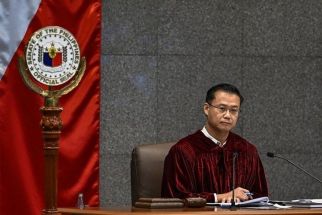
Sen. Francis Escudero, chairman of the Senate ways and means committee, said he did not vote for the treaty because it was poorly negotiated and would be beneficial only to Japan.
Roxas stressed that benefits from JPEPA would not materialize overnight, and that government and businesses should work together to make sure that the gains were realized, and Philippine laws upheld.
“I urge the executive to continue to hold discussions with the various sectors on the benefits of JPEPA, and to put in place the safety nets that are needed,” he said.
Outrage
Militant congressmen were disappointed with the Senate’s “midnight ratification” of JPEPA, saying it was “an act of betrayal.”
“I salute Senators Noynoy Aquino, Aquilino Pimentel, Jamby Madrigal and Francis Escudero,” Quezon Rep. Lorenzo “Erin” Tanada III said.
“We laud them for standing up for the interest of the country,” Risa Hontiveros of party-list Akbayan said, adding that their rejection of JPEPA was an act of “patriotism.”
“It was not a vote ratifying a bilateral agreement. It was effectively a vote to junk the Philippine Constitution and our sovereignty,” she stressed.
“It was as if even the 16 senators who approved of JPEPA were ashamed of their vote. Unfortunately for them, the unconstitutionality of JPEPA is as clear as day,” she added.
“Despite the Senate vote, it is still lopsided and constitutionally infirm. It will not bring in a tide of economic growth but a tsunami of unfair trade and toxic wastes,” she said.
Tañada pointed out that the exchange of notes was just a “shared understanding” between the two parties and “not an integral part to the treaty.”
“Even if it was, it provides that it does not modify the rights and obligations of the parties,” he said.
“Other countries were able to get better deals from Japan, why were we not able to?” he asked. He also cautioned that “mere side notes on the toxic issue do not automatically solve the problem.”
“The Philippine Senate has yet to ratify the amendments to the Basle Convention on the Control of Transboundary Movement of Hazardous Wastes,” Tañada said.
Hontiveros agreed with Tañada, saying the Senate’s concurrence to the exchange of notes between Foreign Secretary Alberto Romulo and Japanese Foreign Affairs Minister Masahiko Koumora “will not amend or degrade the Philippine Constitution.”
A new anti-JPEPA group, NO DEAL! Movement also assailed the Senate for “railroading” the trade pact.
Together with the Bagong Alyansang Makabayan, the group called JPEPA a “patently one-sided and anti-Filipino” treaty.
“We are not surprised that the JPEPA has been approved while the rest of the country is not watching. This treaty has been negotiated by Malacañang and signed by Gloria Arroyo in virtual secrecy,” said Dr. Carol Araullo, convener of NO DEAL! Movement and chairperson of Bayan.
Medical workers indignant
Militant doctors were also enraged by the Senate’s ratification of JPEPA, saying the trade pact will institutionalize “casualization” and deny Filipino workers job tenure in Japan.
“This anti-workers practice will be given a mantle of legality because of the ratification of JPEPA. It will now serve as a blueprint for other countries that employ Filipinos. It will really be to our disadvantage,” Dr. Gene Nisperos, secretary-general of the Health Alliance for Democracy (HEAD), told The STAR.
He said JPEPA is Japan’s ploy “to skirt the issue of providing their own nurses and caregivers the compensation they demand.”
“With the treaty ratified, there is now an even bigger incentive for Japanese hazardous waste generators and traders to ship their dangerous materials to the Philippines so long as an economic justification for ‘recycling’ these toxic substances could be made,” Beau Baconguis, campaign manager for Greenpeace Southeast Asia in the Philippines, said.
She assailed the senators who voted for JPEPA for being “unmindful of the profound consequences that the treaty would have on the lives of Filipinos.” With Marvin Sy, Sheila Crisostomo, Katherine Adraneda and Delon Porcalla





- Latest
- Trending