Rule Britannia

Did you know that relations between the Philippines and what is now known as the United Kingdom of Great Britain and Northern Ireland started way back in the 16th century?
Contrary to popular belief, engagement with the United Kingdom did not start with the British Occupation of Manila and Cavite between 1762 to 1764, but relations started with the arrival of the known British explorer Sir Francis Drake in Mindanao in 1579 after an almost three-year circumnavigational voyage.
Of course, every historian and history buff, particularly of World and English history, would know about the colorful and controversial life and exploits of Sir Francis Drake, who was close to Queen Elizabeth I at the time and was even rumored to be one of her lovers.
Much of the relations with Great Britain four centuries later would be more economic, and it was only on July 4, 1946, that formal diplomatic relations were established.
Relations between the Philippines and the United Kingdom had always been good. No less than our own President, Ferdinand “Bongbong” Marcos Jr., studied in the UK, both at the Worth School and Oxford University in England in the ‘70s. More on British education later.
We put our best foot forward when it comes to the United Kingdom, and our current Philippine Ambassador to the United Kingdom is one of our best public officials, the highly intelligent and astute Teodoro “Teddyboy” Locsin Jr.

On the part of the British, they have likewise sent one of their best diplomats to our shores, Her Excellency Laure Beaufils, who previously served as the Deputy Director for the Middle East and North Africa of the Department of International Development and the Deputy High Commissioner to Nigeria.
Sadly, though, Ambassador Beaufils will be ending her tour of duty here.
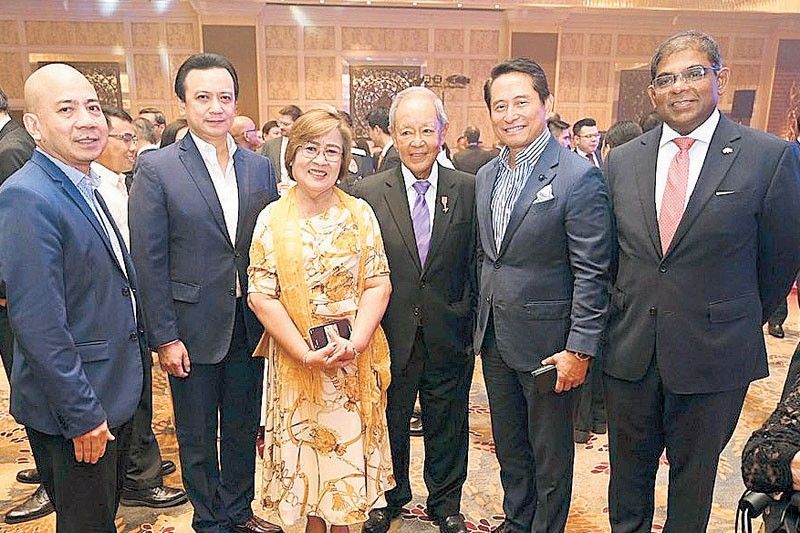
She will be replaced in September by the newly designated Ambassador, Sarah Hulton OBE, who previously served in the British Embassy in Manila as Second Secretary Political PPA from 2005 to 2008.
We look forward to meeting Ambassador-designate Hulton who, I understand, is well versed in Filipino.
Ambassador Beaufils once wrote that over the past four years of her stint as Ambassador to the Philippines, one of the most rewarding parts of her role has been meeting Filipinos who studied in the United Kingdom. She mentioned that their stories are full of insight, warmth, and inspiration. She said that students who chose to study in the United Kingdom gained more than qualifications, they also gained a global perspective.
Modesty aside, I was one of those that she met who regaled her with stories about how memorable studying in the United Kingdom was and of the impact that British education had not just on my life but on my career.
As a certified Anglophile, my love for almost anything British (except, perhaps, traditional British cuisine) verily included the desire to study there, and this dream was realized when I became a scholar of the British government under the Chevening program.
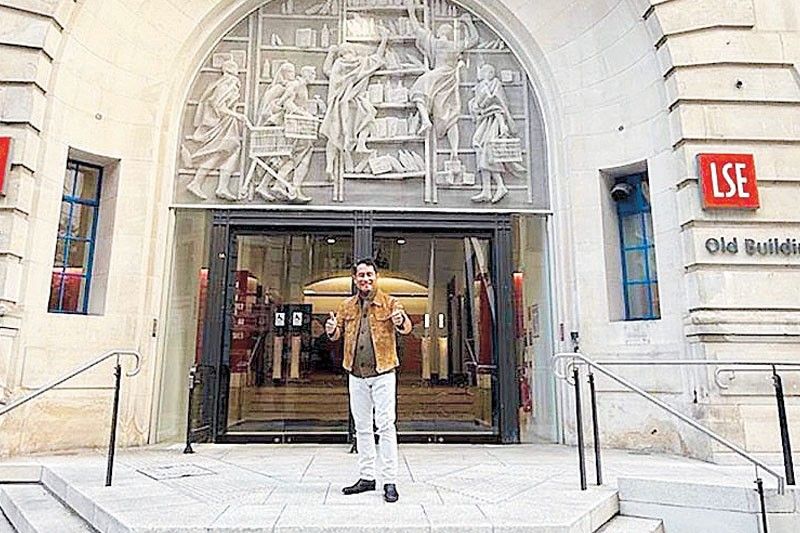
Never did I imagine the honor of being chosen among the thousands who applied then, and there were only three or four of us who were selected. This allowed me, at no cost to my parents or myself, to pursue my dream of tucking in, under my belt, a Master of Laws in International and Economic Law degree at the prestigious London School of Economics and Political Science (LSE).
Chevening is the United Kingdom (UK) government’s international scholarships and fellowships program. It offers fully funded scholarships and fellowships to “individuals with ideas to create positive change.”
Funded by the Foreign, Commonwealth and Development Office (FCDO) and partner organizations, Chevening offers individuals who show potential to inspire, inform, and influence positive change the opportunity to study at a UK university to gain a UK educational qualification.
Chevening Scholars study subjects in a diverse range of fields and go on to implement their ideas for positive change in a range of sectors, while Chevening fellows, on the other hand, are mid-senior-level professionals that have the opportunity to undertake specialized short courses or research placements at UK universities and institutions.
After completing their period of study in the UK, scholars and fellows return home and join a global network of over 60,000 alumni, which in the Philippines is the CAFPI or the Chevening Alumni Foundation of the Philippines, Inc.
I had the honor of serving as the first CAFPI president, and I only had one mission during my tour of duty: to spread the word of Chevening.
Just recently, I had the opportunity to pay my alma mater in England a visit and, I must say, the passage of time has not changed the Old World feel and prestige that I experienced while walking and studying within its hallowed halls.
Aside from Education Secretary Edgardo “Sonny” Angara Jr., the one other alumnus of the LSE is current House Majority Floor Leader and presidential son, Ferdinand Alexander “Sandro” Marcos, who finished his master’s in development studies in the prestigious institution back in 2017.
Right now, British education is no longer just for those who can travel to the United Kingdom but is now being offered in partnership with Filipino universities under transnational education (TNE) postgraduate degree programs in food security, agriculture, public health, financial technology, designing education, data science, robotics, and business management.
Indeed, as outgoing Ambassador Beaufils once said, “As we look to the future, I hope Filipinos will continue to see the UK not just as a destination, but as a launchpad — for ideas, for careers, and for growth and impact that reach far beyond borders.”
Godspeed and we wish you all the best in your next tour of duty, Your Excellency! *


- Latest