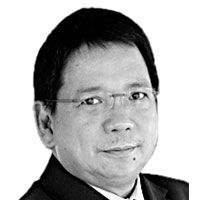
Frederick Go, economic czar
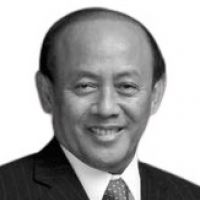
Ferdinand Marcos Jr.’s brilliant move and a masterstroke is the appointment of property tycoon Frederick D. Go as his secretary of Finance, succeeding the politician-economist Ralph Recto, who becomes the executive secretary after former Chief Justice Lucas Bersamin resigned, out of delicadeza, when his grand-nephew, a Palace undersecretary, was reported to have downloaded billions of flood control money by name-dropping the President’s name.
For the first time, a tycoon takes over the Department of Finance whose two main revenue units – the Bureau of Customs and the Bureau of Internal Revenue – are legendary for corruption that rivals the thievery at the Department of Public Works and Highways.
Previously, for 22 months, Go was the Special Assistant to the President for Investment and Economic Affairs (SAPIEA) since Jan. 12, 2024. “If there is one thing admirable about Deck Go,” President Marcos Jr. said, “despite him being comfortable in his own life, he knows he can still make a difference in our country.”
At the Gokongwei Group, Go built in 30 years a property giant from scratch, a sprawling conglomerate with P72-billion market value,17 subsidiaries, 55 shopping malls, 134 residential condominium buildings/towers/housing projects, 32 office buildings, 26 hotel and resort properties and seven industrial facilities. In September 2022, Robinsons Land raised $471 million to become the largest real estate IPO.
Deck is a management engineering graduate of Ateneo.
Go becomes the economic czar, in charge of finance, the economy and investments.
He catalyzed among the biggest and most relevant local investments through reforms that eased the rules and cost of doing business, created a friendlier business climate, opened up growth sectors and made deployment of local and foreign capital focused and inclusive amid an unprecedented crisis.
His latest trophy is Trump removing tariffs on a wide range of Philippine products. Half of the Philippines $14.5-billion exports to the US will now enter free of tariffs. No more tariffs for Phl bananas, coconuts, mangoes, dried guavas, coffee, tea, spices and some fertilizers. Previously, they faced a 19 percent duty.
Among Go’s other key initiatives at the SAPIEA:
1. Boosting the capital markets.
• Allowed short selling, 27 years since it was first proposed;
• Allowed after-hours Volume Weighted Average Price (VWAP) trading on the same day;
• Shortened the settlement cycle from 3 days to 2 days and the IPO Review Timeline from 4 to 6 months to 45 days;
• Removed the minimum broker’s commission fee;
• Passed of the Capital Market Efficiency Promotion Act which reduced stock transaction tax (STT) from 0.6 percent to 0.1 percent, aligning with best in the world practice.
2. Gave flesh and blood to New Public-Private Partnership (PPP) Code and its Implementing Rules and Regulations (IRR).
PPP Code replaces the decades-old Build-Operate-Transfer (BOT) law with a new, investor-friendly code to encourage greater private sector participation and the submission of unsolicited proposals.
Three airport PPPs – Manila International Airport, the Laguindingan International Airport and the Bohol-Panglao International Airport – approved in under three years, spanning each of the islands of Luzon, the Visayas and Mindanao, ensuring that no part of our archipelago is left behind.
3. CREATE MORE Act offers up to 40 years of fiscal incentives to investors – a combination of income tax holidays, enhanced tax deductions and special corporate income tax and non-income tax-based incentives.
It also restores the power of approvals of projects of up to P15 billion to investment promotion agencies (IPAs) such as the Board of Investments for domestic market enterprises and the Philippine Economic Zone Authority for export-oriented enterprises.
4. Digital National ID ensures faster, broader and more secure access for all Filipinos.
By September 2025, over 94 million Filipinos have been registered; 89 million got Digital ID – recognized by 16 government agencies, nine private sector groups and eight major financial institutions, including the country’s biggest e-wallet.
5. Luzon Economic Corridor (LEC).
Launched in 2024 during the trilateral summit – the Philippines, the US and Japan – it drives infrastructure development in the Corridor, supporting connectivity between Subic, Clark, Manila and Batangas.
The flagship is the 212-kilometer freight railway. In May, the US Trade and Development Agency approved the funding for the pre-feasibility study of the SCMB railway project and increased its grant from $2.5 million to $3.8 million.
In October, Manila received additional support from the government of Sweden, through Swedfund International, which extended a $1.3-million grant to finance a feasibility study on signaling systems and operational models for the railway.
6. VAT refund for tourists.
It puts the Philippines on par with tourist-focused countries.
7. E-Visa and visa-free entry.
He rolled out the e-Visa system with India and China, now pushing to promote it all over the world. Also, Indian tourists enjoy two weeks of visa free entry in the Philippines, while Indian tourists holding AJACSSUK (American, Japanese, Australian, Canadian, Schengen, Singapore or UK) visas or residence permits can stay for up to 30 days. Meanwhile, China tourists with AJACS visas can stay up to 21 days in the Philippines. It will be extended to other countries.
8. Amended Investors’ Lease Act.
Extends land lease terms to 99 years (same as in ASEAN), a long-awaited reform.
9. Enhanced Mining Fiscal Regime Act.
A simpler and more competitive tax framework for mining, marked by predictability and sustainability.
10. The Accelerated and Reformed Right of Way Act ensures faster implementation of roads, railways, utilities, schools and other vital infrastructure.
11. Enhanced PhilHealth primary care package.
The Yaman ng Kalusugan Program, or YAKAP, is PhilHealth’s enhanced primary care initiative launched in July 2025. It emphasizes comprehensive and reliable preventive and primary care services. It has been expanded to boost registration, encourage first patient encounters and improve overall utilization.
The program now offers enhanced benefits such as consultations, more lab services, including cancer screening in accredited hospitals, and up to 75 free medicines.
12. Semiconductor and Electronics Industry (SEI) Advisory Council was established in March 2025.
* * *
Email: [email protected]


- Latest
- Trending