Close call
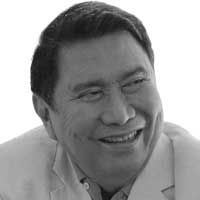
While I was browsing the internet for the whereabouts of journalists who covered the Western Police District – now the Manila Police District – with me (circa 1978-1987), I came across the name of a photojournalist who I will never, ever forget.
Luis Liwanag is now a famous freelance photojournalist whose work has been published by local and international news outlets and magazines: Associated Press, Agence France-Presse, The New York Times, and Time and Newsweek magazines, among others.
Liwanag nearly killed himself and his fellow journalists, including this columnist, in 1981.
He was then with the tabloid Tempo, a sister publication of the Manila Bulletin, where I was a police reporter.
Here’s the whole story:
If memory serves me well, Sept. 15, 1981, seemed to be a dry day for reporters covering the Manila Police beat. Or so that’s what we thought then.
A “dry day” is journalism parlance for a day when nothing significant or newsworthy is happening in a reporter’s field of vision or assignment.
My fellow police reporters were either lounging at the WPD press office or playing lucky nine or blackjack games to while away the time.
I was lying on the lone sofa of the press office in the early evening of that day when a report came in that a passenger jetliner had an accident while it was about to take off at the Manila International Airport (MIA).
How many fatalities among the passengers, what was the condition of the jetliner, what kind of accident it was – these were questions in our minds.
We were asking those questions because the MIA was out of our jurisdiction, as there were other reporters covering the MIA and the Manila Domestic Airport.
However, the editors of our respective papers – Daily Express, Times Journal, Manila Bulletin, Balita, Tempo, Evening Post, Evening Express and People’s Journal – called us one by one and ordered us to run to the MIA to get details of the mishap.
Airport reporters had probably called it a day because it was nightfall, and the important happenings at the airport took place in the daytime.
All the police reporters swarmed at the MIA in no time.
Digressing, police reporters are the hardiest bunch among all journalists, as they cover the “dirty stuff” – killings, fires, mishaps, bank robberies and hostage-taking incidents – but they never complain. Writing about blood and gore is their cup of tea.
Anyway, a Korean Air Lines jumbo jet veered off the runway during takeoff and crashed through a fence, its nose hanging on the edge of the airport runway a few meters from the South Expressway. It blocked traffic on the expressway’s service road.
The KAL jet was carrying 378 passengers bound for Bahrain.
At least 40 passengers were treated at the MIA clinic, but seven of them, who had fractures, were sent to hospitals. The rest of the passengers suffered bruises.
After we presented our press cards to the airport guards, we were allowed onto the scene of the accident.
The ill-fated jumbo jet was so huge, we found ourselves to be like puny creatures below it.
The Caucasian pilots who were still at the scene when we arrived refused to answer questions from reporters. We found them insolent, as most pilots are towards ordinary creatures without wings; white pilots are the worst of their kind.
The air surrounding the crash site was stuffy with fumes from aviation fuel.
The uniformed soldiers from the Aviation Security Command (Avsecom) were accommodating to us reporters; too accommodating, in fact.
Let me try to recall the reporters with me at the time: Teddy delos Santos and Manny Coles of the Times Journal; Bobby Coles of the Evening Post, Manny’s younger brother; Angelo Rilles, my Bulletin colleague; Bert Ignacio of the Daily Express; George Brooks of the Times Journal; Lino Sambo and Edong Reyes of People’s Journal; Eddie Danga of Balita and Robert Roque and Liwanag of Tempo.
As we reporters were inspecting the crash site, I noticed that one of us – it was Liwanag – took out a cigarette from a pack in his pocket, placed it in his mouth, and got a lighter from another pocket.
Liwanag, who was then barely out of his teens, was about to light his cigarette when two Avsecom soldiers kicked and pummeled him.
Police reporters are a tough bunch and protective of one another – at least during my time and during the pre-martial law years. We would not stand idly by while one of us was being beaten up.
We saw how Liwanag was being manhandled and came to his rescue.
A rumble between police reporters and Avsecom soldiers ensued, with Rilles, my Bulletin colleague, delivering the first blow at one of Liwanag’s attackers.
Fellow reporters fondly called Rilles “The Bulk” (a parody taken from a TV series, The Hulk, where a harmless man metamorphosed into a huge monster when provoked).
During the rumble, a man in civilian clothes shouted, “Linti kamo mga reporter (Damn you reporters)” and tried to get into the thick of the rumble.
I didn’t recognize the man with the Ilonggo accent and struck him with my elbow on the chest as he was trying to pacify me. The man turned out to be Col. Vicente Piccio, Avsecom chief.
After hot tempers cooled down, Piccio told us that if Liwanag had lit his cigarette, all of us under the jetliner would have been blown to pieces. People a few meters from the plane would have burned to death.
The fumes would have exploded, as aviation fuel vapor is highly flammable.
That was a close call for Liwanag, the other police reporters and for me.
I’m happy to know that Liwanag is now a topnotch international photojournalist. Most of the others who were with us at the MIA on that fateful day have gone back to their Maker.



- Latest
- Trending