Pardon and /or clemency
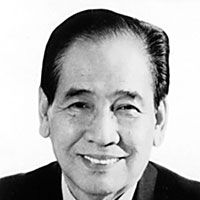
(Former Solicitor General, Philippine Envoy to
Definition of pardon and clemency
Pardon, is an executive action that mitigates or sets aside punishment for a crime. An Act of grace from government governing power which mitigates the punishment the law demands for the offense and restores the rights and privileges forfeited on account of the offense. (Verneco, Inc. v. Fidelity & Cas. Co. of New York 253
Pardon and clemency in the
In the
The pardoning power of the chief executive in the Philippines
Under the Jones Law which preceded the 1935 Philippine Constitution, the pardoning power was vested in the Executive. Down the line in our organic laws that power has remained and been recognized. Under Article VII of the 1935 Constitution, the President shall have the power to grant reprieves, commutations and pardons. That same power is vested in the prime minister under the 1973 Constitution. Of course, in Article VII Section 19 of the 1987 Constitution that power has remained in the following language, “Except in cases of impeachment, or as otherwise provided in this Constitution, the President may grant reprieves, commutations, and pardons, and remit fines and forfeitures, after conviction by final judgment.”
It is clear that the grant by the President of pardon must be done after conviction by final judgment. This grant varies from that given to the
The grant of pardon, a political expediency
It is said that the grant of pardon is a tacit admission that human institutions are imperfect and that there are infirmities in the administration of justice. The power is exercised as a vehicle for correcting these infirmities and for mitigating whatever harshness might be generated by the strict application of the law.
But, whatever are the reasons that motivate the Chief Executive, such power belongs to him exclusively. The Jones Law vested the “exclusive power” to the Chief Executive to grant pardons. Such that the Chief Executive for any reason he deemed just and at anytime, before trial, during trial, after trial and before conviction, after conviction and before serving sentence or during the service of the sentence. This is the extent of the power of pardon under the said Jones Law. There are of course now limitations to this exercise. During the debate in the Constitutional Convention drafting the 1935 Constitution, the delegates were undoubtedly heavily influenced by the Jones Law and the US Federal Constitution. Thus, among the amendments proposed was the insertion of the word “Sole” to make the President of the
The executive clemency or pardon granted to former President Estrada may not be questioned
It cannot be questioned simply because it is an act of the President under the authority of the Constitution. As a former Solicitor General, I have official knowledge of appealed cases and the Solicitor General at that stage acts as Counsel for the People of the
In conclusion, it is interesting to take note of the doctrinal case of Ex Parte Garland (4 Wall. 33,18 L. Ed. 366; Cited in Philippine case of Monsanto v. Factoran Jr., 170 SCRA 190 1989). Accordingly, the broad statement in that case is that pardon reaches both the punishment prescribed for the offense and the guilt of the offender and when the pardon is full, it releases the punishment and blots out of existence the guilt and in the eye of the law the offender is as innocent as if he had never committed the offense. But in the ponente of CJ Fernan, he disagreed with the generalities in the broad language of the





- Latest
- Trending