Republic Act 4169
Last June 19 this year, marked the 42nd anniversary of the establishment of the Pamantasan ng Lungsod ng Maynila (PLM). The law, Republic Act 4169, was signed and took effect on June 19, 1965. The process that led to the founding of the University started in 1960 during the incumbency of the late Manila Mayor Arsenio Lacson when he approved Ordinance 4202 on Jan. 13, 1960 which appropriated P1 million for the construction and establishment of a university. He did not however live to see the realization of this project as he died suddenly of heart attack. Vice-mayor Antonio Villegas took over and pursued this project by first issuing an Executive Order in 1963 through which a planning and working committee was created and appointed the head and members of that committee. Thereafter, Rep. Justo Albert of the 4th Congressional District of Manila introduced Bill 8349 in 1964 which was acted upon by the Senate and the House and was signed into law by President Diosdado Macapagal on June 19, 1965 as R.A. 4169. Earlier, the same President issued Proclamation No. 392-A on April 24, 1965 setting aside a 3-hectare lot occupied by the Manila High School as the University site.
PLM first president and chairman of the board
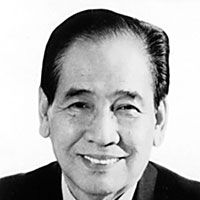
The first president of PLM was Dr. Benito F. Reyes and the first chairman was lawyer Carlos Moran Sison. The first meeting of the Board of Regents was held on March 16, 1967 followed by the opening of the University Colleges, the Graduate Institute for Teachers, the College of Arts and Letters, College of Science, College of Business Economics and Public Affairs, College of Technology and College of Nursing.
The inaugural address of Dr. Benito Reyes tells us of the mission and vision of the PLM. According to him “education is a total thing, meaning that it should be a total involvement of body, mind and emotion in a harmonious inter-relationship x x x x x x first and foremost, the education of man, as a human being so that he may correctly fulfill the purposes of God inherent in his being and embodied in his nature; and second, his education in a situational way so that he may adjust effectively and efficiently to the needs and demands of his actual environment and thus be able to express the ideals of the community in which he lives.” This was said years ago and how truly valid it is now. In later years, the City Government through its Mayors and aldermen had given their total support to the University. It is the City Government that appropriates yearly the necessary funding for the operation of the University. And under the University’s Charter, the Mayor, Vice-Mayor and the members of the Municipal Board constitute a Board of Visitors, and shall, among others, make visits, examine the property, course of study, discipline and state of finances of the University.
Manila the center of education
Manila is and has always been the center of learning and education. People all over the archipelago had always looked up to Manila in pursuit of their education. During the colonial years there was the awesome presence of the University of Santo Tomas (1611) reputedly older than Harvard University. The University of the Philippines established its location in the heart of Manila before it transferred to its present venue. Then there was Ateneo where Jose Rizal studied located in Intramuros. Other universities and colleges for boys and girls flourished in Manila.
It was therefore propitious and timely for the City of Manila to establish its own university, to advance human knowledge, to fully develop Filipino intellect and promote Filipino culture. An institution of learning to be distinguished from existing universities and colleges as it offers free education, non-profit and non-sectarian. Since the establishment of PLM, some 50 thousands students had graduated and in the competitive world its graduates have stood out. We are all aware of the recognition given to PLM graduates in many government sponsored examinations.
Origin and evolution of universities in the US
It is relevant to take note the evolution of universities in the US. There, the origins of universities are to be traced in the colleges established in the colonies, such as Harvard College (1636), College of Williams and Mary (1693), Yale (1701). Later, state universities emerged. The University of North Carolina was in its state constitution in 1705; The University of Georgia was chartered in 1789. The Indiana University of 1816 provided for a general scheme of education wherein tuition shall be free and equally open to all. Then came the University of Virginia established by legislative act of 1819 thru the influence of Thomas Jefferson. This institution was secular and non-sectarian. The model for state universities was the University of Minnesota in 1851. The distinguished characteristics of state universities are: the support of state governments, control and governance by public appointed/elected board and free or low tuition to students. Then a number of cities established or assumed legal control over municipal colleges and universities among which were: the City University of New York, The Teachers College in the district of Columbia, Harris Teachers College in Newark, The Washburn University of Topeka, Kansas.
The foregoing is cited as it provides a pattern of similar developments here. Already, PLM has taken the lead role as it was established not by virtue of a municipal ordinance but by congressional fiat.
The objectives of PLM’s education
In the Philippines as in many parts of Asia, the notion still lingers that education is only for the elite. But this is traversed now in the scheme of education that PLM offers in compliance with its objectives: to advance human knowledge, to fully develop Filipino culture, to give professional training in public affairs, in scientific, cultural, technological, industrial and vocational fields and to provide studies which at present do not receive sufficient emphasis in institutions of higher learning. Ideally, it is an education dealing with the rights and responsibilities of citizens moving from the family to the neighborhood, to the community, to the nation and to the world but with roots remaining deeply planted in one’s own culture. (Writer sits as regent and chairman, Executive Committee, PLM Board of Regents. Others in the Board are: Justice Justo Torres, chairman, Benjamin Tayabas, vice-chairman and president, Alfredo Gabot, Aguinaldo Miravalles, Jose Roy III regents and City School Superintendent Ma. Luisa Quinones ex oficio member)