Truth, war and accountability: Why transparency matters from Ukraine to the Indo-Pacific
When I arrived in Manila, I did not come only to speak about Ukraine. I came to speak about something that connects our countries, even though we are geographically far apart: the question of transparency, accountability and whether truth still matters in times of war and political pressure.
I am a Ukrainian human rights lawyer and the co-executive director of Truth Hounds, an organization that documents war crimes and other international crimes. For more than ten years, our team has worked in conflict zones, collecting evidence, interviewing witnesses and building legal cases so that perpetrators of serious violations of international law can be prosecuted. But our work is not only about war. It is about transparency and accountability — about documenting the truth when someone is trying to hide it.
Russia’s full-scale invasion of Ukraine began in 2022, but the war actually started much earlier, in 2014, with the illegal annexation of Crimea and parts of eastern Ukraine. Even before that, in 1994, Ukraine made a decision that is still shaping our history today. Under the Budapest Memorandum on Security Assurances, Ukraine gave up the world’s third-largest nuclear arsenal in exchange for security assurances from the United States, the United Kingdom and Russia. These countries committed to respect Ukraine’s independence, sovereignty and territorial integrity and to refrain from the threat or use of force against Ukraine. Ukraine chose international law over nuclear weapons. Today, we see how fragile security guarantees can be if international law is not enforced.
This is why transparency and documentation matter so much. Without facts, evidence and documentation, international law becomes only words on paper.
At Truth Hounds, our investigators work in places where war has destroyed normal life. We document attacks on civilians, torture in detention centers, sexual violence, the destruction of cities, attacks on energy infrastructure and environmental disasters caused by war. We interview witnesses, collect physical and digital evidence, analyze satellite imagery, and work with lawyers to ensure that this information can be used in court. This work is often slow and difficult. When we speak with people who survived torture or lost their families, we are not only collecting information — we are preserving truth. And truth, in war, is one of the first things that disappears.
In modern conflicts, information is also a weapon. Disinformation, propaganda and denial are used to hide crimes and avoid responsibility. This is why independent investigations and civil society organizations play such an important role. They create transparency where someone wants darkness. They document facts where someone wants confusion. They build evidence where someone hopes there will be none.
During my visit to Manila, I spoke with lawyers, journalists and policy experts, and I realized that many of the challenges we face are similar. Different countries, different regions, but the same fundamental questions: Can international institutions hold power accountable? Can societies defend truth? Can international law still protect people in small and middle-sized countries when it matters most?
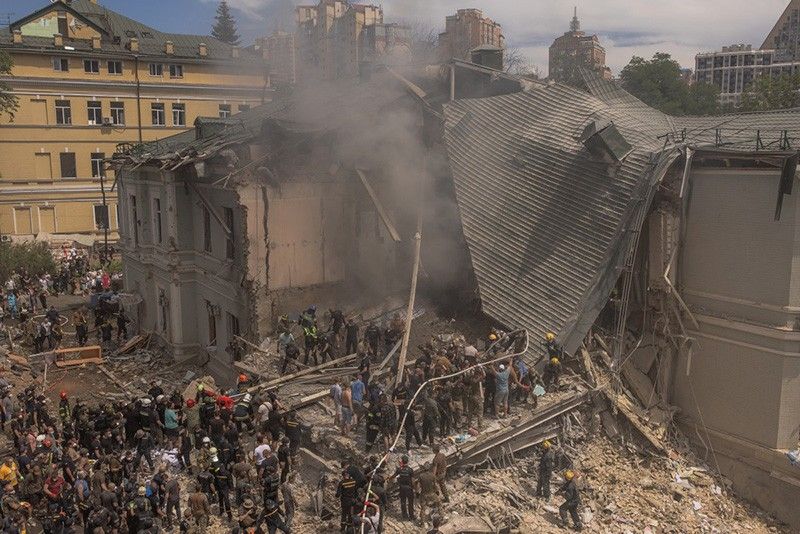
Transparency is not an abstract concept. It is very practical. It means that when a bomb hits a hospital, someone documents it. When a person is illegally detained, someone records their testimony. When a city is flooded after a dam is destroyed, someone investigates what happened and who is responsible. Transparency means that crimes cannot simply disappear into silence.
Accountability is what comes after transparency. Documentation alone is not enough. Evidence must be turned into legal cases. Perpetrators must be identified. Courts, including international courts, must work. Governments must support justice mechanisms. Without accountability, transparency becomes only a record of tragedy. With accountability, it becomes a path to justice.
This is why the work of documenting war crimes in Ukraine is not only about Ukraine. It is about strengthening the idea that law matters, that facts matter, that truth matters, and that international order still protects countries that do not have the power of larger states.
Because the alternative is a world where the most powerful actor defines reality, where disinformation replaces facts, and where violence has no legal consequences.
In my previous work at the European Court of Human Rights and Amnesty International, and now in documenting international crimes, I have seen how fragile the systems that protect human rights really are. They function only if people believe in them and are willing to defend them. They function only if there is evidence, transparency, and pressure for accountability.
Ukraine is now living through a war, but it is also living through a massive effort to document, to investigate, and to pursue justice, even while the war is ongoing. This work is difficult, imperfect, and slow, but it is essential. Because transparency is not only about the past — it is about the future.
It is about creating a world in which crimes are documented, truth is preserved, and accountability is possible — whether in Europe, in the Indo-Pacific, or anywhere else where people want to live in a system where law matters more than force.
And this is why conversations about transparency and accountability — whether in Kyiv or in Manila — are not local conversations. They are global ones.
Oksana Pokalchuk is Co-Executive Director and Head of Advocacy of Truth Hounds, an award-winning non-profit organization from Ukraine that focuses on human rights and war crimes.


- Latest