Turning the Philippines’ exclusive economic zone into an engine of growth
Museums across the Philippines are filled with reminders of the country's maritime past, from the Balangay boats to exhibits on the galleon trade. These artifacts reveal a historical reality: the sea has long been a source of mobility and commerce for the people of the archipelago.
The economic importance of the sea is hardly new to the Philippines. For centuries, the archipelago occupied a strategic position in global maritime trade, most notably during the Manila-Acapulco Galleon Trade, which connected Asia and the Americas for over 250 years.
While the country's geography has long been an economic asset, the challenge today is to leverage that advantage through sustained investments in fisheries, logistics, tourism, and other ocean-related industries. The Philippine Development Plan 2023-2028 recognizes the importance of agriculture, forestry, and fisheries (AFF) and the expansion of the blue economy to optimize the country’s vast coastal and marine resources.
Latest data from the Philippine Statistics Authority (PSA) show that the country’s ocean economy reached PHP 1.01 trillion in 2024 – an increase of 4.7% year-on-year – and contributed 3.8% to total economic output. Among ocean-based activities, ocean fishing accounted for the largest share at 24.5%, followed by manufacturing of ocean-based products (20.8%), sea-based transportation and storage (15.8%), and coastal accommodation and food and beverage services (12.8%). These ocean-based activities collectively employed around 2.39 million people, which underscore the sector’s importance to livelihoods and regional development.
These figures highlight that the country’s ocean economy remains concentrated in traditional activities. This creates a clear investment opportunity: how to shift ocean-based industries toward higher productivity, higher value-added, and innovation-driven growth.
To understand how this transformation can be supported, it is necessary to connect economic performance with the legal framework governing maritime space.
To bring order to the use of the seas, the world observes the United Nations Convention on the Law of the Sea (UNCLOS). Adopted in 1982 and entering into force in 1994, this international treaty serves as the principal legal framework governing the rights, responsibilities, and jurisdiction of states over marine and maritime activities. It has been ratified by over 170 states and the European Union, making it the cornerstone of modern ocean governance.
The Philippines signed the UNCLOS in 1982 and was the 11th country to ratify it in 1984. China signed the treaty in 1982 and ratified it in 1996.
Article 300 of UNCLOS requires State Parties to fulfill their obligations in good faith and to exercise their rights, jurisdiction, and freedoms without constituting an abuse of rights.
A central economic feature of UNCLOS is the establishment of exclusive economic zones (EEZs). Part V of the Convention provides that the EEZ extends up to 200 nautical miles from a coastal state’s baselines. Within this zone, coastal states have sovereign rights to explore, exploit, conserve, and manage natural resources, both living and non-living. Coastal states may also undertake necessary measures to ensure compliance with resource management regulations under the Convention.
This provision has profound implications for investment-led growth. By establishing clearly defined and enforceable rights over vast maritime areas, UNCLOS creates a long-term economic asset base that can attract investments in fisheries, renewable energy, maritime logistics, coastal tourism, marine biotechnology, and other related industries.
For countries like the Philippines, the challenge is no longer the establishment of legal rights over maritime areas, but the effective mobilization of capital to convert those rights into productive economic activity, alongside continued efforts to safeguard national interests.
The Philippines sits at the center of a vast ocean-based economic opportunity, but significant potential remains to be unlocked within its EEZ through deeper investment and industrial upgrading.
Earlier this month, the government issued Memorandum Order No. 47, approving the 2026 Strategic Investment Priority Plan (SIPP). The SIPP identifies priority sectors and investment activities eligible for incentives under Republic Act No. 12066, or the Corporate Recovery and Tax Incentives for Enterprises to Maximize Opportunities for Reinvigorating the Economy (CREATE MORE) Act.
The 2026 SIPP indicates a strategic shift in the country’s investment direction toward higher-value, innovation-driven, and future-oriented industries in response to evolving global economic conditions.
To guide the allocation of incentives, the SIPP classifies investment activities into three tiers. Higher-tier activities receive more generous incentives, including longer income tax holidays, enhanced deductions, and special corporate income tax regimes.
Tier I covers foundational sectors such as AFF, manufacturing, infrastructure, and logistics. Under Tier II are industries critical to supply chain resilience, including food security-related activities. Lastly, Tier III focuses on high-technology sectors such as advanced research and development, artificial intelligence, cybersecurity, and other innovation-driven activities.
Within this structure, ocean-based industries are primarily categorized under Tier I, including fisheries, shipbuilding, and water transport. Rather than limiting potential, this should be viewed as a strong foundation for long-term upgrading. These sectors form the backbone of the blue economy and provide the essential infrastructure upon which higher-value maritime industries can be developed. With the right investments, ocean-based industries can evolve beyond traditional roles.
Through EEZs, states have an opportunity to develop their ocean-based economies. The Philippines, with the third-longest coastline in Asia and the fifth-longest in the world, is well-positioned to benefit from this structure. Its EEZ represents not only a jurisdictional boundary but an economic asset with significant investment potential.
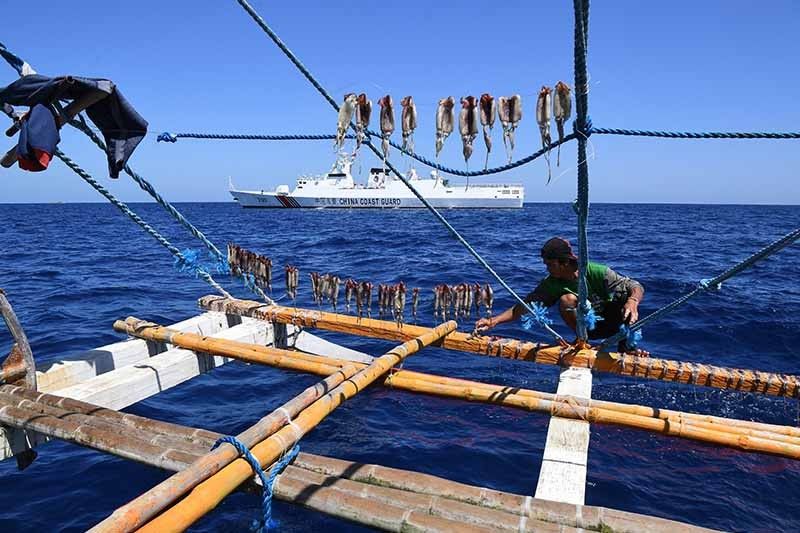
While the Philippines continues to face challenges in enforcing the 2016 arbitral ruling, where the Permanent Court of Arbitration clarified and invalidated excessive maritime claims over parts of the West Philippine Sea by China, the legal foundation of the country’s maritime rights remains firmly grounded in international law and cannot be altered, invalidated or reversed unilaterally.
An important policy question today is how the Philippines can convert its maritime rights into sustained economic value. Legal certainty provided by UNCLOS, reinforced by the arbitral ruling, gives investors a stable foundation for long-term capital. What remains is a more coordinated strategy to accelerate investments in the blue economy.
With legal certainty already established under international law, the Philippines is well-positioned to strengthen its blue economy. The growth opportunities are significant, particularly as global demand shifts toward sustainable food systems, renewable energy, and resilient supply chains.
Ultimately, the people of these islands have long depended on the sea for sustenance, trade, and prosperity. The goal is to translate this enduring maritime heritage and geographic advantage into an investment-led growth strategy: one where the blue economy becomes a far larger, more dynamic contributor to national development, with significant low-hanging fruit opportunities that can be readily unlocked through targeted strategic investment and policy support.
---
Venice Isabelle Rañosa is the Research Director of the Stratbase Group.


- Latest