‘Senators, congressmen face flood control raps’

MANILA, Philippines — Criminal charges are expected to be filed by Jan. 15 against Senators Jinggoy Estrada and Joel Villanueva, former senator Bong Revilla and several congressmen over their alleged involvement in the flood control corruption scandal, Sen. Imee Marcos said yesterday, citing reports she received from a source she did not identify.
In an interview, Marcos also said she received information that CWS party-list Rep. Edwin Gardiola, Benguet Rep. Eric Yap and ACT-CIS party-list Rep. Edvic Yap would also be included in the charges.
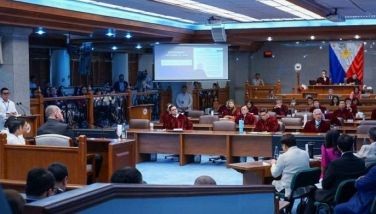
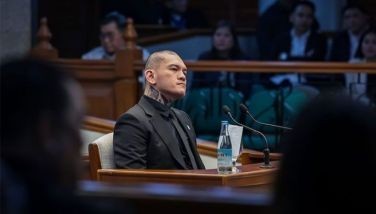
Blue Ribbon committee hearings last year had revealed how Estrada, Villanueva and Revilla allegedly received kickbacks from anomalous flood control projects.
Marcos said she knows that her colleagues have long been preparing their legal defense. She lamented how lawmakers from the House of Representatives, especially her cousin former speaker Martin Romualdez, were not being pursued.
“It makes me feel sad that only senators are being targeted even if it’s Bonjing and the speaker’s office that were the sources of corruption in flood control,” she said, in a mocking reference to the Leyte congressman.
Marcos recalled that in November, she had said that Senate witness Orly Guteza would recant his testimony linking Romualdez and former Ako Bicol party-list congressman Zaldy Co to the flood control controversy.
She also said there was, so far, no direct evidence connecting Senators Francis Escudero and Mark Villar, and former senators Nancy Binay and Grace Poe, to so-called “ghost” or substandard flood control projects.
All of them have denied any involvement in the controversy, which triggered large-scale protests in 2025 and calls for accountability among government officials.
She also claimed that Blue Ribbon committee members were being prevented from linking certain administration personalities especially Romualdez.
But Sotto III and Senate President Pro Tempore Panfilo Lacson slammed Marcos for what they called her baseless claims against the Blue Ribbon committee investigation on anomalous flood control projects. Marcos, at a recent zoom press briefing, also claimed the Senate leadership was preventing committee members from implicating influential people in the flood control sandal, and that she has lost trust in the committee since the ouster of Sen. Rodante Marcoleta as committee chairman.
“That’s impossible. Nobody’s preventing anyone from doing anything. Sen Lacson might get mad at such an accusation. Imbento,” Sotto said.
“Out of respect for all the senators of the 20th Congress and the hardworking staff of the Blue Ribbon committee, I choose not to dignify Sen Marcos’ unfair, untruthful and baseless accusations,” Lacson, for his part, said.
Marcos also lamented that the ongoing Department of Justice investigation centered on the alleged role in the flood control kickbacks scheme of senators both former and current.
We can’t oversee ‘pork’ ourselves – Makabayan
The militant Makabayan bloc, meanwhile, said Congress is not the proper institution to exercise oversight over allocations that benefit its members especially those possibly involved in anomalies in flood control projects and other corruption cases.
“We should not put much credence on this supposed oversight committee because how will Congress exercise oversight over the system of ‘allocables’ or congressional allocations for infrastructure that benefit its members? Will the lawmaker proponents investigate themselves?” Makabayan said in a statement.
“How will Congress exercise oversight over the various pork items that lawmakers themselves have a hand in implementing? We cannot expect lawmakers to do all these things because it goes against their vested interests of taking advantage of the pork barrel system,” it added.
The militant bloc said the public should keep its vigilance if it wants to prevent corruption and make accountable those responsible.
“The people will be the one to guard and fight the abuses of public funds,” the Makabayan bloc said.
For Bicol Saro Rep. Terry Ridon, chairman of the committee on public accounts, digitalizing transactions to minimize human discretion is key to limiting or eliminating corruption.
Ridon highlighted the importance of creating a portal where taxpayers can make their voices heard, whether to complain or voice support for government initiatives.
Agencies like the Department of Budget and Management, the Department of Information and Communications Technology and the Government Procurement Policy Board should “assist agencies in effectively shifting to primarily online procurement activities, to limit personnel intervention throughout the process,” he said.
“Public participation will be a cornerstone of budget accountability throughout the year,” the Bicol Saro party-list congressman said, noting it is important to “further limit human intervention in procurement” by requiring “key agencies to shift processes online.”
“The committee will also work with civil society and people’s organizations to facilitate public participation in monitoring the implementation of the 2026 national budget. We will invite the public to join monitoring activities and budget implementation discussions with various agencies,” he said.
“This ensures that the work of budget reform does not end with the signing of the budget – and that it continues until well-built public infrastructure is delivered, cost-effective goods are procured, and social programs efficiently reach every Filipino family,” Ridon pointed out.
Best interest of Congress
Opposition Rep. Leila de Lima, for her part, welcomed the initiative of the House leadership under Speaker Faustino Dy III and Majority Leader Sandro Marcos to create a joint congressional committee to monitor budget spending.
“We fully support this initiative as our job does not end with the passage of the national budget,” she said referring to the creation of the Joint Congressional Oversight Committee (JCOC) on Public Expenditures.
“It is in the best interest of Congress to make sure that the law – in this case the GAA (General Appropriations Act), a most important piece of legislation – is properly and judiciously implemented,” she said.
“Aside from this oversight committee, it would be vital to institutionalize this initiative through the passage of the Citizen Access and Disclosure of Expenditures for National Accountability (CADENA) Act,” the Mamamayang Liberal party-list lawmaker said, citing a related approved Senate measure filed by Sen. Bam Aquino.
“We have filed a House counterpart of this crucial measure to implement genuine budget reform,” De Lima said.
“Through this measure, a digital budget portal will be established to make government spending accessible, searchable, and traceable throughout the entire budget cycle,” De Lima, a former senator and justice secretary said.
With legal basis
In defense of the JCOC, Senate finance committee chairman Sherwin Gatchalian said the soon-to-be convened body has legal basis in the GAA.
“This JCOC is not entirely new. The GAA mandated the creation of a JCOC on public expenditures. But it has never been created,” Gatchalian said at the Kapihan sa Manila Bay forum yesterday.
Gatchalian said he will manifest before the plenary when session resumes on Jan. 26 that members of the House and Senate bicameral conference committee comprise the JCOC.
The JCOC, he said, will look into the use of public funds amid the “perennial” problem of budget underutilization by underperforming agencies.
The JCOC will also look into the implementation of infrastructure projects – like those for flood control or irrigation – to prevent another flood control scandal involving ghost or substandard public works lost to corruption.
The JCOC hearings will complement the executive department’s crafting of the National Expenditure Program ahead of the budget call, to prevent a repeat of questionable “insertions” in the spending plan.
“This is a process prior to the submission of the NEP. Projects end up in the NEP because of the bottom-up procedure, which means it should be based on the requests of local government units and the community,” Gatchalian said.
“The JCOC will also look into this, as another way to prevent insertions during the congressional process, but also to hear from the voice of the community and local government and translate this to national expenditure,” he added.
Gatchalian said he also wants the JCOC to oversee the implementation of a new “anti-epal” general provision in the GAA, which expressly prohibits politicians from being involved in the distribution of government financial assistance programs.
“We are doing a lot of preparatory work. We have to coordinate with our House counterpart to narrow down the topics we want to cover,” the senator said.
Gatchalian also denied that the JCOC would be used to “cover up” the role of Congress in any budget anomaly. - Jayson Cayabyab, Delon Porcalla, Jose Rodel Clapano






- Latest
- Trending