Congress insertions still prone to abuse – Drilon

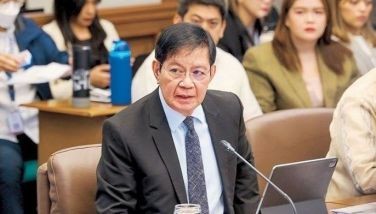
MANILA, Philippines — The Senate inquiry into anomalies in flood control projects must result in stronger safeguards in the national budget, former Senate president Franklin Drilon said yesterday, as he warned that congressional insertions remain prone to abuse.
“What our countrymen are waiting for is a result of this investigation. Imprison those responsible, and return the people’s money,” Drilon said in Filipino.
The former senator, who previously chaired the Senate finance committee, stressed that the probe is “in aid of legislation, not prosecution” and should focus on reforms that would prevent a repeat of the controversy.
Drilon suggested placing all projects outside the National Expenditure Program under “for later release,” subject to stricter vetting before funds are disbursed.
“Budget amendments cannot be avoided in Congress,” he said. “But insertions should not be released unless they are properly examined. That is one way to prevent this from happening again.”
Drilon lamented the “adversarial and divisive” tone of the debates, saying the Senate should concentrate on policy fixes instead of political bickering.
Asked if incumbent or former senators named in testimonies should attend hearings, he said: “That is their lookout. If they do not appear, the committee can always refer the matter to investigating agencies. This is not a criminal trial.”
Drilon recalled that he voluntarily appeared before a Blue Ribbon inquiry when the Iloilo Convention Center came under scrutiny, saying public officials must be prepared to face questions.
He also reminded senators to assess the credibility of witnesses carefully, warning that coached or false testimonies could undermine the process.
“The people deserve both justice and better safeguards in the budget process,” Drilon said.
“This investigation should not only point to accountability but also ensure reforms that prevent misuse of public funds,” he added.
Ban infrastructure insertions in budget
Meanwhile, Sen. Erwin Tulfo said yesterday Congress should be stripped of any authority to insert their own infrastructure projects into the national budget, as he stressed that projects should be funded only if local governments asked for them.
Tulfo said congressional involvement in infrastructure projects has created gaps that allowed corrupted budgets, and that local governments should instead directly coordinate with the Department of Public Works and Highways (DPWH).
“It should be that insertions should not be the job of lawmakers anymore,” the senator told dzBB in Filipino, referring to the practice of congressional insertions in the national budget.
Tulfo said infrastructure requests should naturally come from local governments, saying local officials have a firm grasp of what their communities need.
“It’s simple. Give the DPWH the funds, then request from them what (the local government) needs, so there will be no involvement from the lawmakers. We should get rid of meddling lawmakers, it should be the mayor talking to the DPWH,” he said.
“For infrastructure (projects), who do you approach? Maybe the local government would approach a congressman or senator to inform the DPWH when they have a need for it, the Department of Health if for a hospital. Maybe that’s what they should just do, even the appointment of a district engineer (DE),” he added.
Amid talks of abolishing district engineering offices and replacing them with regional offices, Tulfo said restructuring the DPWH requires thorough study, but agreed that the agency needs to be restructured.
“It (restructuring) should be studied thoroughly because the scope for that is massive, but I think it’s only right. Maybe at a provincial level, so that a congressman won’t be allowed to meddle in the appointment (of the DE). It should be studied further so that a congressman would not be involved anymore in the appointment of a DE,” Tulfo said.
He said President Marcos was correct in suggesting to divert the P36 billion originally intended for flood control funds, to social services for Filipinos who are poverty-stricken and in dire need of livelihood assistance.
“Instead of DPWH officials, contractors and politicians pocketing these public funds, I would rather have it allocated for the poor and marginalized,” Tulfo said.
“If the funds are with the Department of Social Welfare and Development, it will go directly to the people and not go through the hands of politicians, or even DPWH officials and contractors,” said the lawmaker who also served as DSWD secretary.
President Marcos earlier announced the flood control funds will be redirected to DSWD poverty alleviation programs such as the Assistance to Individuals in Crisis Situation (AICS) and Sustainable Livelihood Program (SLP), among others.
The AICS is a program of the DSWD intended to support poor and disenfranchised Filipinos when it comes to their emergency need for medicine, hospital, burial and transportation assistance.
AICS, however, has been criticized for its use by politicians in patronage, despite statements by the DSWD that politicians are not supposed to be involved in the unconditional aid program.
The SLP, meanwhile, provides P15,000 to communities so they can establish their own income-generating enterprises, and is a program being proposed by Tulfo to be institutionalized through Senate Bill 766.


- Latest
- Trending