DICT to Meta: Act vs fake news, disinformation
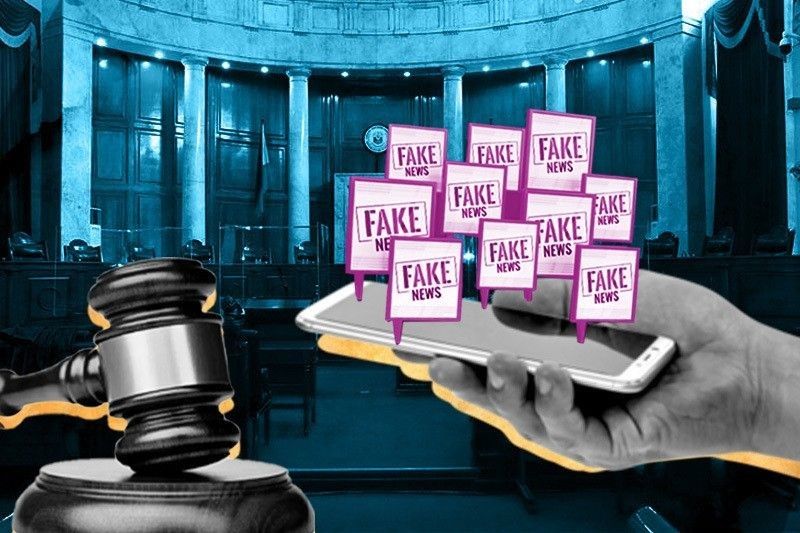
MANILA, Philippines — With Filipinos among the top users of Facebook and Instagram, their parent firm Meta should strictly enforce its community standards in the Philippines to stop the proliferation of fake news and malicious content, Information and Communications Secretary Rhoel Aguda said yesterday.
At the Kapihan sa Manila Bay forum, Aguda said he has asked the global tech giant to apply its community standards strictly in the country, as it does in the United Arab Emirates and Singapore, and get it to implement geographical blocking of fake news content in social media accounts in the Philippines.
Aguda, who was among the department secretaries reappointed by President Marcos in the recent Cabinet reorganization, said that as head of the Department of Information and Communications Technology (DICT), he is calling the attention of Meta to its inadequate action on fake news being carried by its social media platforms.
He said his department is engaged in serious efforts to clean up the internet of fake news and online disinformation and misinformation as well as harmful online activities like illegal gambling.
“I’m very confident, when I talk to the social media platform owners, we can get them to comply,” Aguda said at the forum. “We don’t want special treatment, we just want fair treatment.”
The DICT chief said Meta should not apply its own supposed community standards selectively, pointing out that the tech giant is proactively geo-blocking or geo-locking harmful content on the pages of their social media account holders in the two developed countries.
He said Meta should apply its global standards, recognized by jurisdictions like the European Union and the United Nations, on the Philippines which is battling online fake news.
“Let’s not pass the burden on to the (Filipino) public,” Aguda said, referring to fact-checking being undertaken almost singlehandedly by local groups
“They should be proactive,” Aguda said of Meta, noting that the Philippines is a top market of the global tech giant.
He pointed out that Meta has even set up an office for selling advertisement in the Philippines.
“Why don’t they have an office for regulatory and compliance?”
Aguda noted that other online giants and social media platforms such as Google and TikTok have a satisfactory level of compliance with rules on takedown of fake news and other disinformation content, especially during the last May 12 elections. “Meta, they complied somehow,” Aguda said.
During the last elections, the DICT, through the Cybercrime Investigation and Coordinating Center, and the Commission on Elections coordinated with Meta for the establishment and operation of a 24/7 Threat Monitoring Center to take down fake news and election-related disinformation and misinformation.
Aguda also announced the DICT will soon come out with clear and harmonized policies to help telecommunications firms block the SIM cards of their subscribers found engaged in text and online scams.
He said his department made the commitment after a meeting on May 30 with National Telecommunications Commission chief Ella Blanca Lopez, National Privacy Commission commissioner John Henry Naga, as well as with officials of PLDT, Smart Communications, Globe Telecom Inc., PT&T Corp. and Dito Telecommunity.
He said they discussed persistent problems with text scams despite the enforcement of the SIM Card Registration Law in 2022.
At the meeting, Aguda said that telcos asked for a department order that would provide clear guidelines for SIM Card registration process.
Aguda said that possible breach of privacy is the primary concern raised by telcos in taking more aggressive action on anomalous use of SIM cards.
“They committed that they will harmonize their policies together. So there will be clear guidelines from NPC,” Aguda said. “That’s what they need, clear guidance, and then, they will follow,” he said.
He said he hoped to come out with the guidelines within the month, decreed earlier by Marcos as National ICT Month.
Security team-up
Meanwhile, the private sector council for telco security is eyeing the inclusion of law enforcement agencies in its membership to counter the rising threats against the country’s technological assets.
The National Telecommunications Security Council (NTSC) yesterday announced plans to become a defense body by adding the military and police to its membership.
Currently, the NTSC is operating as an industry umbrella headed by security professionals of the country’s biggest telcos, including PLDT, Globe Telecom, Converge ICT Solutions, Dito Telecommunity Corp. and Sky Cable Corp.
At the NTSC’s latest meeting, its leaders agreed in principle to expand its membership to include the Armed Forces of the Philippines and Philippine National Police.
The NTSC aims to bring in security agents to consolidate efforts in preserving telco assets.
The NTSC also plans to add the National Bureau of Investigation and Philippine Coast Guard to its fold. The NTSC is also inviting the DICT and NTC.
By expanding the NTSC’s membership to include law enforcers, the council hopes to accomplish more in defending telco assets critical to national security.
Specifically, the NTSC raised the multitudes of risks to telco infrastructure, from petty but costly crimes like theft and vandalism, to complex illicit activities like cyberattacks and fraud.
PLDT head of security and central command administration Wilfredo Gonio said the NTSC also seeks to set up a framework for threat response in consultation with the government.
The framework covers improved information sharing, new ways to protect critical infrastructure and rapid response protocols for emergencies.
It also schedules joint training between the public and private sectors on how to foil cyberattacks.
It is important for telcos to protect connectivity assets to ensure uninterrupted service delivery in their coverage areas.
They also incur losses when their networks are attacked by criminals.
PLDT, for one, saw its infrastructure losses go down by half between 2022 and 2024, reaping the benefits of its partnerships with law enforcement and local communities. - Elijah Felice Rosales


- Latest
- Trending