Puno: Supreme Court maintained its independence under my watch
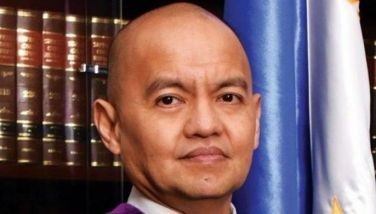
MANILA, Philippines - Retiring Chief Justice Reynato Puno yesterday said the Supreme Court (SC) has maintained its independence during the 42 months he was at the helm of the judiciary.
Puno leaves the SC today formally ending his 38 years in the judiciary, stressing his legacy of leaving the SC with its integrity and independence intact.
He said the SC has asserted its independence notwithstanding the fact that 14 of the justices are appointees of President Arroyo.
“There are a number of important cases wherein the Court has decided contrary to the position of the administration,” Puno said.
Puno said the controversial cases that were decided against the administration include the bid for a people’s initiative to amend the Constitution, the initial peace agreement between the government and the Moro Islamic Liberation Front, and the recent case seeking to allow Cabinet officials to stay in their posts even after filing their certificates of candidacy to seek elective posts.
Puno said it was during his 42-month stint as head of the SC that he introduced reforms in the judicial system to promote protection of all three levels of human rights.
“When I was sworn into office as chief justice, I knew I had to act swiftly if I wanted to institute meaningful and relevant programs in the judiciary, bearing in mind that I would only have three years and a few months to do so,” he said.
Puno admitted the increasing incidents of unexplained killings and enforced disappearances prompted him to introduce programs to promote human rights in the judicial system.
Puno also expressed hope that his appointed successor, Senior Associate Justice Renato Corona, would continue the “legacy of ever-improving judiciary, one more responsive to the needs of our people, ever on the side of the Constitution and of human dignity.”
Puno will be honored by the High Court in a special ceremony at the SC session hall at 3:30 p.m. today.
He leaves the judiciary three days before his actual date of retirement on May 17, since he is set to leave tomorrow for the US to receive awards from the University of California-Berkeley and the Dedman School of Law, Southern Methodist University in the US.
On Wednesday, Malacañang announced President Arroyo has chosen Corona to succeed Puno.
Chief Presidential Legal Counsel Raoul Victorino said Corona would likely assume the post at midnight of May 17.
“At 12:01 a.m. of Tuesday (May 18), Justice Renato C. Corona will succeed Chief Justice Reynato S. Puno so that there will be continuity and there will be no hiatus,” Victorino said.
Warning
Malacañang told critics led by Sen. Benigno “Noynoy” Aquino III, who is expected to be proclaimed as the next president, to recognize the appointment of Corona.
Presidential spokesman Ricardo Saludo said the appointment of Corona “gives stability and continuity to the judiciary.”
“There will be no uncertainty that is often the source of speculation and intrigues. There will be no more of that,” Saludo said.
Saludo said Aquino, who has repeatedly vowed to find ways to undo Corona’s appointment, is duty-bound to respect it as it was already decided by the SC as mandated by the Constitution.
Aquino said he would not recognize the appointment of Corona and even warned the new chief justice could be impeached.
Saludo said Aquino would soon realize that his position could be illegal and unconstitutional.
“It is the duty of every Filipino and every official (to abide by the Constitution). If we need to make such a call, it is as (if) we are insulting him. We don’t need to point that out to him. He took that oath as a senator,” Saludo said.
“So to say a statement that ‘I would not recognize someone who was appointed by this president’ you know, strictly speaking, what you’re saying is you will disregard a legal appointment,” he said.
Saludo said the SC has long settled the issue and the Judicial and Bar Council (JBC) took its cue from the decisions of the high court and proceeded to make a shortlist of candidates.
“What we have done here is not a declaration of war but it is compliance with the Constitution. We are not their enemy; their enemy would be the Constitution. If we comply with the Constitution, and people are taking issue with it, then they are not taking (issue) with the government, they are taking issue (with) the Constitution,” Saludo said.
Re-electionist Sen. Juan Ponce Enrile said Aquino should be thankful to President Arroyo for making the appointment of the next chief justice.
Enrile contradicted Aquino by saying the next president cannot appoint the next chief justice in the absence of any recommendation coming from the JBC.
Enrile explained the Constitution is explicit in saying the next chief justice or member of the judiciary should pass through the JBC, which in turn, would recommend the names for appointment to the president.
Since Puno would be retiring on May 17, he would cease to become the ex-officio chairman of the JBC and there would be no names coming from the panel to be appointed by the president, Enrile pointed out.
If Mrs. Arroyo did not make the appointment, then there would be no chief justice to preside over the JBC when the next president assumes office on June 30.
“That’s very clear in the Constitution, the chief justice is the ex-officio chairman of the JBC; if he is not there, the JBC cannot function,” Enrile said.
“In the same manner that the Senate president is the ex-officio chairman of the Commission on Appointments, if the Senate president is not around then the Commission on Appointments cannot convene and hold session,” he said.
Sen. Francis Escudero, as the Senate representative to the JBC, earlier agreed to the appointment of Corona as the next chief justice.
“I may disagree with the decision of the (SC) and even the move of the President, but there is no other recourse but to accept it,” he said.
Escudero said the SC has already ruled to allow Mrs. Arroyo to appoint the next chief justice notwithstanding the constitutional prohibition on midnight appointments.
Critics said the President should have just allowed her successor to make the appointment instead of following the SC ruling.
They also called on Corona not to accept the appointment or face possible impeachment.
Corona, for his part, refused comment, saying he would issue a statement after he takes his oath of office.
SC spokesman Midas Marquez said there is no need for Corona to accept or reject the appointment since the incoming chief justice has yet to formally receive the appointment papers from Malacañang.
“It’s very clear. What the Palace did was just an announcement of a forthcoming appointment. There is no need to accept or reject it at this point,” he said.
Marquez said Corona opted to remain silent “so as not to add more controversy.”
But he believes there is no reason for Corona not to accept the appointment.
“I don’t see any reason why Justice Corona wouldn’t accept. I would like to think he would accept the position. In the first place, he and other nominees submitted themselves to the selection process and even manifested that they were honored to be included in the shortlist,” he said.
Marquez added the incoming president would anyway have the authority to appoint five more justices in the SC during his six-year term.
He revealed Aquino would have the chance to appoint the vacancy left by the appointment of Corona as well as four other vacancies in the coming years to be left by Associate Justices Conchita Carpio-Morales, Antonio Eduardo Nachura, Roberto Abad and Martin Villarama who are all retiring. –With Paolo Romero, Christina Mendez





- Latest
- Trending