SHDA: Housing bottlenecks risk supply, affordability
CEBU, Philippines — Housing developers in Central Visayas are calling for faster government approvals, stronger infrastructure planning and more predictable regulation as the region prepares for another phase of urban and economic expansion.
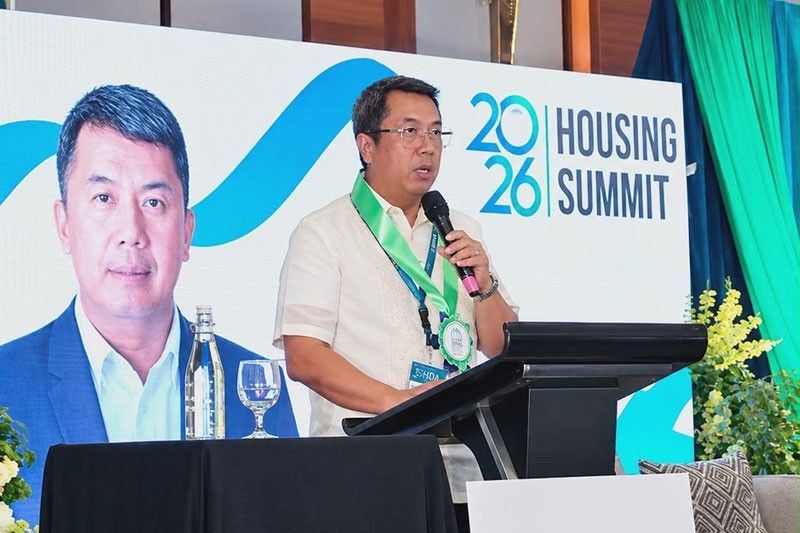
Ken A. Salimbangon, president of the Subdivision and Housing Developers Association (SHDA) Central Visayas, said the region has significant potential for housing and real estate investment but warned that regulatory and infrastructure bottlenecks could constrain the industry’s ability to meet future demand.
“Regulation must be clear, predictable and efficient,” Salimbangon said in his closing remarks at the SHDA Central Visayas summit, which carried the theme “Breaking Barriers, Building Forward.”
The industry is not seeking weaker regulation, he said, but a more efficient system that protects homebuyers without unnecessarily delaying legitimate projects.
Salimbangon pointed to taxation, the Real Property Valuation and Assessment Reform Act, emerging housing policies and the process of securing a License to Sell (LTS) as among the issues confronting developers.
For the property industry, delays are not merely administrative inconveniences. They have financial consequences.
“When approvals are unnecessarily delayed, projects are delayed. Financing and carrying costs increase. Housing supply is affected. And eventually, some of these costs find their way to the homebuyer,” he said.
The comments come as Central Visayas continues to attract investment and population, increasing pressure on the region’s housing stock and infrastructure.
Developers said future growth must be matched by investment in water, power, roads and transportation, as well as by environmental planning.
Salimbangon said the availability of land should no longer be the primary consideration in determining where new housing projects should be built.
Developers and planners must also determine whether prospective growth areas have sufficient water and electricity, whether transport networks can support additional communities and whether the environment can sustain development.
This requires government agencies, local government units, utilities and developers to plan infrastructure ahead of demand, rather than address shortages only after communities have been built.
The cost of housing
Affordability remains another major concern for the industry.
Rising prices of fuel, construction materials, labor and logistics, together with financing and regulatory costs, are putting pressure on the economics of housing development.
But Salimbangon said developers could not rely solely on higher selling prices to absorb those costs.
The industry must improve design and construction efficiency, adopt technology and find other ways to reduce the cost of delivering homes, he said.
Greater access to housing finance will also be necessary if the government and private sector are to expand homeownership among Filipino families.
The challenge is therefore broader than increasing the number of housing units.
It is about creating a housing system in which homes can be delivered at a price that households can afford while still allowing developers to earn sufficient returns to keep building.
Planning for the next growth corridor
The summit also highlighted the need for Central Visayas to anticipate where the next wave of economic growth will occur.
New infrastructure can create new development corridors, while emerging economic centers and population growth can generate fresh demand for housing.
“The next major growth areas may not necessarily be where development is concentrated today,” Salimbangon said.
That creates an opportunity for developers to work with government in shaping—not merely following—the region’s expansion.
The goal should be communities that are properly connected, adequately serviced, environmentally sustainable and genuinely liveable, he said.
For SHDA Central Visayas, the immediate challenge is to convert the summit’s discussions into concrete reforms and partnerships.
Salimbangon called for closer collaboration with government to identify processes that can be streamlined, infrastructure gaps that need to be addressed and policies that may have unintended consequences for housing development.
He also acknowledged that the private sector must improve where necessary.
The industry’s message is ultimately a pragmatic one—Central Visayas has the demand and investment potential to support continued property growth, but the systems surrounding housing must keep pace.
“Because ultimately, what we are building is more than houses,” Salimbangon said. “We are building communities. We are building opportunities for families. And collectively, we are helping build the future of Central Visayas.”


- Latest