


FILSCAP pushes for music licensing compliance
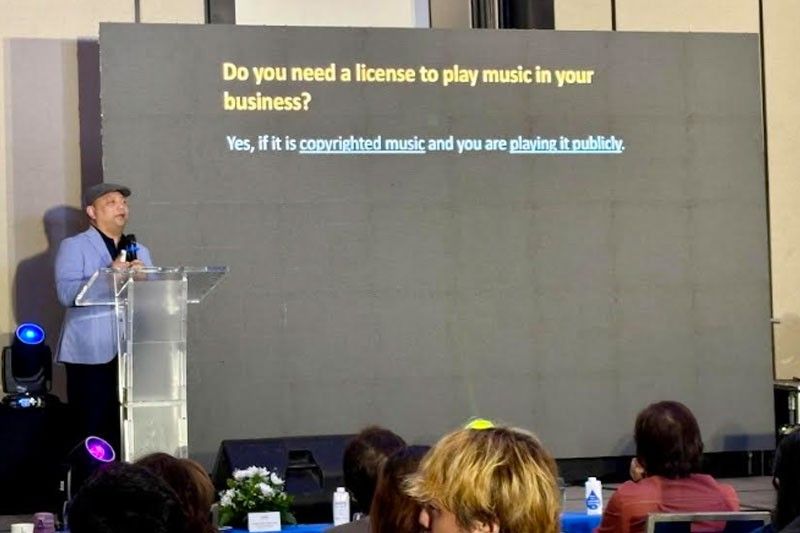
CEBU, Philippines — The Philippines’ sole accredited music collective management organization is ramping up efforts to expand licensing compliance among businesses, arguing that paying for the legal use of copyrighted music represents a negligible cost relative to the commercial value music creates for restaurants, malls, hotels and other establishments.
The Filipino Society of Composers, Authors and Publishers, Inc. (FILSCAP) general manager Mark Thursday Alciso said many businesses continue to underestimate the value of music licensing, even as copyright law requires establishments to secure authorization before publicly playing copyrighted songs.
“One song played without a license is already a copyright infringement,” said Alciso during the recently held forum “Music for Business Growth” held at the Seda Ayala Center Cebu.
Alciso emphasized that the organization serves as an intermediary between music creators and commercial users of music.
FILSCAP, a non-profit organization accredited by the Intellectual Property Office of the Philippines (IPOPHL), currently represents around 1,900 Filipino members and maintains reciprocal agreements with 50 foreign societies, allowing it to license more than 40 million local and international musical works.
The organization said collective licensing addresses a practical challenge for both copyright owners and businesses. Individual composers, from local songwriters to global artists such as Taylor Swift, would find it virtually impossible to monitor and negotiate with every restaurant, bar, retail store or broadcaster playing their music.
Likewise, businesses would face the daunting task of identifying and contacting each copyright owner separately.
“The licensing is being done collectively through a society because it cannot be efficiently enforced directly or individually,” FILSCAP officials said.
Under the Intellectual Property Code, copyright owners may designate collective management organizations to administer and enforce their rights.
FILSCAP remains the only government-accredited collective management organization authorized to license the public performance of copyrighted music in the country.
The accreditation framework, Alciso noted, was designed to protect consumers and prevent the proliferation of multiple licensing bodies.
Thailand, for instance, has around 30 music societies, requiring businesses to deal with several organizations to secure permissions for music use.
FILSCAP’s licensing structure varies depending on the type and size of the establishment. A retail store in Cebu with a selling area of between 51 and 100 square meters pays an annual licensing fee of P5,370, equivalent to about P443 a month or less than P15 a day.
Restaurants outside Metro Manila with seating capacities of 51 to 75 and playing recorded music pay annual fees of around P10,634, while establishments featuring live performances pay higher rates.
For concerts, FILSCAP charges 2.25 percent of net ticket sales after deducting amusement taxes.
Despite occasional resistance from business owners, Alciso said many establishments eventually recognize that the fees are reasonable, particularly when weighed against the role music plays in influencing customer behavior and enhancing the overall consumer experience.
“Music can help your business if you create the right music environment,” he said.
As the organization expands its enforcement efforts beyond Metro Manila, FILSCAP continues to work with industry groups, including the Philippine Retailers Association (PRA) and the Kapisanan ng mga Brodkaster ng Pilipinas, (KBP) to provide preferential rates and encourage wider compliance among enterprises.
For music creators, the licensing system ensures royalties are collected and distributed efficiently. Apart from deductions for operational expenses and socio-cultural projects, the organization said nearly all revenues generated from licensing are returned to rights holders. — (FREEMAN)


- Latest


