Detected in samples from CV: New variant found
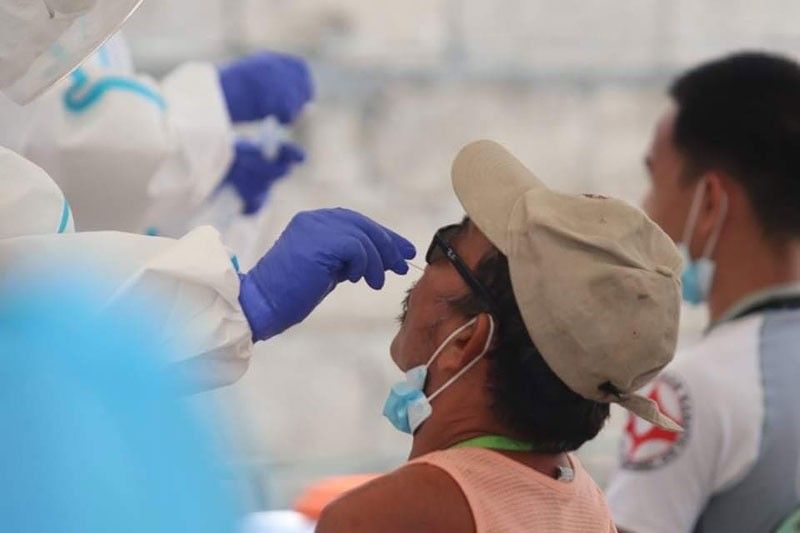
CEBU, Philippines — Most of the samples from COVID-19 patients that were detected to have the signature mutations of PHL-B.1.1.28 (P.3) or the emergent Philippine variant are from the Central Visayas region, according to the findings of the Philippine Genome Center (PGC).
The findings, however, does not necessarily mean that the newly detected variant originated from here and that the region is spreading it to the other parts of the country.
Dr. Mary Jean Loreche, Department of Health-7 spokesperson, explained that the region is just aggressive in the conduct of bio-surveillance.
“Kung atong tan-awon, kita ang pinaka-aggressive or pro-active nga region nga nag-conduct og bio-surveillance,” said Loreche.
(If we look at it, we are the most aggressive and proactive region conducting bio-surveillance)
The PGC also detected B.1.1.28 or the Brazilian variant in Central Visayas aside from P.3. Both the B.1.1.28 and the PHL-B.1.1.28 are of the Brazilian variant lineage or “family tree”.
“We should remember that the Brazilan variant gikan baya na sa gawas. But basically, we should take note on how the viruses are, the more iyang transmission, mas daghan siya’g matakdan, mutations occur. I believe that because of the rising cases that we have that is why we have developed this,” Loreche explained.
The P.3 cases were initially identified from next generation sequencing (NGS) conducted last February 4. The earliest case was collected on January 8, 2021.
“The reported variant carries multiple mutations in the spike protein of the virus that are likely to have functional significance. In particular, the E484K, N501Y, and P681H mutations have been previously associated with known SARS-CoV-2 variants of concern and, together with a three (3) amino acid deletion at spike positions 141 to 143, have been linked to possible increased transmissibility and immune escape in some studies,” says the PGC report.
Further studies are suggested to determine their collective effects on the transmissibility (rate of infection), pathogenicity (severity of the disease), and immunogenicity (impact on vaccine efficacy) of the virus.
While the emergent variant could be a factor in the spike of new COVID-19 cases, particularly in Cebu City, Loreche said there are also other factors that need to be considered. These include the re-opening of the economy and the way people observe the health protocols.
“If you look at these variants that will really come because there will be more that will be coming,” said Loreche.
She said the detection of new emergent variant should not be a cause for alarm but rather a wakeup call for everyone to always adhere to the health protocols.
“It is for us to control, to contain that transmission,” Loreche said.
CASES IN CEBU CITY
A decrease in the number of new cases, however, was noted in Cebu City last Sunday. For the first time in 41 days, the city recorded only two digits in new cases. DOH-7 reported on Sunday that there were only 91 new cases. The same report states that Cebu City’s active cases are now 2,650. The data from the Emergency Operations Center (EOC), however, is a bit lower at 1,914 cases.
EOC officials explained that the variance is due to some recoveries that are yet to be validated by the DOH-7.
According to EOC’s monitoring, there are more new cases that are no known causes of transmission. It was, however, noted that the number of barangays with active cases has decreased to 68 from 70. This means that 12 barangays in Cebu City have no active cases as of this time.
Critical Care Occupancy Rate in Cebu City right now is at 50.4% for both public and private hospitals combined. — Mitchelle L. Palaubsanon /FPL (FREEMAN)




- Latest