


Diaz on why Lapulapu is absent in ‘Magellan’: Humabon did everything
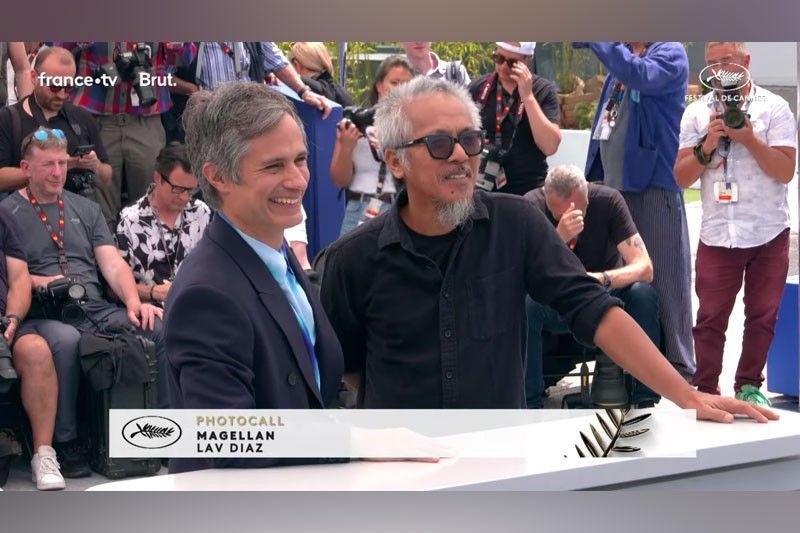
CEBU, Philippines — After claiming that Lapulapu is a “myth,” Lav Diaz clarified his decision to exclude the national hero in his latest film, “Magellan,” choosing instead to center Rajah Humabon as one of the anchors of the perspective on Filipinos’ first contact with the Spaniards.
“Not to say wala si Lapulapu. But according to my research, it seems that we should reconsider Humabon’s place in our history,” Diaz was quoted during the September 6 premiere of the film in Taguig City. “My responsibility is just to examine it; this is what I found, and we talked about it. I am throwing it for dialogue. For discourse.”
The auteur filmmaker cited his seven years of research on Magellan and the events of the Battle of Mactan as the reason why the first Filipino hero does not exist, claiming that he was an invention of Humabon to discourage the Spaniards from converting more locals into Christianity.
In the same premiere, he further clarified his research process, which included library trips in Portugal, Spain, and New York. “When you research for so long, you see things that other historians may not have seen. I read a lot, researched everything, and I could not find anything on Lapulapu. It seems closer to the truth that Humabon did everything.”
Playing Humabon is Diaz’s frequent collaborator, Ronnie Lazaro, who plays opposite the Mexican actor Gael García Bernal as the titular historical figure who is Portuguese in origin.
“Magellan” was picked by the Film Academy of the Philippines (FAP) and Film Development Council of the Philippines (FDCP) to be the country’s entry for the 98th Academy Awards’ Best International Feature Film category.
FAP explained that “Magellan” was picked for its “aesthetic and technical excellence, embodiment of Filipino value and culture, international appeal, and the capability of the producer to mount an extensive campaign for the Academy shortlisting in December, and the nomination in February.”
Of the 37 films that the Philippines has submitted for consideration since 1953, none has been nominated, let alone shortlisted.
Aside from the FDCP’s P1 million grant to support its Oscar campaign, “Magellan” has an edge in North America, with Janus Films as its distributor. The company has a proven track record with Oscar voters, backing winners such as Latvia’s “Flow” (Best Animated Feature earlier this year) and Japan’s “Drive My Car” (Best International Feature, 2021).
Diaz, known for his long takes that resulted in his 2004 film “Evolution of a Filipino Family” being his longest film to date at 10 hours and 24 minutes, “Magellan” clocks in at a short runtime of two hours and 40 minutes.
It also marks Diaz’s return to shooting in color, with most of his works characterized by black-and-white cinematography. His last color film was 2013’s “Norte, the End of History,” which starred Sid Lucero.
Revisionism, or opening a can of worms?
Reactions to The FREEMAN’s September 5 article on Cebu historians’ mixed reactions towards Diaz’s Lapulapu claim was just as split, if more divisive. Among those critical of Diaz’s claim is Valeriano Alonzo, who reacted, “Does that mean Antonio Pigafetta, the official chronicler of the Magellan expedition, was lying, or was also a myth? The street fronting the historical Fort San Pedro is named after him. So, Pigafetta, who recorded the Battle of Mactan, must be a figment of history’s imagination.”
Another commenter, Jo Del, wrote, “I would base my ideas on Ambeth Ocampo rather than a film director. A myth, meaning Pigafetta invented the chronicles of killing his Master Commander? Or about the narrative of Enrique, who accompanied him from Spain and spoke the native’s dialect, and had mutiny and succeeding massacre of the surviving crew with Sebastian Elcano, because he refused to return with the remaining crew since the death of his master also terminated his bondage?”
Some commenters misattributed Diaz as a Tagalog, accusing him of fueling the regional divide between Tagalogs and Bisayas. Diaz, 66, grew up in Mindanao, a native of Sultan Kudarat, back when it was still part of Cotabato before the province was divided into three.
A few also took shots at Diaz’s signature lengthy runtime filmography, with one commentator saying, “His next five-hour movie should be a guy leafing through scholars from Visayas.”
Others have a balanced take on Diaz’s claim. Jazer Arzaga wrote, “I hope a behind-the-scenes documentary is made to allow Lav to explain his side. Seven years of research is quite a huge amount of time to say Lapulapu is a myth.”
Jethro Aquidado also said, “There’s no record of a Hollywood-style one-on-one between Magellan and Lapulapu, but for sure, he does exist. Antonio Pigafetta wrote about him, even mistaking his name as Cilapulapu from natives saying ‘si’ when mentioning a name.”
One commenter on the other side of the discussion, Ren Segara, argued that Diaz might have a basis for his claim, saying, “To be fair, the Spanish might have made up the story to avoid the embarrassment of explaining how their expedition leader died.”
Kent Gabriel Genove is open to Diaz’s interpretation of the events surrounding Magellan’s presence in Cebu. “I am open to the idea that the entire story of Lapulapu was in part created or exaggerated by Humabon to justify a means of intimidation or retaliation against local leaders and people of Mactan,” he said.
“After all, Humabon eventually betrayed the Spaniards afterwards. What is stopping him from hitting two birds with one stone? Even primary sources can be exaggerated if without correspondence, which Pigafetta is very highly likely to have done in order to sell the voyage and future expeditions to the crown.”
Rolando Borrinaga said Lapulapu’s story may be “mythical,” but the figure himself is not. “I have done my own research that theorized his existence from circumstantial evidence, but I have never tried to force the acceptance of my theories; I just presented them.”
Defending Diaz, he added, “We must first view his film as an art, not a documentary. Thus, we must excuse the distortion or bending of historical facts in this work as artistic license and see how it goes.”
Another history enthusiast, Ricky De Castro, believes the claim has already sparked discourse. “Opening a can of worms or Pandora’s Box? I hope it’s the latter, like what happened with ‘The Da Vinci Code,’ which prompted more studies and defenses of Jesus Christ as the only true Son of God through debates and scrutiny of that American film. With the Pinoy film ‘Magellan,’ I hope it will lead to more archaeological and historical studies, international conferences, or even a book on the historicity and discourse of Lapulapu.”
A commenter named Maan Panglinan-Yeyec believed Lapulapu is more of an amalgamation of locals, stating, “It was not Lapulapu who killed Magellan, but the warriors who fought alongside him. Perhaps there was really no warrior named Lapulapu, but his name and image represent the brave warriors who fought to preserve our independence.”
The response from netizens may have already achieved what Diaz intended even before the film’s release. Film producer Hazel Orencio, who also plays Humabon’s wife Hara Humamay, previously told The FREEMAN that they had no problem with the mixed reactions and encouraged open discourse regarding the film’s interpretation.
Critical acclaim
Since its premiere in Cannes, “Magellan” has received critical acclaim, with a 100 percent Rotten Tomatoes score from 11 reviews and a 3.5 out of 5 rating on Letterboxd.
Critics lauded Diaz’s political messaging, noting how it continues his tradition of interrogating history and national identity through cinema. They also highlighted that “Magellan” stands out as one of his most accessible works to date, with a more streamlined narrative that does not compromise his signature contemplative storytelling, which allows a broader audience to appreciate his work, not acquainted with his usual long-form approach.
Positive response echoed among those local critics. In his perfect five-star review, Philbert Dy, who has seen the film twice, said, “The movie really parses colonialism as a whole, but the narrative isn’t simply that of mighty native warriors defeating invaders. Lav really puts belief at the center of it, these tricky animists putting one over the supposed missionary of Christian belief.”
Lé Baltar also praised the film, stating on X, “It’s transfixing to see another Lav Diaz movie past his signature monochrome. While ‘Magellan’ is a sprint in Diaz’s marathon cinema, it never loses his spirit – still narratively pensive but also visually painterly. Revisionist accusations will be inevitable.” — (FREEMAN)





- Latest